USAID DEC
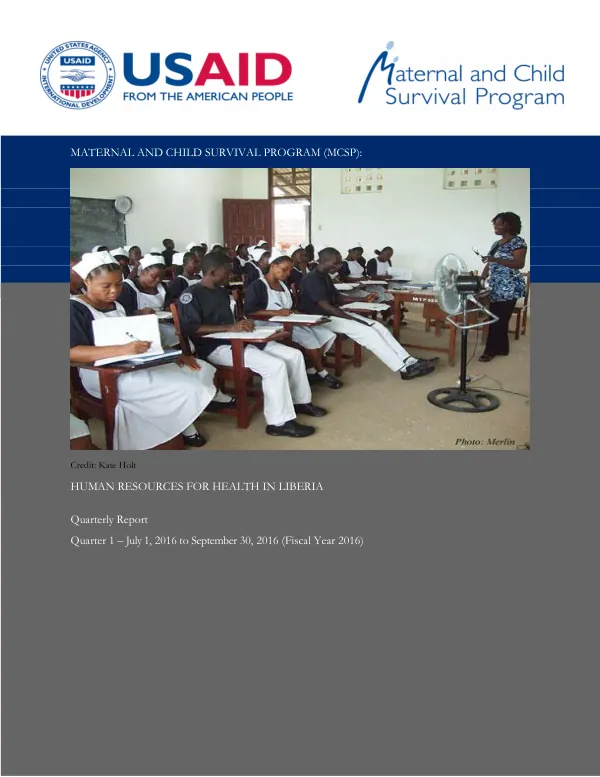
Maternal and Child Survival Program (MCSP): Restoration of Health Services in Liberia
Sign inCHEMONICS
Maternal and Child Survival Program (MCSP): Restoration of Health Services in Liberia
The Maternal and Child Survival Program (MCSP) Restoration of Health Services in Liberia is a global U.S.
2016 · 38 pages
Sign in to readA free account is required to download.
Abstract
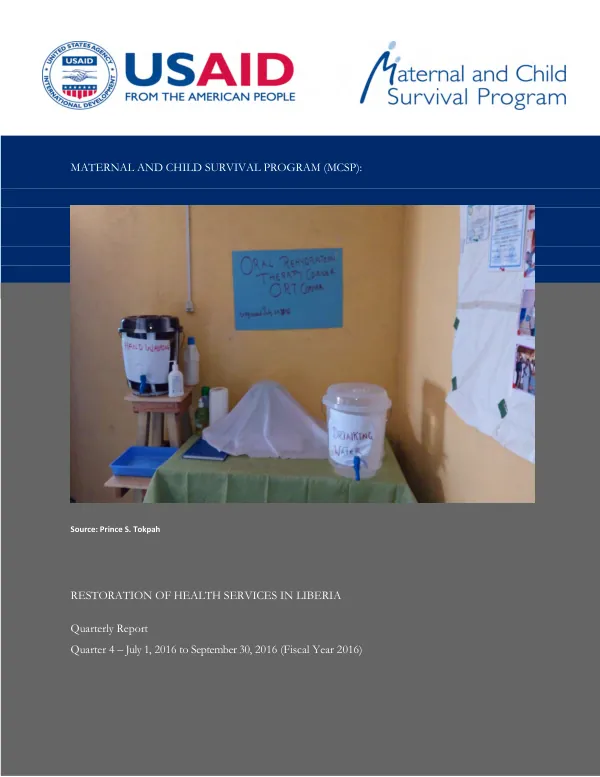
Agency for International Development (USAID) cooperative agreement aimed at introducing and supporting high-impact health interventions in 25 priority countries. The ultimate goal of the program is to end preventable child and maternal deaths within a generation. MCSP engages governments, policymakers, private sector leaders, health care providers, civil society, faith-based organizations, and communities in adopting and accelerating proven approaches to address major causes of maternal, newborn, and child mortality. The program focuses on health systems strengthening, household and community mobilization, gender integration, and eHealth, among others. In light of the Ebola Crisis, USAID/Liberia requested MCSP to support its commitment to restoring service delivery at primary health care facilities and rolling out nationwide infection prevention and control (IPC) training and protocols. The Liberia MCSP Restoration of Health Services (RHS) program carries forward the momentum and lessons learned from the USAID-funded Maternal and Child Health Integrated Program (MCHIP), which has made significant progress in improving the health of women and children in over 50 developing countries. MCSP Liberia/RHS is a 231-month project with a geographic focus primarily in Grand Bassa, Lofa, and Nimba counties, with the possibility of additional activities in other USAID-focus counties. The program's overarching goal is to restore confidence in the health care system by upgrading IPC practices critical for fighting Ebola and other infectious diseases and ensuring restoration of MCH services in target facilities. The program has achieved significant progress in strengthening IPC practices at 77 health facilities through training, intensive supportive supervision, triage, improvement of waste management, and planning and management of essential IPC commodities and supplies. The program has also generated demand and restored delivery of quality primary health care services through the implementation of RMNCAH as part of the Essential Package of Health Services (EPHS) in 77 facilities. The program has made significant progress in improving the quality of health services from household to hospital, tackling issues such as postpartum hemorrhage, birth asphyxia, and diarrhea. The program has also focused on health systems strengthening, household and community mobilization, gender integration, and eHealth, among others. The program has engaged governments, policymakers, private sector leaders, health care providers, civil society, faith-based organizations, and communities in adopting and accelerating proven approaches to address major causes of maternal, newborn, and child mortality. The program has also made significant progress in improving the health of women and children in Grand Bassa, Lofa, and Nimba counties, with a focus on restoring confidence in the health care system by upgrading IPC practices critical for fighting Ebola and other infectious diseases and ensuring restoration of MCH services in target facilities. The program has a strong partnership with the Ministry of Health (MOH) and key departments, County Health Teams, USAID-funded projects and partners, including FARA IPs, PACS, HC3, DELIVER, CSH, UNICEF, UNFPA, H4+, and Chemonics. The program has a total budget of $10,500,000 USD, with a geographic coverage of Grand Bassa, Lofa, and Nimba counties. The program has a strong focus on monitoring and evaluation, with a progress report highlighting achievements, processes, challenges, lessons learned, and upcoming activities for the next quarter. The program has a robust workplan matrix, with a detailed description of accomplishments and additional activities completed during the reporting period.