USAID DEC
Feasibility Study for Aquaculture and Culture-Based Fisheries in Mountain Areas of Karnali Pradesh
Sign inDAI GLOBAL, LLC
Feasibility Study for Aquaculture and Culture-Based Fisheries in Mountain Areas of Karnali Pradesh
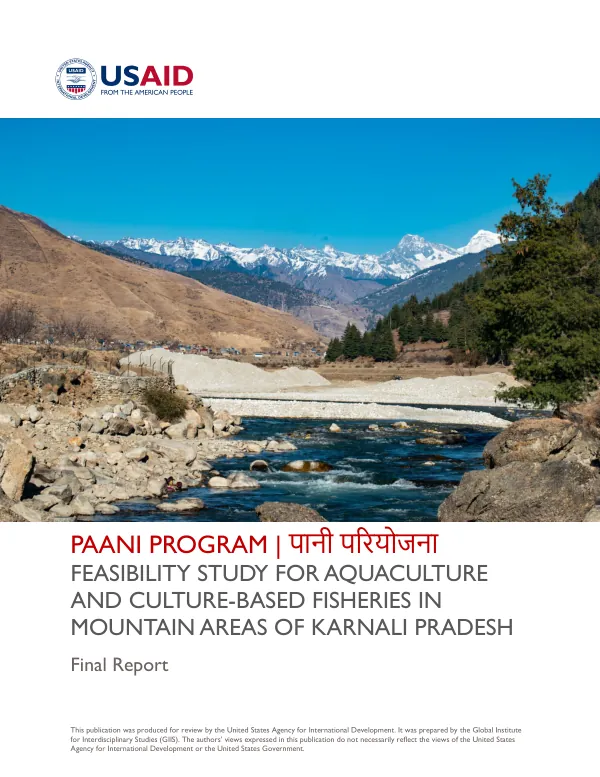
The USAID Paani Program conducted a feasibility study for aquaculture and culture-based fisheries in mountain areas of Karnali Pradesh.
2021 · 123 pages
Sign in to readA free account is required to download.
Abstract
The study aimed to identify potential sites for aquaculture and culture-based fisheries in the five districts of Mugu, Kalikot, Jumla, Humla, and Dolpa. The study area is characterized by rugged terrain, limited access to markets, and a lack of infrastructure. The study employed a multi-disciplinary approach, combining desktop analysis, fieldwork, and stakeholder engagement. The research team conducted focus group discussions, key informant interviews, and surveys to gather data on local perceptions of aquaculture and culture-based fisheries. The study also analyzed existing data on water quality, fish species, and aquaculture practices in the region. The study identified several potential sites for aquaculture and culture-based fisheries in the five districts. In Mugu district, the study found that the Karnali River and its tributaries have suitable conditions for culture-based fisheries. In Kalikot district, the study identified several potential sites for aquaculture, including the Kalikot River and its tributaries. In Jumla district, the study found that the Jumla River and its tributaries have suitable conditions for culture-based fisheries. The study estimated that the total potential area for aquaculture in the five districts is approximately 1,500 hectares. The study also identified several potential palikas (local government units) for aquaculture and culture-based fisheries in the five districts. In Mugu district, the study identified several potential palikas, including the Tila-Karnali River and its tributaries. In Kalikot district, the study identified several potential palikas, including the Kalikot River and its tributaries. The study concluded that the mountain areas of Karnali Pradesh have significant potential for aquaculture and culture-based fisheries. The study recommended that the government and private sector invest in infrastructure development, training, and extension services to support the growth of aquaculture and culture-based fisheries in the region. The study also recommended that the government establish policies and regulations to support the development of aquaculture and culture-based fisheries in the region. The study identified several challenges to the development of aquaculture and culture-based fisheries in the region, including limited access to markets, lack of infrastructure, and limited availability of fish species. The study recommended that the government and private sector invest in infrastructure development, training, and extension services to address these challenges. The study also identified several opportunities for the development of aquaculture and culture-based fisheries in the region, including the potential for export-oriented aquaculture and the development of value-added fish products. The study recommended that the government and private sector invest in research and development to explore these opportunities. The study concluded that the development of aquaculture and culture-based fisheries in the mountain areas of Karnali Pradesh has the potential to improve the livelihoods of local communities and contribute to the economic development of the region.