USAID DEC
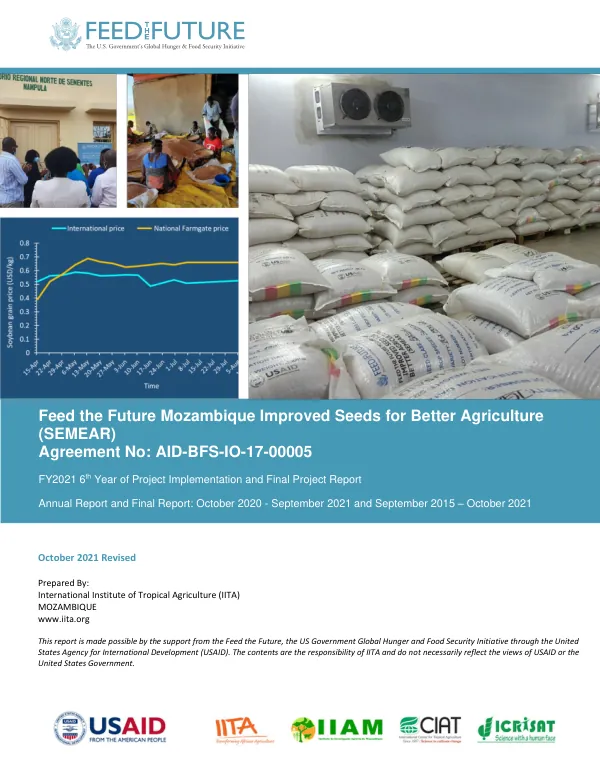
Feed the Future Mozambique Improved Seeds for Better Agriculture (SEMEAR) Final Project Report
Sign inINTERNATIONAL INSTITUTE OF TROPICAL AGRICULTURE
Feed the Future Mozambique Improved Seeds for Better Agriculture (SEMEAR) Final Project Report
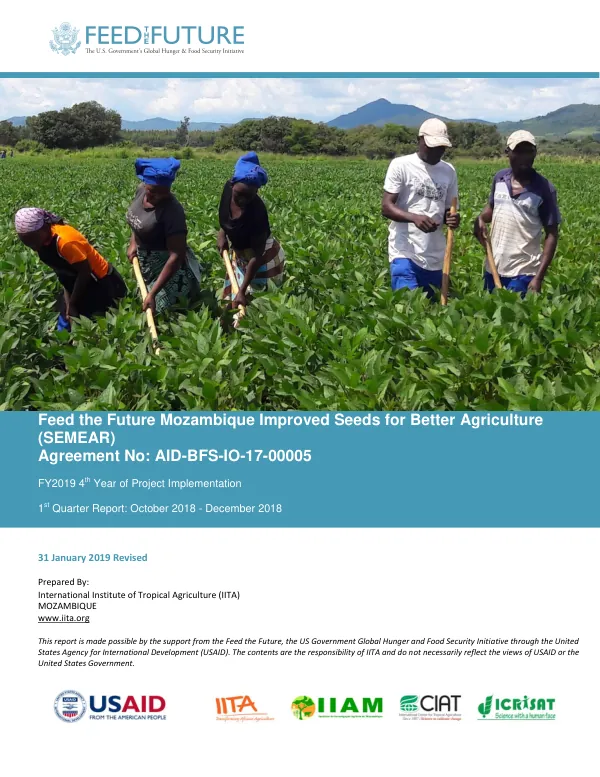
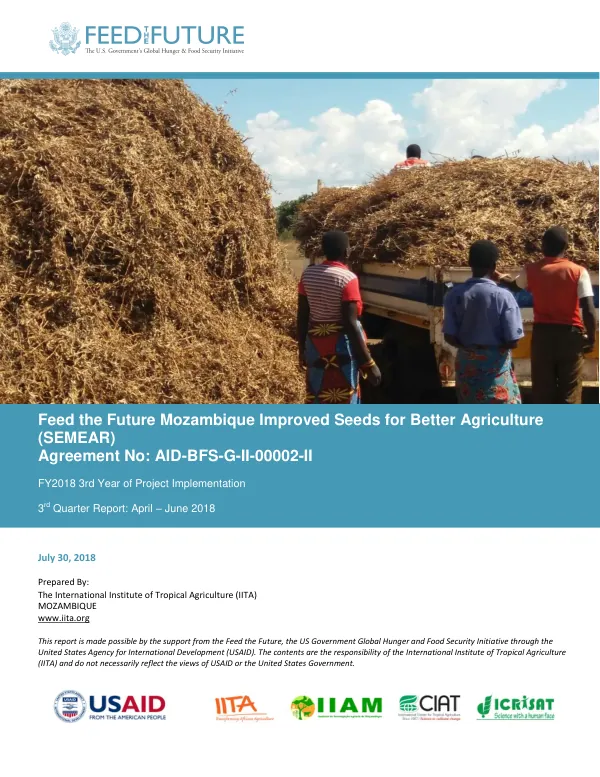
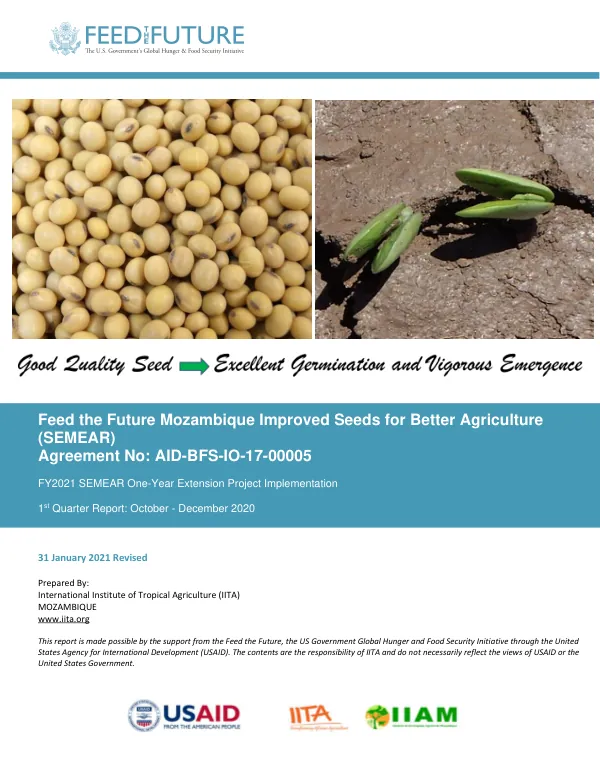
The Feed the Future Mozambique Improved Seeds for Better Agriculture (SEMEAR) project was implemented in Mozambique from October 2015 to September 2021.
2021 · 62 pages
Sign in to readA free account is required to download.
Abstract
The project aimed to increase the production and supply of breeder, pre-basic, basic, and certified seeds of common bean, cowpea, groundnut, pigeon pea, sesame, and soybean in the major Feed the Future Zones of Influence (FtF ZOI) and strengthen the national seed systems. The project was implemented in four provinces: Nampula, Zambézia, Manica, and Tete. The geographic focus was on six districts in Nampula Province, three districts in Zambézia Province, three districts in Manica Province, and three districts in Tete Province. The project had a total budget of US$13,346,185 and was funded by the United States Agency for International Development (USAID) through the Feed the Future initiative. The project had three main objectives: to increase the production and supply of breeder, pre-basic, basic, and certified seeds; to scale-up and enhance the adoption of improved varieties and best management practices; and to enhance national policy dialogue on seed and fertilizer supply. The project was implemented by the International Institute of Tropical Agriculture (IITA) in partnership with the Mozambique Agriculture Research Institute (IIAM), the International Center for Tropical Agriculture (CIAT), and the International Centre for Research in the Semi-Arid Tropics (ICRISAT). The project achieved significant progress in seed production and supply. The production of breeder, pre-basic, and basic seeds increased by 25% compared to the baseline. The certified seed production also increased by 30% compared to the baseline. The project sold over 1,000 tons of certified seeds to farmers, which is a significant increase compared to the baseline. The project also promoted and scaled-up the adoption of best crop management practices in the FtF ZOI using participatory approaches. The project conducted on-farm demonstrations, training, and scaling up adoption of improved varieties and best management practices. The project also organized field days, exchange visits, and meetings to promote the adoption of improved practices. The project's end-line study showed significant improvements in crop yields and income of farmers who adopted improved practices. The study also showed that women-headed households showed higher adoption rates for all practices except mechanical land preparation. The project's environmental monitoring and mitigation plan (EMMP) compliance was also satisfactory. The project collaborated with other donor projects, including the Feed the Future Innovations for Agriculture Activity (FtF-InovA) and the Feed the Future Seed Trade project (FtF STP). The project also worked with local partners, including seed companies, community seed producers, and farmers' associations. The project's success story is the increased production and supply of certified seeds, which has improved the livelihoods of farmers in the target areas. The project's achievements are a testament to the effectiveness of the Feed the Future initiative in improving agricultural productivity and reducing poverty in Mozambique.
Related documents