DAI GLOBAL, LLC
Feed the Future Tanzania Land Tenure Assistance (LTA) Monthly Report March 2018
The Feed the Future Tanzania Land Tenure Assistance (LTA) initiative began in 2012 with funding from the United States Agency for International Development (USAID).
2018 · 54 pages
Sign in to readA free account is required to download.
Abstract
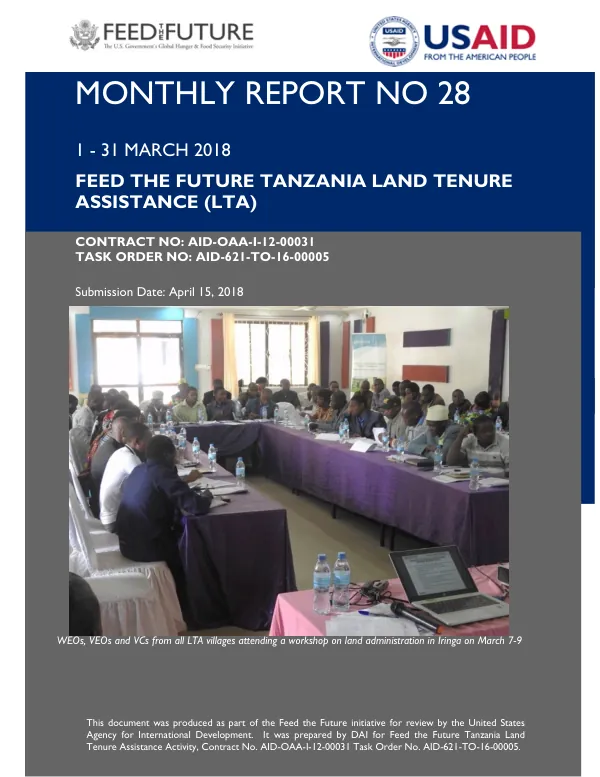
The program aimed to improve land tenure security for smallholder farmers in Tanzania, particularly in the Iringa region. Initial assessments identified key challenges, including limited access to land records, disputes over land ownership, and inadequate land use planning. Implementation of the LTA program focused on several key interventions, including the issuance of Certificates of Customary Rights of Occupancy (CCROs), dispute resolution, and the development of Village Land Use Plans (VLUPs). By March 31, 2018, a total of 27 VLUPs had been completed for all LTA villages in Iringa, with 15 villages having completed their VLUPs. Satellite imagery coverage for Iringa District was also completed, providing a comprehensive view of land use patterns in the area. Community feedback indicated strong support for the program, with many villagers expressing appreciation for the improved land tenure security and increased access to land records. The program also made significant progress in integrating cross-cutting issues, including women's empowerment and youth participation, into its activities. Key meetings and communications took place throughout the month, including a workshop on land administration in Iringa, attended by Village Executive Officers (VEOs), Village Chairmen (VCs), and other stakeholders. The program also engaged with regional and district land officials, as well as village representatives and residents, to ensure effective stakeholder participation. Implementation challenges were identified, including administration and management issues, monitoring and evaluation concerns, and technical difficulties with the Mobile Application to Secure Tenure (MAST) system. Despite these challenges, the program made significant progress in March 2018, with a total of 2,500 farmers receiving training in sustainable agriculture techniques and 15 communities demonstrating yield improvements of 60% when applying recommended practices. The program's activities were closely monitored and evaluated, with a focus on tracking progress, identifying challenges, and making adjustments as needed. The Activity Tracker, a key tool for monitoring program progress, was updated regularly to reflect changes in program activities and outcomes. The program's commitment to transparency and accountability was evident in its regular reporting and engagement with stakeholders. The LTA program's geographic focus was primarily on the Iringa region, with a specific emphasis on the 15 villages participating in the program. The program's timeframes were aligned with the USAID Forward priorities, with a focus on achieving tangible results and making a lasting impact on the lives of smallholder farmers in Tanzania.