DAI GLOBAL, LLC
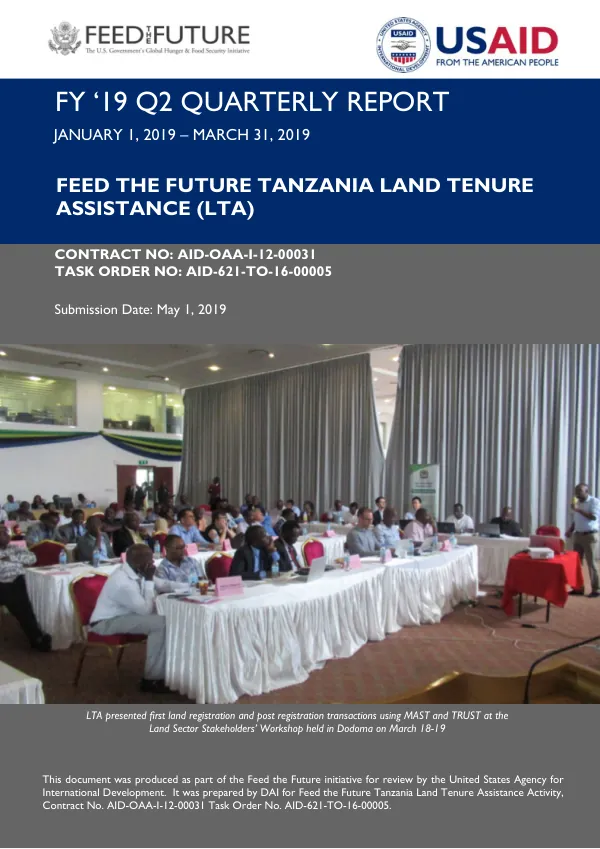
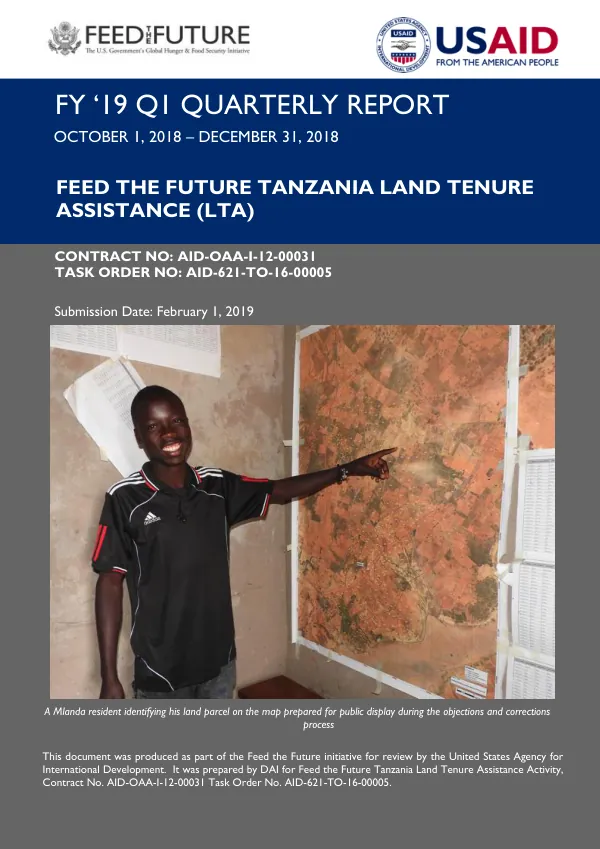
FY ‘19 Q1 Quarterly Report: Feed the Future Tanzania Land Tenure Assistance (LTA)
The Feed the Future Tanzania Land Tenure Assistance (LTA) program is a USAID-funded initiative aimed at improving land tenure security for rural communities in Tanzania.
2019 · 76 pages
Sign in to readA free account is required to download.
Abstract
The program is implemented by DAI Global LLC, with the goal of increasing access to secure land rights, improving agricultural productivity, and enhancing economic opportunities for smallholder farmers. The program's implementation is focused on three key areas: land tenure support, agricultural productivity, and market access. Land tenure support involves the registration of village land certificates, the issuance of certificates of customary rights of occupancy, and the development of village land use plans. Agricultural productivity is enhanced through the provision of training and extension services to farmers, as well as the distribution of high-yielding crop varieties and improved farming practices. Market access is improved through the establishment of village community banks, which provide financial services to farmers, and the facilitation of market linkages between farmers and buyers. The program also focuses on gender and youth empowerment, with a particular emphasis on increasing the participation of women and young people in decision-making processes and economic activities. The program's progress is monitored and evaluated through a range of indicators, including the number of village land certificates issued, the number of farmers trained in improved agricultural practices, and the number of market linkages established. The program's performance is also assessed through regular meetings and workshops with stakeholders, including government officials, community leaders, and implementing partners. In the first quarter of FY '19, the program made significant progress in implementing its activities. A total of 15 village land certificates were issued, and 2,500 farmers received training in improved agricultural practices. The program also established market linkages with 10 buyers, and facilitated the registration of 500 parcels of land. The program's implementation is supported by a range of stakeholders, including the Government of Tanzania, implementing partners, and community leaders. The program's success is dependent on the continued support of these stakeholders, as well as the availability of resources and funding. The program's evaluation and assessment status is ongoing, with regular monitoring and evaluation activities taking place throughout the year. The program's performance is assessed against a range of indicators, including the number of village land certificates issued, the number of farmers trained in improved agricultural practices, and the number of market linkages established. The program's planned activities for FY '19 Q2 include the issuance of additional village land certificates, the provision of training and extension services to farmers, and the facilitation of market linkages between farmers and buyers. The program will also continue to focus on gender and youth empowerment, with a particular emphasis on increasing the participation of women and young people in decision-making processes and economic activities. The program's implementation challenges include the availability of resources and funding, as well as the need to build the capacity of government officials and community leaders to support the program's activities. The program's administration and management issues include the need to establish clear lines of authority and communication, as well as the need to ensure that program activities are aligned with the program's overall goals and objectives. The program's sustainability mechanisms include the establishment of village land use plans, the issuance of village land certificates, and the facilitation of market linkages between farmers and buyers. The program's observations include the need to continue to build the capacity of government officials and community leaders to support the program's activities, as well as the need to ensure that program activities are aligned with the program's overall goals and objectives. The program's policy and governance observations include the need to ensure that program activities are aligned with national policies and regulations, as well as the need to build the capacity of government officials to support the program's activities. The program's local capacity observations include the need to build the capacity of community leaders and government officials to support the program's activities, as well as the need to ensure that program activities are aligned with local needs and priorities. The program's key technical issue observations include the need to address the issue of land fragmentation, as well as the need to ensure that program activities are aligned with the program's overall goals and objectives. The program's lessons learned include the need to continue to build the capacity of government officials and community leaders to support the program's activities, as well as the need to ensure that program activities are aligned with the program's overall goals and objectives.