FHI 360
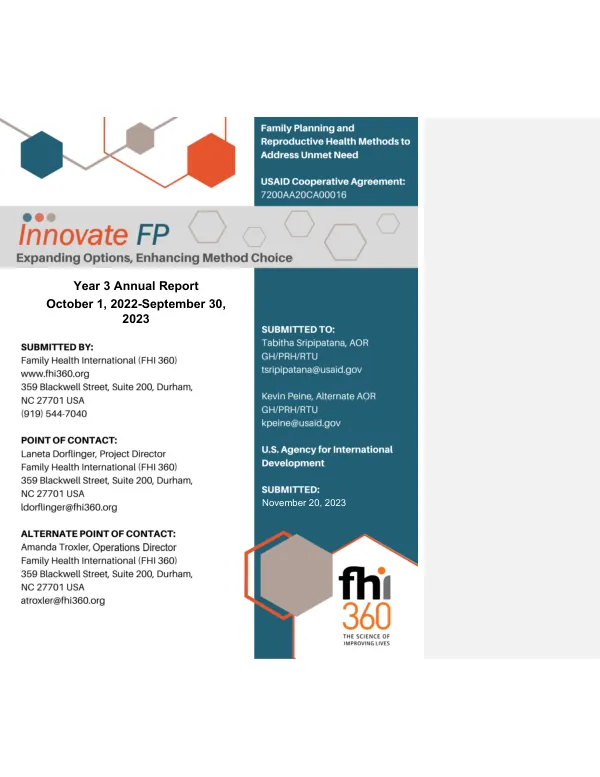
FHI 360 Innovate FP Year 3 Annual Report (Oct 2022-Sep 2023)
The 6-month DMPA SC (DMPA XT) pivotal Phase 3 trial experienced delays primarily due to site initiation and enrollment issues.
2023 · 60 pages
Sign in to readA free account is required to download.
Abstract
Site initiation delays resulted from ethics board approval processes, while clinical trial agreements executed with UK sites underwent lengthy negotiation. Site initiation training in the UK was postponed until all regulatory, R&D, and ethics board approvals were obtained for the version of the protocol to be implemented. As of September 2023, all five sites are enrolling participants, but recruitment across most sites has been slower than anticipated due to factors such as the availability of contraceptive methods at no or low cost, healthcare staff workload in the UK, and limited recruitment efforts used. To mitigate these challenges, the study team has implemented various recruitment strategies, including expanding dissemination of recruitment flyers and posters, posting study information on the CTI Exchange, and holding investigator-led briefings. The team has also submitted recruitment material and plans for a large social media campaign to FHI 360's Protection of Human Subjects Committee and the UK ethics board. Site-specific enrollment targets have been shifted to allow faster-recruiting sites to expand their enrollment, and the team continues to monitor weekly enrollment at each site and provide recruitment updates to USAID monthly. The DMPA SC extended use: user and service delivery considerations study experienced delays due to the journal's extended review time. The team eventually withdrew the outstanding paper from the journal and submitted both manuscripts to a new journal. Delays in peer review have been noted across academic publishing and also affected the review of manuscripts developed under the Rapid Response activity. The situational analysis of the postpartum intrauterine device (PPIUD) experienced significant delays due to unanticipated issues. Obtaining shipment and procurement data from the manufacturer took longer than expected, and identifying key informants proved to be challenging. The team is pursuing alternative avenues and will move forward with key informant interviews on a rolling basis, with the intention of completing the activity in Year 4. The 3-6 month progestin-only microneedle patch (MNP) manufacturing process was delayed due to challenges executing an agreement between Georgia Tech and Emory. The additional time was used to optimize the patch design and the manufacturing process to include a microneedle (MN) geometry that is closer to what will be evaluated in a Phase 1 trial. There were also delays with starting the rat pharmacokinetic (PK) study due to challenges with needle insertion and detachment in rat skin. To mitigate these challenges, prototype modifications were made to improve the patch's performance. The Innovate FP project has nine activities, including technical leadership/management and monitoring and evaluation. One new activity was added in Year 3, and delays and challenges were experienced in some activities. Mitigation strategies have been implemented to address these challenges, and the team continues to monitor progress and provide updates to USAID.