RAINFOREST ALLIANCE
Final Validation Report for Cajambre REDD+ Project
The Cajambre REDD+ project is a forest conservation initiative located in the Pacific region of Colombia.
2015 · 132 pages
Sign in to readA free account is required to download.
Abstract
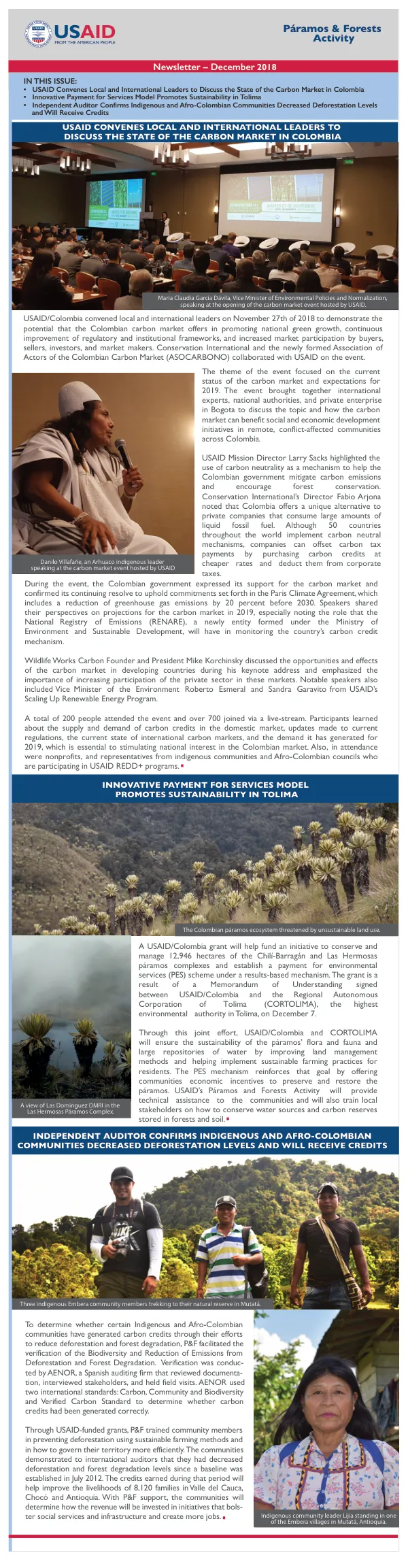
The project is part of the eight-project BioREDD+ program, which was instituted in the Colombian Pacific with funding from USAID and implementation by multiple partners. The project's proponents are the Consejo Comunitario de Cajambre, and the crediting period and project lifetime is 30 years. The validation process for the Cajambre REDD+ project was conducted by the Rainforest Alliance audit team, which consisted of two Senior Auditors and a local Colombian forestry expert, as well as a geospatial consultant who provided remote support. The audit process was desk-based and field-based, taking place from October 2014 to April 2015. The field audit included stakeholder meetings with over 100 individuals representing leadership and membership from all consejos, as well as a re-sampling of permanent plots used throughout the entire BioREDD+ program to measure forest carbon stocks. The audit team identified 31 VCS nonconformity reports (NCRs) and 19 CCB NCRs, which are required to be corrected prior to successful validation. The proponents submitted multiple rounds of evidence for closure of NCRs, and on April 20, 2015, sufficient corrective actions and evidence had been submitted to enable all NCRs to be closed and to determine a positive validation conclusion. The Rainforest Alliance audit team has determined to a reasonable degree of assurance positive conformance to the VCS Version 3, VCS VM0006 v2.1 methodology, VCS VT0005 tool, and the CCB Third Edition Standards. The ex-ante net emissions reduction is estimated at 8,924,643 tCO2e, with an estimated issuance of 7,358,393 VCUs, over the project lifetime. The validation statement is based upon the PD version 3.10 from 22 April 2015, and the AFOLU-Non-permanence risk report version 1.9 from 22 April 2015. The project's design includes measures to maintain high conservation values, manage risks to project benefits, and ensure employment opportunities and worker safety. The project's legal status is compliant with laws, statutes, property rights, and other regulatory frameworks. The project has evidence of right of use, and it is not participating in any emissions trading programs or other binding limits. The project has also been reviewed for respect for rights and no involuntary relocation, and it has been found to be compliant with these requirements. The project's application of methodology is in accordance with the VCS Version 3 and CCB Third Edition Standards, and it has been found to be compliant with these requirements.