USAID DEC
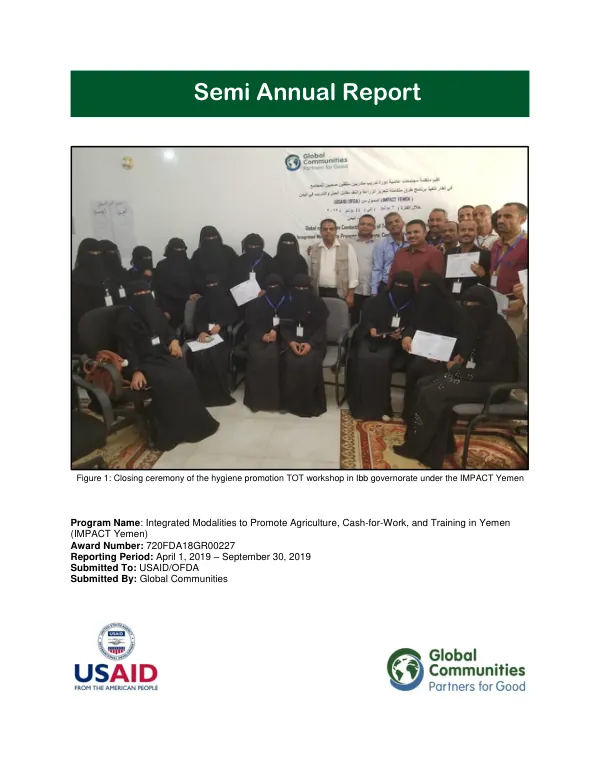
First Semi Annual Report FY19: Integrated Modalities to Promote Agricultural, Cash-for-Work, and Training in Yemen (IMPACT Yemen)
Sign inDEPUTY MINISTRY OF TECHNICAL AND VOCATIONAL EDUCATION AND TRAINING
First Semi Annual Report FY19: Integrated Modalities to Promote Agricultural, Cash-for-Work, and Training in Yemen (IMPACT Yemen)
The Integrated Modalities to Promote Agricultural, Cash-for-Work, and Training in Yemen (IMPACT Yemen) project aims to address the urgent humanitarian needs of vulnerable, conflict-affected Yemenis living in Sana'a, Dhamar, Ibb, and Taiz governorates.
2019 · 8 pages
Sign in to readA free account is required to download.
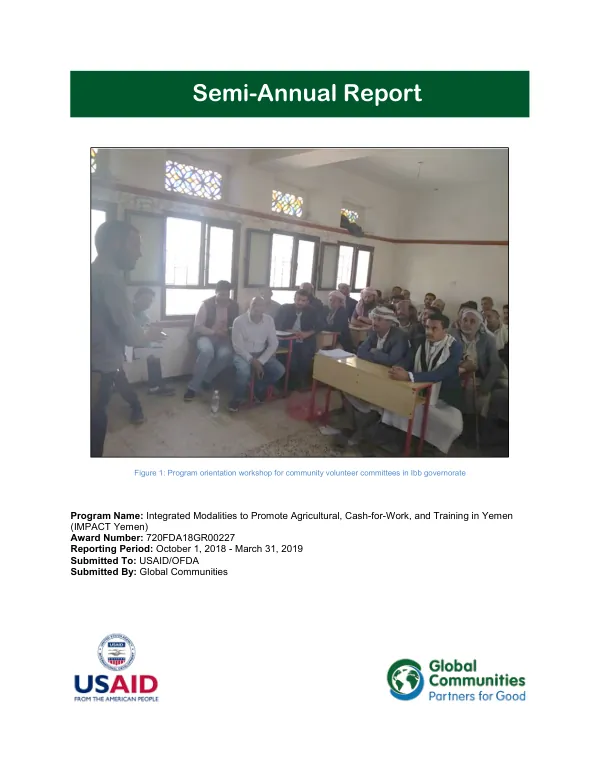
Abstract
The project is being implemented by Global Communities (GC) with funding from USAID/OFDA. The project's goal is to meet continued humanitarian assistance and early recovery needs of vulnerable and conflict-affected populations in Yemen through an integrated, holistic approach to bolstering food security and livelihoods, improving WASH outcomes, and promoting economic opportunities. The project addresses the needs of 72,982 vulnerable beneficiaries and is being implemented together with the USAID/FFP-funded Yemen Emergency Food Assistance (YEFA) project in two districts through an integrated manner. The program will achieve its goal with three objectives: Improved household food security and livelihoods by restocking critical agricultural inputs, increased household income for vulnerable households through market-driven vocational training and cash-for-work opportunities, and improved access to safe water supplies, sanitation facilities, and improved hygiene practices in targeted communities. During the reporting period, GC ensured participation in relevant coordination meetings and forums, including the WASH Cluster, Food Security and Agriculture Cluster (FSAC), Cash and Market Working Group (CMWG), and Health and Education clusters in Sana'a and sub-clusters in Ibb. GC coordinated with the World Food Programme (WFP), UNICEF, and INGOs during the sub-district selection process for IMPACT and YEFA interventions. The project also conducted meetings with local authorities, including officials of NAMCHA offices at the governorate level, Ministry of Agriculture and Irrigation, Ministry of Technical Education and Vocational Training (MoTEVT), and District Councils from the working areas. GC organized three kickoff workshops for local authorities in Sana'a, Ibb, Taiz, and Dhamar to introduce the project, seek their input in the area selection, and discuss coordination. The participants included officials of NAMCHA offices at the governorate level, Ministry of Agriculture and Irrigation, Ministry of Technical Education and Vocational Training (MoTEVT), and District Councils from the working areas. Districts councils shared a list of vulnerable sub-districts with GC in Ibb, Dhamar, Sana'a, and Taiz governorates, which helped GC to prioritize the sub-districts in need assessment and selection of working areas with major humanitarian gaps and a high vulnerability ratio. Community Volunteer Committees (CVCs) were established in two districts of Ibb, with a minimum of 40% participation of women in the 7-10 member committees. The CVCs received an orientation by the GC team on project interventions, beneficiary selection criteria, and the process for the selection of beneficiaries. The project also conducted meetings with the Ministry of Agriculture and Irrigation (MoAI) in Sana'a to ensure proper coordination with the Ministry and to seek their support in carrying out agriculture and food security activities in the selected working districts. The project's implementation is ongoing, with GC working to establish CVCs in other districts, conduct baseline assessments, and implement agriculture and food security activities. The project's progress is being monitored and evaluated regularly, with a focus on ensuring that the project is meeting its objectives and making a positive impact on the lives of vulnerable Yemenis.