DEPUTY MINISTRY OF TECHNICAL AND VOCATIONAL EDUCATION AND TRAINING
Quarterly Programmatic Report
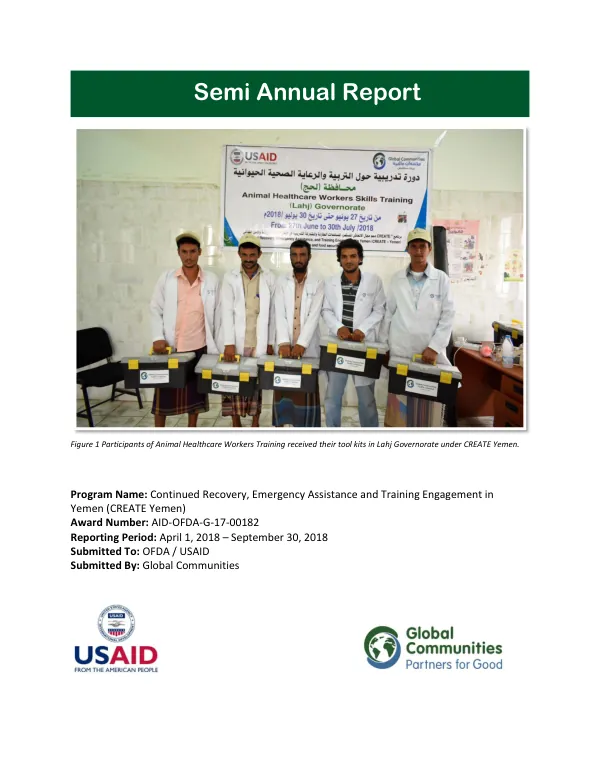
Global Communities implemented the Continued Recovery, Emergency Assistance and Training Engagement in Yemen (CREATE Yemen) program in Aden, Lahj, and Dhale Governorates.
2018 · 12 pages
Sign in to readA free account is required to download.
Abstract
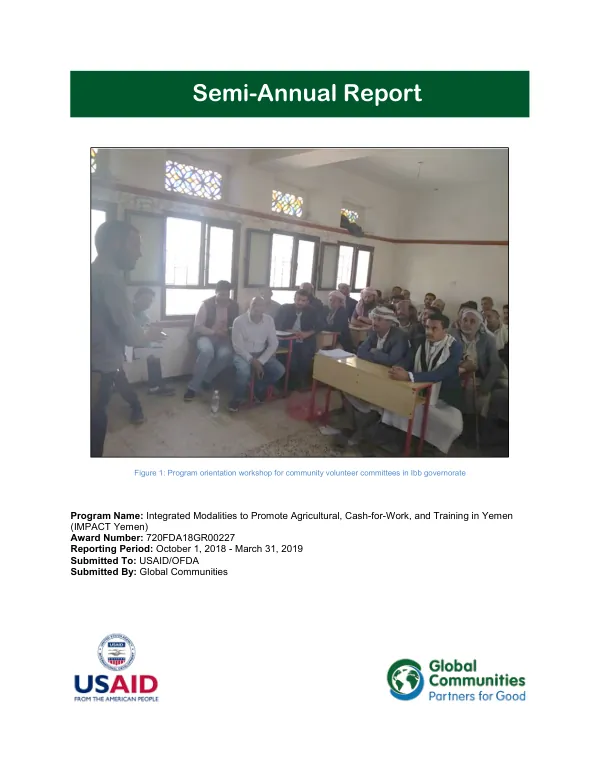
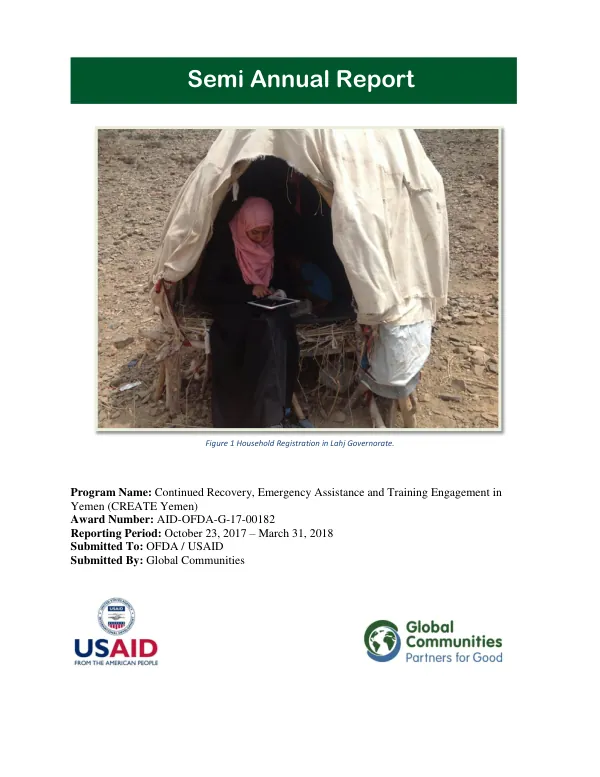
The program aimed to meet humanitarian assistance and early recovery needs of vulnerable and conflict-affected populations through a holistic approach to bolstering food security and livelihoods, improving WASH outcomes, and promoting economic opportunities. The program was designed to achieve three objectives: improving household food security and livelihoods through agricultural inputs, providing income generation opportunities for vulnerable households through market-driven vocational training, and improving community hygiene practices. The proposed 18-month project addressed the needs of 164,906 vulnerable beneficiaries, with Global Communities working in partnership with communities to identify beneficiary households using vulnerability criteria created specifically for CREATE Yemen. During the reporting period, Global Communities ensured active liaison development and participated in relevant coordination forums at all levels, including UN OCHA, WFP, UNICEF, and Government line ministries. The organization maintained strong relationships with the Government, particularly with key Government line ministries, to ensure humanitarian access and smooth operations. Global Communities also ensured proper branding and introduced itself and the project to District Councils, who shared a list of vulnerable villages with the organization. Global Communities established 15 Community Volunteer Committees (CVCs) after conducting a proper needs assessment for the selection of most vulnerable areas in the targeted districts. The CVCs received an orientation by the Global Communities team on sectoral interventions and how to process for the selection of beneficiaries, with a strong emphasis on selection criteria. Initially, CVCs nominated the data of 7,000 households for all sectors, but 5,037 households (4,214 Male and 828 Female) registered by March 31, and the remaining household's registration is ongoing. The program implemented agriculture and food security interventions, with Global Communities signing a Memorandum of Understanding (MoU) with the Ministry of Agriculture and Irrigation in Aden for the smooth implementation of sectoral activities. The MoU ensured proper coordination with the Ministry, allowing Global Communities to implement its agriculture and food security activities in targeted districts and Governorates. Two Agriculture Agents were hired to conduct program-specific work outside of their official government work, communicating with beneficiaries on project activities. Global Communities conducted a Rapid Needs Assessment (RNA) in order to prioritize areas with major humanitarian gaps and a high vulnerability ratio. The RNA was prepared and documented properly, and the organization ensured that women's participation was actively supported in Community Volunteer Committees and the beneficiary selection process.
Related documents