DAI GLOBAL, LLC
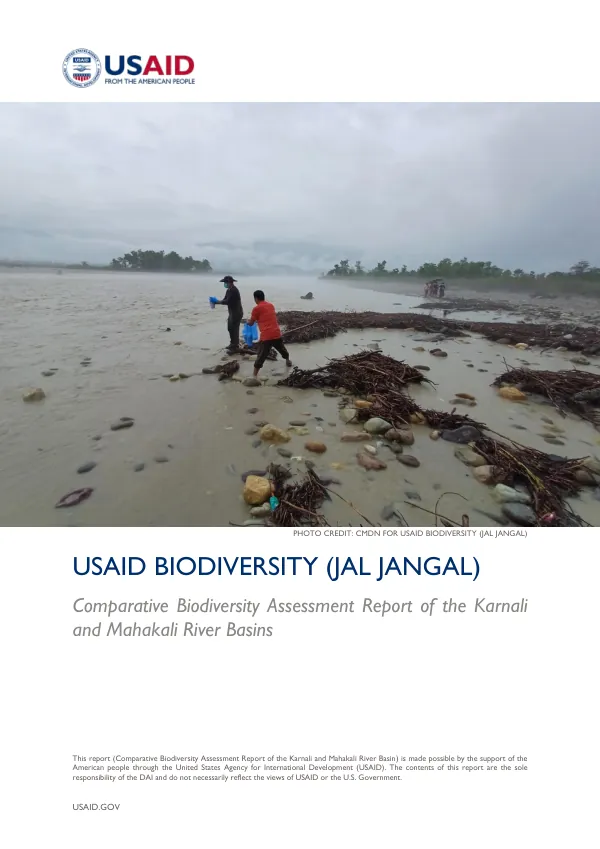
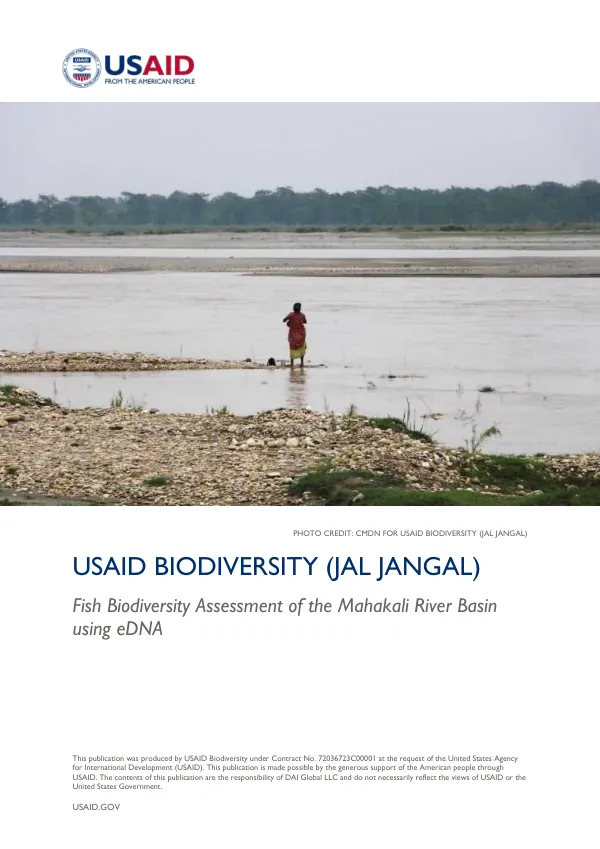
Fish Biodiversity Assessment of the Mahakali River Basin using eDNA
The Mahakali River Basin is a significant water resource shared by Nepal and India, and it is home to a diverse fish species.
2023 · 47 pages
Sign in to readA free account is required to download.
Abstract
The river's biodiversity faces various threats, and an effective conservation plan based on comprehensive assessment is urgently needed. The study used cutting-edge eDNA technology in conjunction with traditional voucher specimen collection to assess aquatic biodiversity of the river. A total of 19 different fish species were identified, along with one highly endangered species, Mahseer (Tor spp.), detected in all sampled sites. Mahseer is a known important and endangered migratory fish species, and detecting its eDNA provided evidence of its presence along the length of the river. From the same collected samples, other vertebrate species, including four amphibians, five birds, and 19 mammals, were also mapped, demonstrating eDNA as the most cost-effective tool to map biodiversity. The study also conducted several Focus Group Discussions (FGDs) and Key Informant Interviews (KII) to understand the socio-demographic dynamics of the communities living along the river basin. The feedback obtained through the FGDs and KIIs revealed that the overall fish population in the river has been declining over the years. Although Mahseer is a common fish, communities had limited awareness of its endangered status and hence were not involved in any conservation efforts. The study highlights the importance of community engagement to raise awareness of fish diversity and conservation, thereby encouraging them to safeguard biodiversity in and around the Mahakali River Basin. Nepal possesses 2.27 percent of the world's freshwater resources, as well as a significant portion of overall global biodiversity, including about 232 freshwater fish species. The country's aquatic habitats range from the plains of the Terai lowlands to the midhill terrains and the Himalayas, with approximately 59 species classified as cold-water fish. Fish diversity contributes to three percent of Nepal's total agricultural Gross Domestic Product (GDP), resulting in significant ecological, academic, and economic value. Environmental DNA (eDNA) is a genetic material obtained from the environment that can be assessed and profiled by molecular techniques to detect and identify species. eDNA has numerous applications, including trophic and community ecology, bio monitoring, conservation biology, invasion biology, and environmental assessment. As technology has improved and the capacity to identify and analyze genetic material in the environment has become more sophisticated, eDNA has become widely accepted as a reliable tool. The study builds comprehensive baseline information on the aquatic biodiversity of the Himalayan River basins through the use of novel eDNA technology. By comparing fish biodiversity information from other important river systems in Nepal, this project has qualitatively and quantitatively assessed fish presence and diversity and revealed the Mahakali River Basin as holding the most fish species and abundance next to the Karnali river basin.