USAID DEC
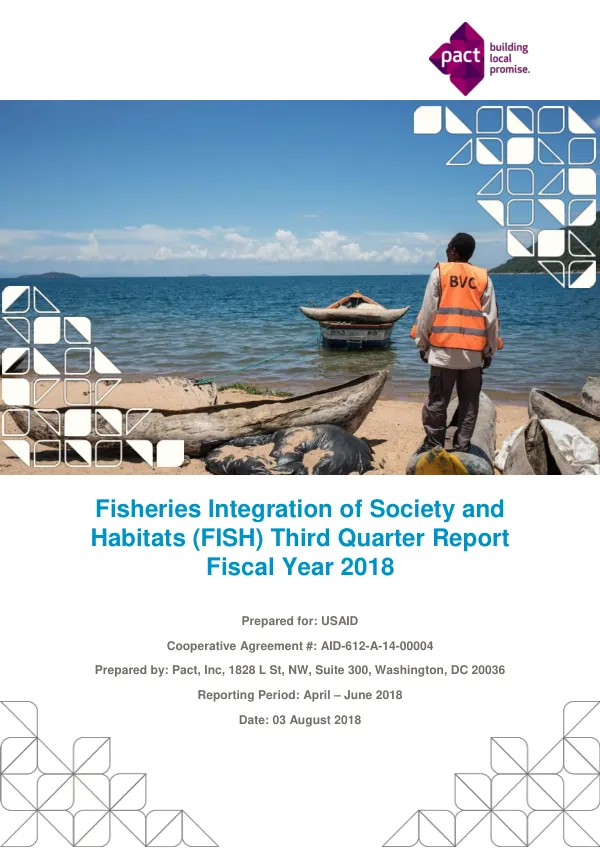
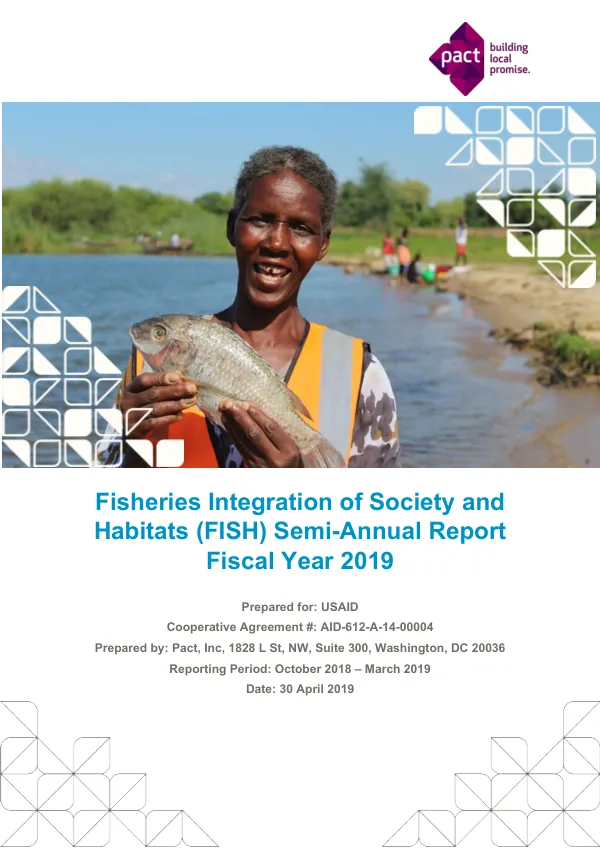
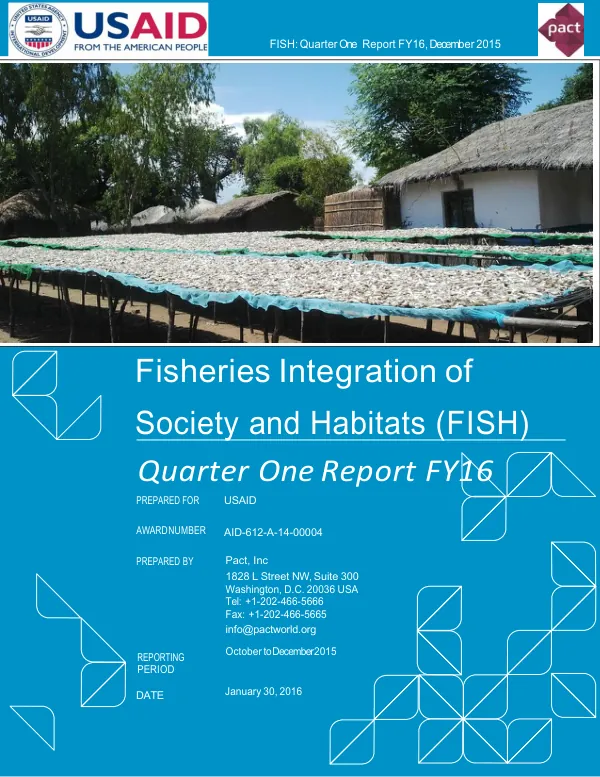
Fisheries Integration of Society and Habitats (FISH) Third Quarter Report Fiscal Year 2019
Sign inPACT
Fisheries Integration of Society and Habitats (FISH) Third Quarter Report Fiscal Year 2019
The FISHERIES INTEGRATION OF SOCIETY AND HABITATS (FISH) project, a five-year initiative, began in 2014 with a total obligated amount of US $16,092,473.
2019 · 44 pages
Sign in to readA free account is required to download.
Abstract
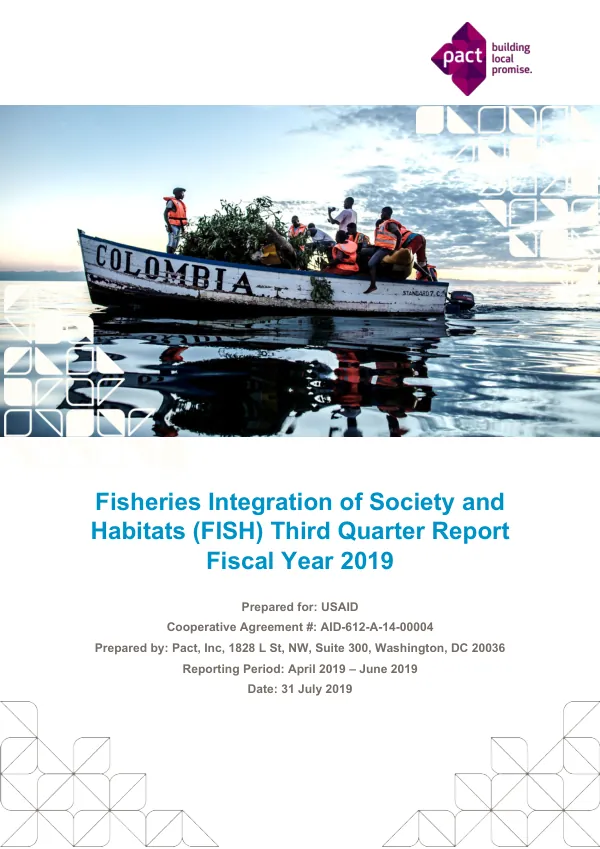
The project's primary focus is on enhancing resilience to climate change, conserving biodiversity, and promoting sustainable management of freshwater ecosystems in Malawi. The project is implemented by Pact, Inc., in partnership with the Malawi government and other stakeholders. During the third quarter of Fiscal Year 2019, the project continued to make progress in achieving its objectives. Output 1, which aims to increase the utilization of science, analysis, and information for decision-making, reported significant contributions to outcomes. The project's efforts in this area included the development of a fisheries management plan, which was endorsed by the Malawi government. The plan is expected to improve the management of freshwater ecosystems and promote sustainable fishing practices. Output 2, which focuses on enhancing the enabling environment for conservation and management of freshwater ecosystems, also made notable progress. The project worked with local communities to establish Beach Village Committees (BVCs), which are responsible for managing and conserving freshwater resources. The BVCs have been trained in sustainable fishing practices and are now equipped to monitor and manage their local fisheries. The project also supported the development of a fisheries management plan, which was endorsed by the Malawi government. Output 3, which aims to reduce priority threats to freshwater ecosystem biodiversity, reported significant progress. The project worked with local communities to establish protected areas, which are designed to conserve and protect freshwater ecosystems. The project also supported the development of a conservation plan, which was endorsed by the Malawi government. The plan is expected to improve the conservation of freshwater ecosystems and promote sustainable fishing practices. Output 4, which focuses on increasing the adoption of climate change adaptation measures that support the resilience of communities and freshwater ecosystems, also made notable progress. The project worked with local communities to develop and implement climate-resilient agriculture practices, which are designed to improve the resilience of communities to climate change. The project also supported the development of a climate change adaptation plan, which was endorsed by the Malawi government. The project also made progress in its DREAMS component, which aims to reduce the spread of HIV/AIDS among adolescent girls and young women. The project worked with local communities to establish peer mentorship programs, which are designed to promote healthy behaviors and reduce the risk of HIV/AIDS. The project also supported the development of a social and behavioral change communication strategy, which was endorsed by the Malawi government. In addition to its technical progress, the project also made significant progress in its management and financial aspects. The project's financial management system was audited, and the project's financial reports were submitted to USAID. The project also made significant progress in its human resource management, with the recruitment and training of new staff members. The project's environmental compliance and construction update also reported significant progress. The project's environmental management plan was reviewed and updated, and the project's construction activities were completed in accordance with the plan. The project also made significant progress in its monitoring and evaluation activities, with the collection and analysis of data on project outcomes and impacts. Overall, the FISH project made significant progress in the third quarter of Fiscal Year 2019, achieving its objectives and making a positive impact on the lives of local communities in Malawi. The project's focus on climate change adaptation, biodiversity conservation, and sustainable management of freshwater ecosystems has been instrumental in promoting the resilience of communities and conserving freshwater ecosystems. The project's success can be attributed to its strong partnerships with local communities, the Malawi government, and other stakeholders. The project's commitment to transparency, accountability, and good governance has also been instrumental in ensuring the project's success. The project's progress and achievements are a testament to the importance of collaborative efforts in promoting sustainable development and conserving natural resources. The project's planned activities for the fourth quarter of Fiscal Year 2019 include the completion of the project's final report, the submission of the project's financial reports to USAID, and the evaluation of the project's outcomes and impacts. The project's legacy will continue to benefit local communities in Malawi, promoting sustainable development and conserving natural resources for generations to come.