ACDI/VOCA
Food for Peace Contributions: Sierra Leone
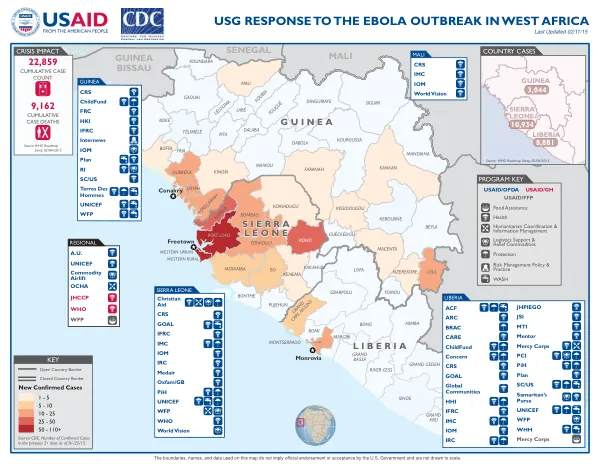
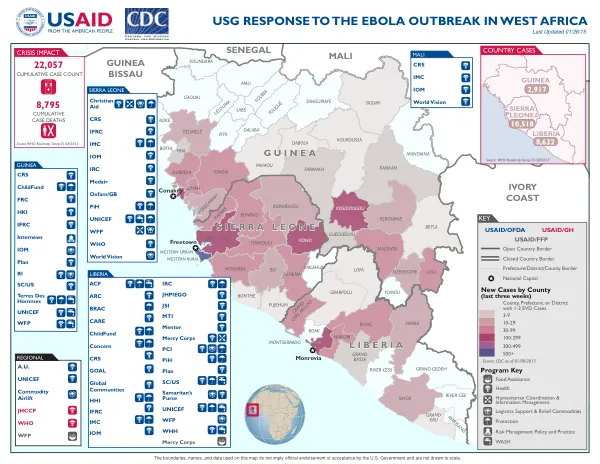
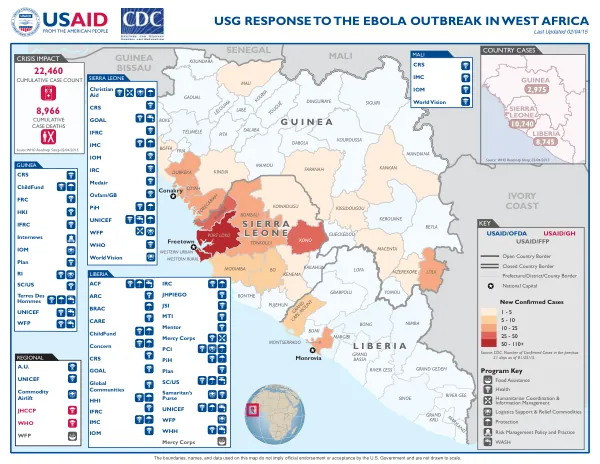
The 2014-2016 Ebola epidemic in Sierra Leone had severe health impacts and undermined food security throughout the country.
2018 · 1 pages
Sign in to readA free account is required to download.
Abstract
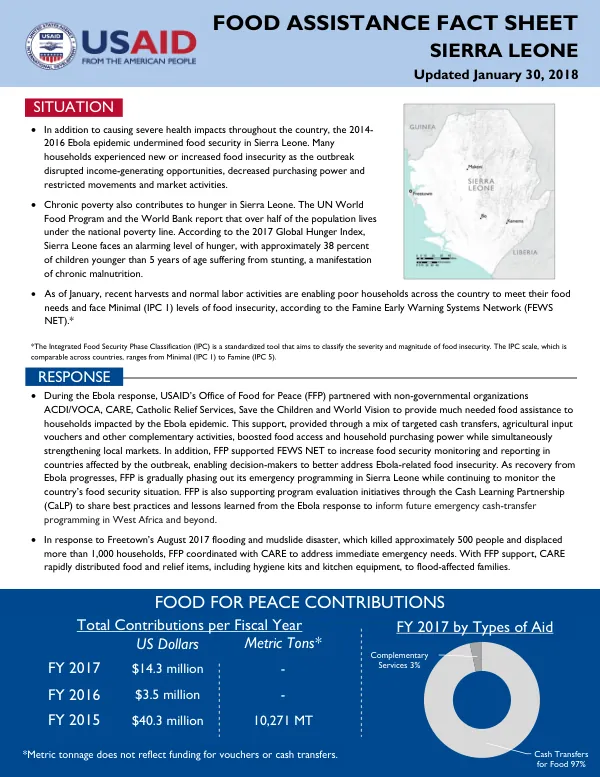
Many households experienced new or increased food insecurity due to the outbreak's disruption of income-generating opportunities, decreased purchasing power, and restricted movements and market activities. Chronic poverty also contributes to hunger in Sierra Leone. The UN World Food Program and the World Bank report that over half of the population lives under the national poverty line. According to the 2017 Global Hunger Index, Sierra Leone faces an alarming level of hunger, with approximately 38 percent of children younger than 5 years of age suffering from stunting, a manifestation of chronic malnutrition. Recent harvests and normal labor activities have enabled poor households across the country to meet their food needs and face Minimal (IPC 1) levels of food insecurity, according to the Famine Early Warning Systems Network (FEWS NET). The Integrated Food Security Phase Classification (IPC) is a standardized tool that aims to classify the severity and magnitude of food insecurity, with the IPC scale ranging from Minimal (IPC 1) to Famine (IPC 5). During the Ebola response, USAID's Office of Food for Peace (FFP) partnered with non-governmental organizations to provide much-needed food assistance to households impacted by the epidemic. This support, provided through a mix of targeted cash transfers, agricultural input vouchers, and other complementary activities, boosted food access and household purchasing power while simultaneously strengthening local markets. FFP also supported FEWS NET to increase food security monitoring and reporting in countries affected by the outbreak, enabling decision-makers to better address Ebola-related food insecurity. In response to Freetown's August 2017 flooding and mudslide disaster, FFP coordinated with CARE to address immediate emergency needs. With FFP support, CARE rapidly distributed food and relief items, including hygiene kits and kitchen equipment, to flood-affected families. FFP's contributions to Sierra Leone's food security situation include $14.3 million in FY 2017, $3.5 million in FY 2016, and $40.3 million in FY 2015, with a total of 10,271 metric tons of food assistance provided in FY 2015.