ICF
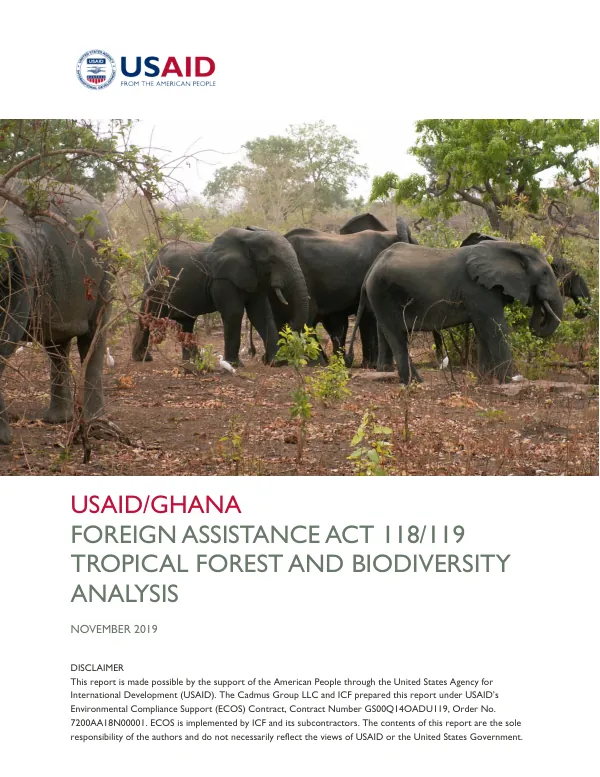
Foreign Assistance Act Sections 118/119 Tropical Forests and Biodiversity Analysis
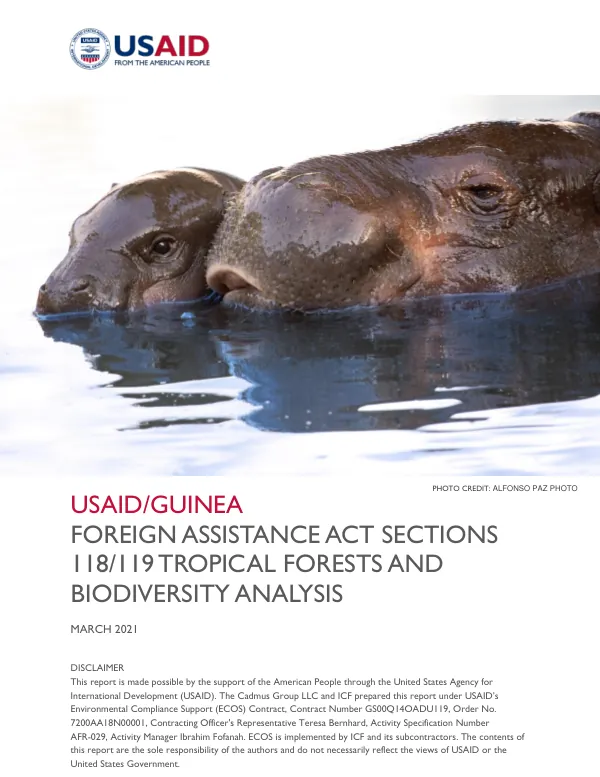
The tropical forests and biodiversity analysis in Guinea is a comprehensive report that assesses the status of the country's biodiversity, including tropical forests, and identifies key threats and drivers of these threats.
2021 · 116 pages
Sign in to readA free account is required to download.
Abstract
The report is prepared by The Cadmus Group LLC and ICF under the Environmental Compliance Support (ECOS) Contract with the United States Agency for International Development (USAID). Guinea's biodiversity is characterized by a diverse range of ecosystems, including tropical forests, savannas, and mangroves. The country is home to a rich array of plant and animal species, including many that are endemic to the region. However, Guinea's biodiversity is under threat from a range of direct and indirect drivers, including deforestation, habitat fragmentation, and climate change. The report identifies several key threats to Guinea's biodiversity, including the expansion of agriculture, urbanization, and infrastructure development. These activities are driven by a range of factors, including population growth, economic development, and climate change. The report also highlights the importance of addressing these threats through a range of actions, including promoting sustainable livelihoods, strengthening community governance systems, and developing and revising environmental laws and regulations. The report assesses the extent to which USAID programming contributes to actions necessary to conserve and protect Guinea's tropical forests and biodiversity. The analysis identifies several key areas where USAID programming can support conservation efforts, including promoting sustainable livelihoods, strengthening community governance systems, and developing and revising environmental laws and regulations. The report provides a range of recommendations for addressing the threats to Guinea's biodiversity, including promoting sustainable livelihoods, strengthening community governance systems, and developing and revising environmental laws and regulations. The report also highlights the importance of increasing accessibility and affordability of household and commercial energy alternatives to charcoal and fuelwood. The report concludes that Guinea's biodiversity is under significant threat from a range of direct and indirect drivers, including deforestation, habitat fragmentation, and climate change. However, the report also highlights the potential for USAID programming to support conservation efforts and promote sustainable livelihoods in and adjacent to areas of biodiversity importance. The report provides a range of recommendations for addressing the threats to Guinea's biodiversity and promoting sustainable development in the country. Guinea's tropical forests and biodiversity are critical components of the country's natural heritage and play a vital role in supporting the livelihoods of local communities. The report highlights the importance of addressing the threats to Guinea's biodiversity through a range of actions, including promoting sustainable livelihoods, strengthening community governance systems, and developing and revising environmental laws and regulations. The report's recommendations are aimed at supporting the development of a comprehensive conservation strategy for Guinea's tropical forests and biodiversity. The strategy should be based on a thorough understanding of the country's biodiversity, including its ecosystems, species, and genetic diversity. The strategy should also take into account the social and economic context of the country, including the needs and aspirations of local communities. The report's recommendations are also aimed at supporting the development of a results framework for USAID's conservation programming in Guinea. The results framework should be based on a clear understanding of the country's biodiversity and the key threats and drivers of these threats. The framework should also identify the key actions necessary to conserve and protect Guinea's tropical forests and biodiversity, including promoting sustainable livelihoods, strengthening community governance systems, and developing and revising environmental laws and regulations. Overall, the report provides a comprehensive assessment of Guinea's biodiversity, including tropical forests, and identifies key threats and drivers of these threats. The report also provides a range of recommendations for addressing the threats to Guinea's biodiversity and promoting sustainable livelihoods in and adjacent to areas of biodiversity importance.