USAID DEC
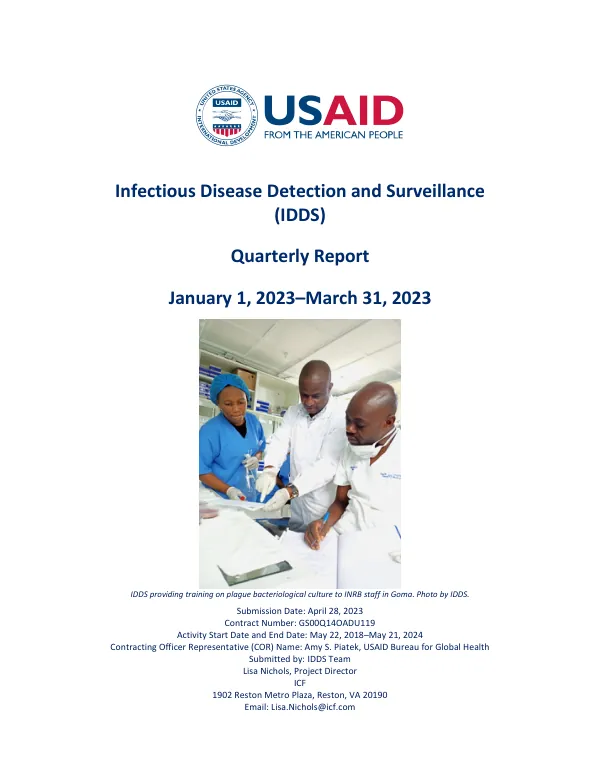
Functional Equipment Technical Approach for Infectious Disease Detection and Surveillance (IDDS)
Sign inUSAID
Functional Equipment Technical Approach for Infectious Disease Detection and Surveillance (IDDS)
A responsive, diagnostic network offers tiered services from the point of care to the national and supranational reference laboratory.
2019 · 3 pages
Sign in to readA free account is required to download.
Abstract
This network requires suitable working equipment in the right location to meet the needs of the diagnostic network. The systems and infrastructure needed to support functional diagnostic equipment are often lacking in many countries, leading to weak specimen referral systems and reduced network resilience against outbreaks. Infectious Disease Detection and Surveillance (IDDS) aims to support countries in strategically acquiring, maintaining, and using equipment throughout its lifecycle. IDDS works with partner countries in six main areas: inventory, needs analysis, selection and procurement, human resources, IDDS equipment procurement, and lifecycle management. The IDDS technical approach assists countries to identify essential and auxiliary equipment, as well as the need for new equipment, repair, or maintenance. This helps stakeholders develop a strategic equipment procurement, maintenance, and lifecycle strategy. The IDDS five-year technical approach will assist countries to identify existing equipment in the network and inform a strategic equipment procurement, maintenance, and lifecycle strategy. IDDS will provide technical assistance to address equipment needs, increase capacity for local maintenance, and proper use by equipment users. The approach includes providing training and selecting and procuring equipment through standardization and harmonization practices. IDDS will advise on equipment placement based on diagnostic network needs after conducting analyses. The result will be a maintained, sustainable diagnostic equipment network that supports ongoing surveillance for Global Health Security Agenda (GHSA) priority pathogens, antimicrobial resistance (AMR), and tuberculosis (TB). IDDS will assist country partners to establish an inventory of their diagnostic and safety equipment used for priority pathogen and AMR testing. Network equipment mapping will help with capacity planning, not only for routine needs, but also for the ability to surge in the event of an outbreak or to support testing at other testing laboratories. This approach will support country stakeholders to determine what equipment they have, including its location and operating status, and identify unmet equipment needs, including training, spare parts, and maintenance. An inventory and associated asset tracking system can be maintained by a country and updated in response to changing needs over time. An equipment needs analysis provides a system for determining, prioritizing, and addressing equipment needs. The findings of an equipment needs analysis inform equipment and resource allocations, which may include the reallocation of existing equipment, strategic acquisition of new equipment, changes in specimen referral systems, creation of rest plans, and implementation of training programs. IDDS will provide technical assistance to help country partners develop a strategic equipment assessment that can inform further equipment acquisition, deployment, and maintenance, as well as system strengthening efforts. IDDS will work with countries to standardize and select equipment through a standardized procurement process. IDDS will consider the full lifecycle during procurement, including technical requirements, setup, commissioning, maintenance, operating cost, calibration, performance evaluation, and decommissioned. IDDS will leverage its combined purchasing power whenever possible for all diagnostic equipment purchased. IDDS will also provide technical assistance and subject matter expertise to country stakeholders to develop sustainable and efficient equipment procurement plans that comply with applicable country regulations and best practices. IDDS will work with national partners to create national standardized policies, inclusive of priority pathogens and AMR platforms. After the equipment is selected, IDDS will support the implementation of robust and sustainable procurement plans by providing technical assistance and subject matter expertise to identify vendors, comply with applicable laws and regulations, and negotiate pricing and service packages. IDDS will also provide training for bioengineers to service equipment at all levels of the tiered network.