SEWALANKA FOUNDATION
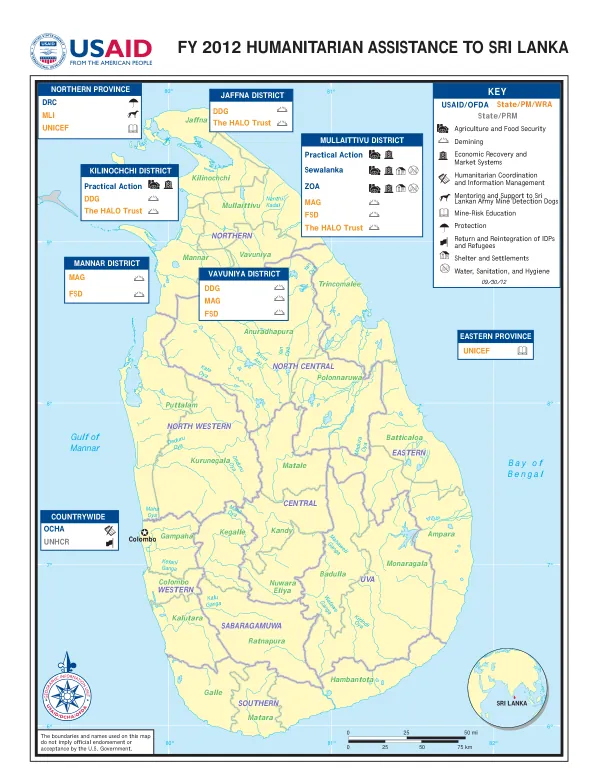
FY 2012 HUMANITARIAN ASSISTANCE TO SRI LANKA
The Sri Lankan government has implemented various initiatives to promote agricultural development and food security in the country.
2012 · 1 pages
Sign in to readA free account is required to download.
Abstract
The agricultural sector is a significant contributor to Sri Lanka's economy, with the majority of the population engaged in farming activities. The government has identified several key areas for improvement, including soil degradation, limited market access, and inadequate irrigation systems. The training programs have focused on sustainable agriculture techniques, including composting and crop rotation methods. Infrastructure development has been a key component of the agricultural development initiative, with a focus on irrigation systems and road networks. The government has invested in the construction of new irrigation canals and the rehabilitation of existing ones, with the aim of increasing crop yields and improving food security. Market linkage facilitation has also been a key area of focus, with the government working to establish stronger connections between farmers and markets. The government has also implemented various programs to support farmers, including the provision of credit and input subsidies. The programs have been implemented in collaboration with international organizations, including USAID and the United Nations. The government has also established a number of agricultural development centers, which provide training and support to farmers. The agricultural development initiative has been implemented in several districts across Sri Lanka, including the Eastern Province, the Northern Province, and the North Central Province. The initiative has been supported by a number of international organizations, including USAID, the United Nations, and the World Bank. The government has also received technical assistance from a number of countries, including the United States, Japan, and China. The initiative has made significant progress in improving agricultural productivity and food security in Sri Lanka. According to government reports, crop yields have increased significantly, and food security indicators have improved across the country. The initiative has also helped to reduce poverty and improve the livelihoods of farmers and their families. The government has also reported that the initiative has helped to promote economic growth and development in the country. The agricultural development initiative has been implemented in several phases, with the first phase focusing on the Eastern Province. The second phase has focused on the Northern Province, and the third phase has focused on the North Central Province. The initiative has been supported by a number of international organizations, including USAID, the United Nations, and the World Bank. The government has also received technical assistance from a number of countries, including the United States, Japan, and China.
Related documents