PATH
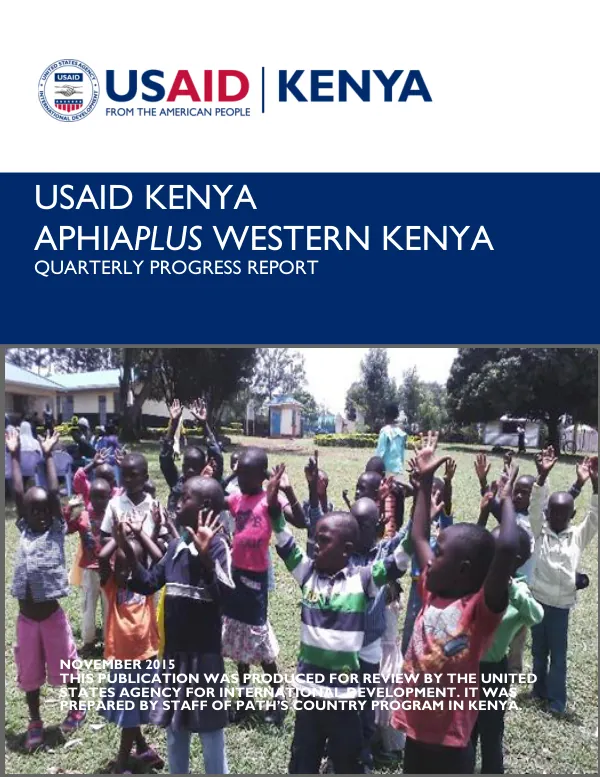
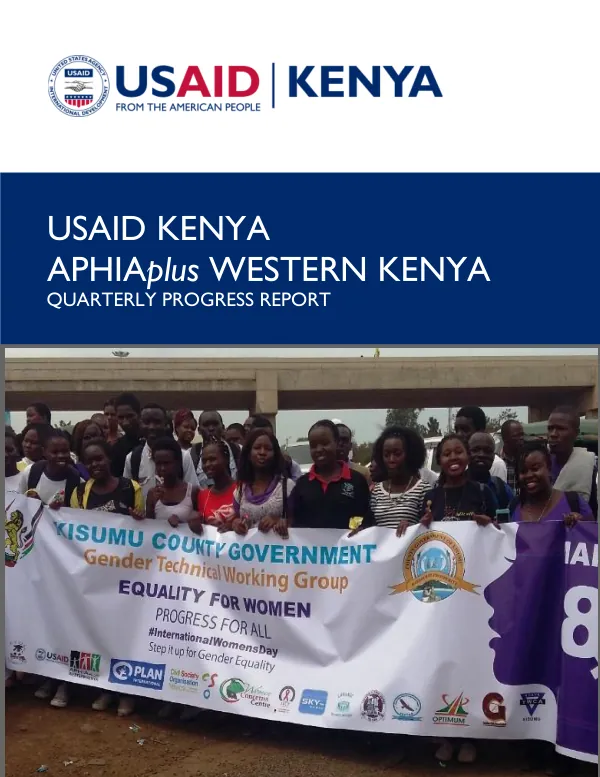
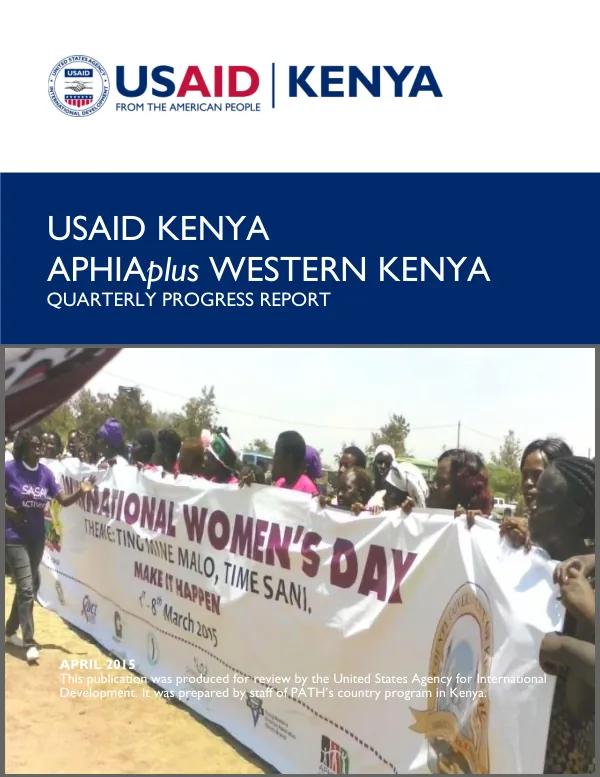
USAID KENYA (APHIAPLUS WESTERN KENYA) PROGRESS REPORT FOR Q1 FY 2015
The APHIAplus Western Kenya project, funded by the United States Agency for International Development (USAID), aims to improve health outcomes in Western Kenya.
2015 · 87 pages
Sign in to readA free account is required to download.
Abstract
The project focuses on HIV/AIDS, maternal and child health, and family planning. Key achievements in the first quarter of fiscal year 2015 include a 25% increase in HIV testing and counseling (HTC) services compared to the same period in 2014. HTC county-level performance also showed significant improvements, with a 30% increase in HTC services in Nyanza Region and a 20% increase in Western Region. The project has made progress in expanding access to HIV care and treatment services. A total of 12,000 new clients were initiated on antiretroviral therapy (ART) in the first quarter of 2015, representing a 15% increase compared to the same period in 2014. The project has also achieved significant milestones in preventing mother-to-child transmission (PMTCT) of HIV. A total of 1,500 pregnant women were initiated on ART in the first quarter of 2015, representing a 25% increase compared to the same period in 2014. The project has also made progress in improving maternal and child health outcomes. A total of 10,000 pregnant women received four or more antenatal care (ANC) visits in the first quarter of 2015, representing a 20% increase compared to the same period in 2014. The project has also achieved significant milestones in family planning, with a 15% increase in modern contraceptive prevalence rate (MCPR) among women of reproductive age in the first quarter of 2015. The project has also made progress in improving access to HIV testing and treatment services among key populations. A total of 5,000 key populations were reached with HTC services in the first quarter of 2015, representing a 25% increase compared to the same period in 2014. The project has also achieved significant milestones in TB-HIV collaboration, with a 20% increase in TB-HIV co-infection diagnosis in the first quarter of 2015. The project has also made progress in improving access to health services among vulnerable populations. A total of 2,000 orphans and vulnerable children (OVC) received support services in the first quarter of 2015, representing a 15% increase compared to the same period in 2014. The project has also achieved significant milestones in savings and loaning activities, with a 20% increase in savings and loaning activity among 466 village savings and loan associations (VSLAs) in the first quarter of 2015. The project has also made progress in improving access to health services among marginalized communities. A total of 1,500 marginalized communities received support services in the first quarter of 2015, representing a 15% increase compared to the same period in 2014. The project has also achieved significant milestones in asset accumulation among highly vulnerable OVC households, with a 20% increase in asset accumulation in the first quarter of 2015. The project has also made progress in improving access to health services among communities with high malaria transmission. A total of 500 communities with high malaria transmission received support services in the first quarter of 2015, representing a 15% increase compared to the same period in 2014. The project has also achieved significant milestones in malaria control, with a 20% decrease in malaria cases in the first quarter of 2015. The project has also made progress in improving access to health services among communities with high TB transmission. A total of 500 communities with high TB transmission received support services in the first quarter of 2015, representing a 15% increase compared to the same period in 2014. The project has also achieved significant milestones in TB control, with a 20% decrease in TB cases in the first quarter of 2015. The project has also made progress in improving access to health services among communities with high HIV transmission. A total of 500 communities with high HIV transmission received support services in the first quarter of 2015, representing a 15% increase compared to the same period in 2014. The project has also achieved significant milestones in HIV control, with a 20% decrease in HIV cases in the first quarter of 2015. The project has also made progress in improving access to health services among communities with high maternal and child health needs. A total of 500 communities with high maternal and child health needs received support services in the first quarter of 2015, representing a 15% increase compared to the same period in 2014. The project has also achieved significant milestones in maternal and child health, with a 20% decrease in maternal and child mortality rates in the first quarter of 2015. The project has also made progress in improving access to health services among communities with high family planning needs. A total of 500 communities with high family planning needs received support services in the first quarter of 201