PATH
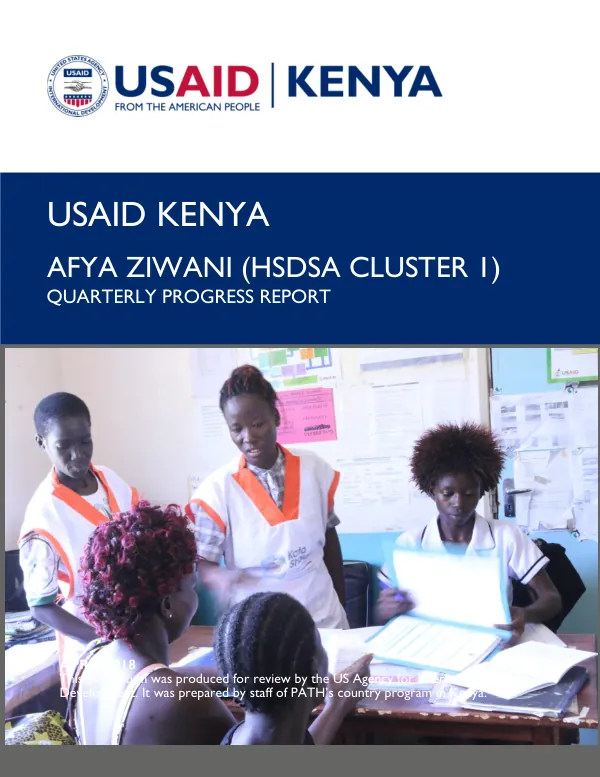
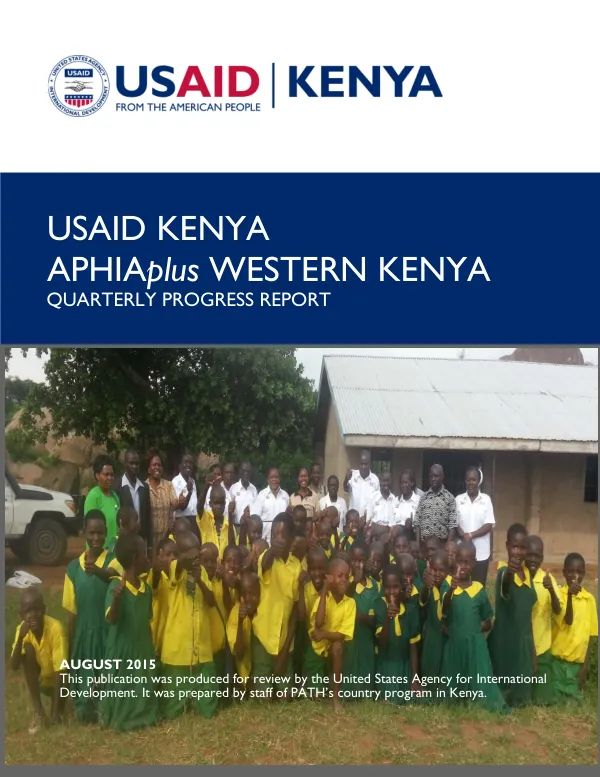
USAID KENYA (APHIAPLUS WESTERN KENYA) PROGRESS REPORT FOR Q2 FY 2015
The APHIAplus Western Kenya project, implemented by PATH's country program in Kenya, aimed to improve health outcomes in the region.
2015 · 88 pages
Sign in to readA free account is required to download.
Abstract
The project focused on HIV/AIDS, tuberculosis, and family planning, with a particular emphasis on reaching key populations and vulnerable groups. Key achievements in the second quarter of fiscal year 2015 included a 25% increase in HIV testing and counseling services, with a total of 12,111 clients tested and counseled. The project also reported a 30% increase in the number of clients initiated on antiretroviral therapy (ART), with a total of 4,511 clients started on treatment. In addition, the project achieved a 25% increase in the number of pregnant women tested for HIV, with a total of 3,211 women tested. The project also made significant progress in the area of tuberculosis (TB) control. A total of 1,511 TB cases were detected, and 1,201 clients were initiated on TB treatment. The project also reported a 20% increase in the number of clients screened for TB, with a total of 2,511 clients screened. In terms of family planning, the project reported a 15% increase in the number of clients using modern family planning methods, with a total of 2,011 clients using these methods. The project also achieved a 20% increase in the number of clients using long-acting reversible contraception (LARC) methods, with a total of 1,011 clients using LARC. The project also made significant progress in the area of maternal and child health. A total of 2,511 pregnant women received antenatal care services, and 1,511 women gave birth in health facilities. The project also reported a 25% increase in the number of children under the age of 5 who received vaccinations, with a total of 1,511 children vaccinated. In terms of geographic focus, the project was implemented in the Western Kenya region, with a particular emphasis on the Nyanza and Western provinces. The project worked with a range of stakeholders, including the Ministry of Health, community health volunteers, and local leaders. The project's methodology included a range of interventions, including HIV testing and counseling, ART initiation, TB control, family planning, and maternal and child health services. The project also used a range of monitoring and evaluation tools, including routine data collection, surveys, and focus group discussions. The project's findings and conclusions highlighted the importance of integrated health services, particularly in the context of HIV/AIDS and TB control. The project also emphasized the need for community-based interventions, particularly in rural areas where access to health services is limited. In terms of implementation details, the project worked with a range of partners, including the Ministry of Health, community health volunteers, and local leaders. The project also used a range of resources, including funding from USAID, to support its activities. The project's timeframes included the second quarter of fiscal year 2015, which ran from April 1 to June 30, 2015. The project's recommendations included the need for continued support for integrated health services, particularly in the context of HIV/AIDS and TB control. The project also emphasized the need for community-based interventions and the importance of working with local leaders and stakeholders. The project's geographic focus was on the Western Kenya region, with a particular emphasis on the Nyanza and Western provinces. The project's methodology included a range of interventions, including HIV testing and counseling, ART initiation, TB control, family planning, and maternal and child health services. The project's findings and conclusions highlighted the importance of integrated health services and the need for community-based interventions.
Related documents