LAND O'LAKES VENTURE37
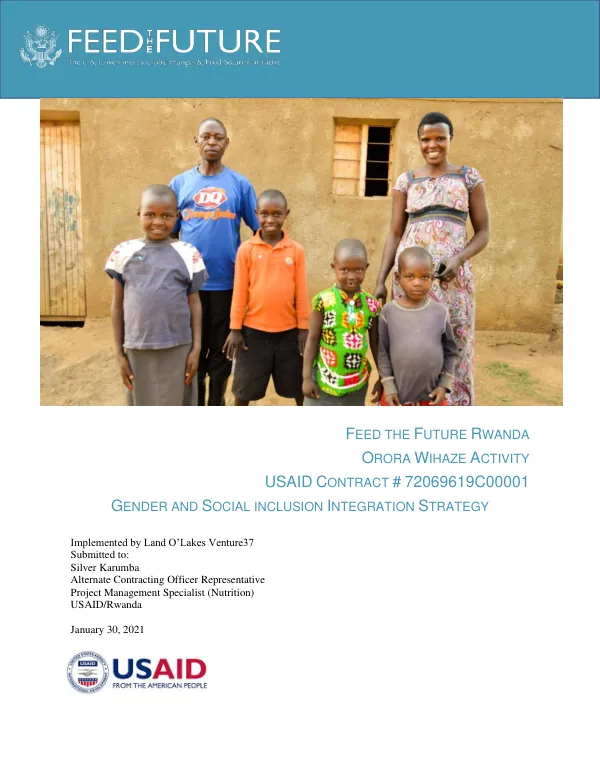
Gender and Social Inclusion Integration Strategy for the Orora Wihaze Activity
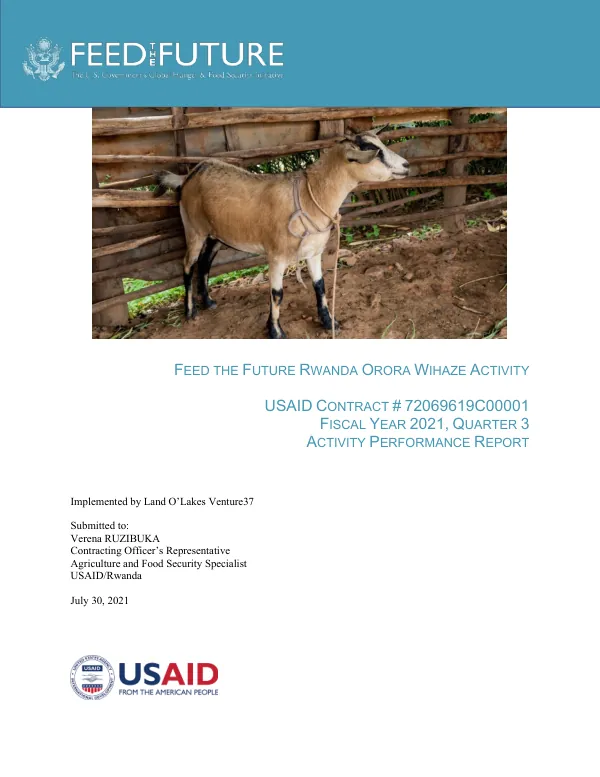
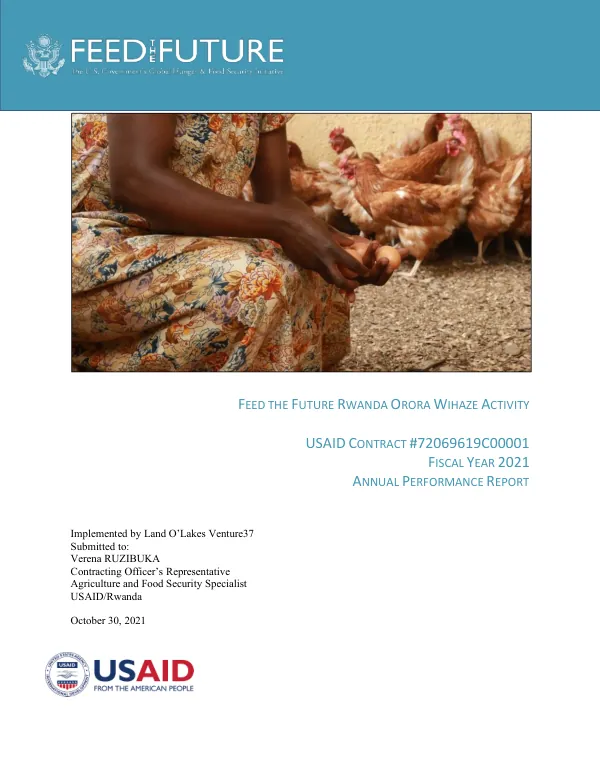
The Feed the Future Rwanda Orora Wihaze Activity is a 5-year project implemented by the USAID, with the goal of sustainably increasing the availability of, access to, and consumption of animal-sourced foods (ASF) through the development of a profitable market.
2021 · 46 pages
Sign in to readA free account is required to download.
Abstract
The project focuses on strengthening inclusive private sector-led ASF value chains, specifically small ruminants (goat and sheep), pigs, and chickens, and increasing demand for ASF consumption by women and children. The project targets ASF producer and consumer households in eight administrative districts in Rwanda, with a focus on women, youth, and people with disabilities. Rwanda has set ambitious goals to reach Middle Income Country (MIC) and High-Income Country (HIC) status by 2035 and 2050, respectively. The country's National Development Strategies emphasize the importance of addressing gender inequalities and promote gender equality and women's empowerment. The Revised National Gender Policy (2020) aims to improve gender equality and women's access to economic opportunities, and the Private Sector Gender Mainstreaming Strategy promotes gender equality in the private sector. The development of a Gender and Social Inclusion (GSI) integration strategy for the Orora Wihaze Activity is in line with the Government of Rwanda's development agenda and the USAID's development agenda for women, youth, and people with disabilities. The GSI integration strategy aims to contribute to the attainment of project objectives and provide an opportunity to engage different categories of the population across all project components. The project objectives are to achieve and strengthen an inclusive private sector-led ASF value chains and increase the demand for ASF consumption for women of reproductive age and children of 6-23 months. The Market Systems Baseline Study commissioned by Orora Wihaze found that women are primarily involved in caring for smaller livestock, such as poultry and goats, but have limited roles in decision-making around veterinary services and animal drugs. Few women are employed in the ASF system, despite being perceived as better at managing hygiene than men and young people. The study also noted that young people are motivated, dynamic, and available, but lack experience and reliability, and face barriers such as limited financial management capabilities and lack of start-up capital and land. The project will use a market system development (MSD) approach to integrate evidence-based social and behavior change (SBC) strategies across production, marketing, and nutrition interventions to stimulate a market system that better supports inclusive livestock value chains and ASF consumption. The project will also engage with local partners and various private sector actors in Rwanda to strengthen the ASF market system. The project's geographic focus is on eight administrative districts in Rwanda, with a focus on ASF producer and consumer households. The project's timeframes are not specified, but the project is expected to run for 5 years. The project's recommendations include the development of a GSI integration strategy to contribute to the attainment of project objectives and provide an opportunity to engage different categories of the population across all project components.