USAID
Gender And Youth-Sensitive Climate Vulnerability Capacity Assessment Report
The Titukulane project is an initiative aimed at enhancing climate resilience in the districts of Mangochi and Zomba.
2021 · 117 pages
Sign in to readA free account is required to download.
Abstract
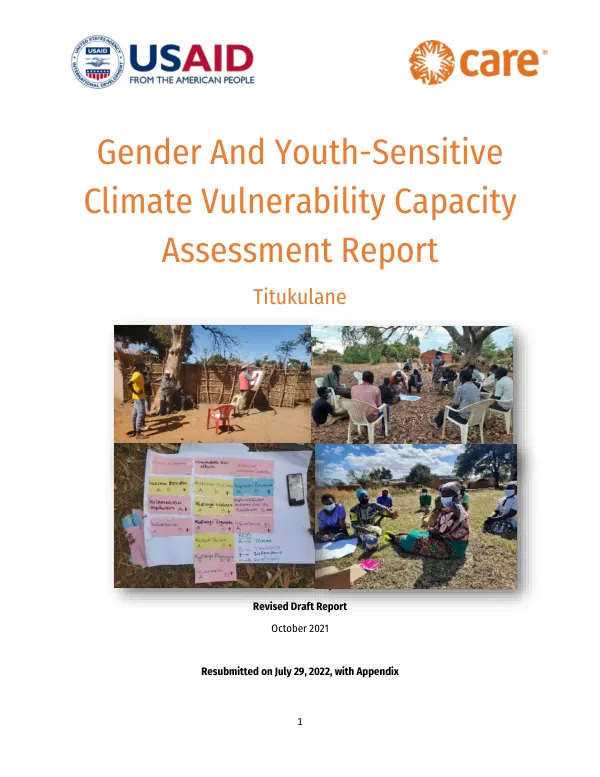
The project's inception phase involved an inception workshop, which brought together stakeholders to discuss the project's objectives and scope. The purpose of the analysis was to conduct a gender and youth-sensitive climate vulnerability capacity assessment to identify climate risks, vulnerabilities, and capacities in the target areas. The methodology employed in the study included secondary data collection, primary data collection, and data analysis. Secondary data collection involved reviewing existing literature and reports on climate change, climate risks, and resilience capacities in the study areas. Primary data collection involved conducting key informant interviews, focus group discussions, and thematic areas for data collection. The sampling frame consisted of 15 communities in Mangochi and Zomba districts, with a total of 150 households and 300 individuals participating in the study. The study identified several climate risks and impacts in the study areas, including drought, floods, and temperature fluctuations. The study also found that women and youth are disproportionately affected by climate change, with women facing challenges in accessing climate information and resources, while youth face barriers in accessing education and employment opportunities. The study highlighted the need for early warning systems, insurance services, and safety nets to enhance climate resilience in the study areas. The study also examined the existing adaptive, absorptive, and transformative resilience capacities and barriers in the study areas. The study found that early warning systems are effective in mitigating climate risks, while insurance services are limited due to high premiums and lack of access to insurance products. The study also found that women and youth face challenges in accessing decision-making processes and resources, which hinders their ability to adapt to climate change. The study identified several options and actions for increasing climate resilience in the study areas, including the establishment of early warning systems, insurance services, and safety nets. The study also recommended the allocation of DRM funds to support climate resilience initiatives and the promotion of cultural norms and practices that support climate resilience. The study also highlighted the need for internal and external actions to deal with COVID-19, including the provision of health services, economic support, and social protection measures. The study concluded that climate change poses significant risks to the livelihoods of women and youth in Mangochi and Zomba districts. The study recommended the implementation of climate-resilient agriculture practices, the promotion of early warning systems, and the provision of insurance services to enhance climate resilience in the study areas. The study also recommended the allocation of DRM funds to support climate resilience initiatives and the promotion of cultural norms and practices that support climate resilience. The study identified several indicators of resilience across gender and age groups, including access to climate information, education, and employment opportunities. The study also found that women and youth face challenges in accessing decision-making processes and resources, which hinders their ability to adapt to climate change. The study recommended the promotion of women's and youth's participation in decision-making processes and the provision of resources and support to enhance their resilience capacities. The study also examined the COVID-19 pandemic and its impacts on the study areas. The study found that the pandemic has exacerbated climate-related vulnerabilities, particularly for women and youth. The study recommended the provision of health services, economic support, and social protection measures to mitigate the impacts of COVID-19 on the study areas.
Related documents