USAID
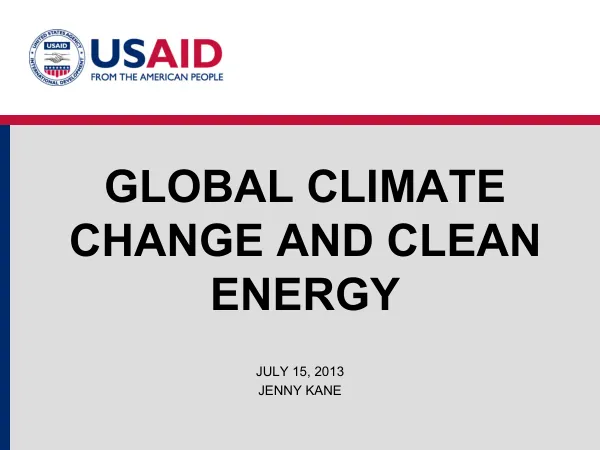
Global Climate Change and Clean Energy
The Global Climate Change and Clean Energy course is a comprehensive training program that aims to equip participants with knowledge and skills to integrate clean energy into development sectors.
2013 · 245 pages
Sign in to readA free account is required to download.
Abstract
The course is designed to address the challenges of climate change and promote economic development. The training program is structured around several key themes, including decoupling energy consumption and economic growth, energy efficiency, and leveraging investments in clean energy. The course focuses on the role of clean energy in promoting economic development and mitigating greenhouse gas emissions. It emphasizes the importance of Low Emission Development Strategies (LEDS) and Nationally Appropriate Mitigating Actions (NAMAs) in addressing climate change. The training program also highlights the potential of clean energy to improve living standards, particularly in rural areas. One of the key objectives of the course is to enable participants to describe the impact of energy consumption on economic development and the role of clean energy in promoting economic development. The training program covers various topics, including off-grid energy, energy efficiency, and low-carbon development strategies. The course also emphasizes the importance of creating an enabling environment for investments in clean energy. The training team consists of experienced trainers, including Jenny Ogonowski, Gwen Andersen, Todd Johnson, and Aieysha Kayani. The course is designed to be interactive, with participants encouraged to engage in discussions and prepare flip charts to illustrate their understanding of the topics covered. The course covers several key areas, including: - Decoupling energy consumption and economic growth - Energy efficiency - Leveraging investments in clean energy - Low Emission Development Strategies (LEDS) - Nationally Appropriate Mitigating Actions (NAMAs) The training program also highlights the potential of clean energy to improve living standards, particularly in rural areas. The course emphasizes the importance of creating an enabling environment for investments in clean energy and promoting economic development. The training program is designed to be flexible, with participants encouraged to engage in discussions and prepare flip charts to illustrate their understanding of the topics covered. The course covers various topics, including off-grid energy, energy efficiency, and low-carbon development strategies. The training program is structured around several key themes, including decoupling energy consumption and economic growth, energy efficiency, and leveraging investments in clean energy. The course emphasizes the importance of Low Emission Development Strategies (LEDS) and Nationally Appropriate Mitigating Actions (NAMAs) in addressing climate change. The training program also highlights the potential of clean energy to improve living standards, particularly in rural areas. The course emphasizes the importance of creating an enabling environment for investments in clean energy and promoting economic development. The training program is designed to be interactive, with participants encouraged to engage in discussions and prepare flip charts to illustrate their understanding of the topics covered. The training program is designed to equip participants with the knowledge and skills to integrate clean energy into development sectors. The course emphasizes the importance of creating an enabling environment for investments in clean energy and promoting economic development. The training program is structured around several key themes, including decoupling energy consumption and economic growth, energy efficiency, and leveraging investments in clean energy.