THE WORLD RESOURCES INSTITUTE
Greenhouse Gas Emissions in Egypt
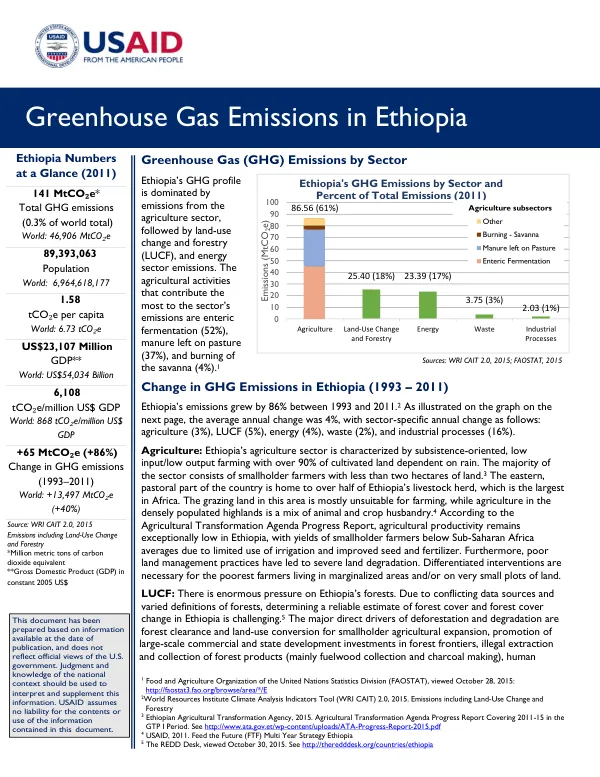
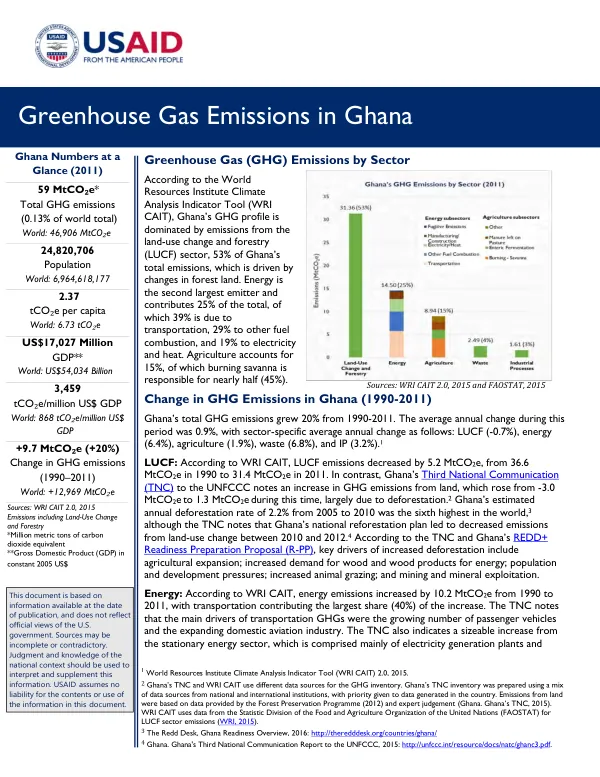
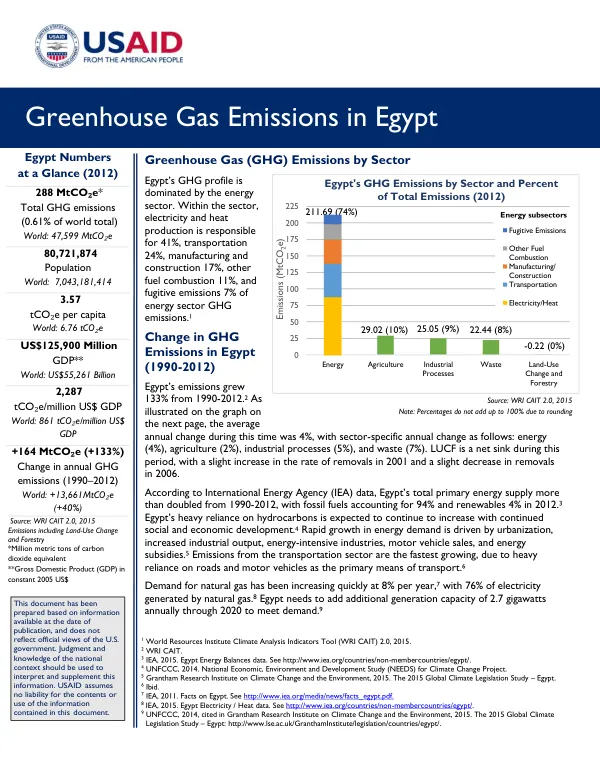
Egypt's greenhouse gas (GHG) emissions profile is dominated by the energy sector, which accounts for 41% of total GHG emissions.
2015 · 2 pages
Sign in to readA free account is required to download.
Abstract
Within the energy sector, electricity and heat production is responsible for 41%, transportation for 24%, manufacturing and construction for 17%, other fuel combustion for 11%, and fugitive emissions for 7%. The energy sector's share of GHG emissions is expected to continue increasing due to Egypt's heavy reliance on hydrocarbons and rapid growth in energy demand driven by urbanization, increased industrial output, and energy-intensive industries. Egypt's total GHG emissions grew by 133% from 1990 to 2012, with an average annual change of 4%. The energy sector's emissions grew at a rate of 4% per year, while agriculture, industrial processes, and waste emissions grew at rates of 2%, 5%, and 7% per year, respectively. Land-use change and forestry (LUCF) is a net sink, with a slight increase in the rate of removals in 2001 and a slight decrease in removals in 2006. Egypt's total primary energy supply more than doubled from 1990 to 2012, with fossil fuels accounting for 94% and renewables for 4% in 2012. The country's heavy reliance on hydrocarbons is expected to continue, driven by urbanization, increased industrial output, and energy-intensive industries. Emissions from the transportation sector are the fastest growing, due to the heavy reliance on roads and motor vehicles as the primary means of transport. Egypt's GHG emissions per capita are 3.57 tCO₂e, which is lower than the world average of 6.76 tCO₂e. The country's GDP grew from US$49.5 billion to US$125.9 billion from 1990 to 2012, with a faster rate of growth than total GHG emissions. This suggests that the carbon intensity of the economy in 2012 had decreased relative to 1990. Egypt's Climate Change Risk Management Programme asserts that the country is moving towards a less GHG-intensive path mainly by becoming a more energy-efficient economy and increasing the utilization of its large renewable energy potential. Egypt has not yet submitted its Intended Nationally Determined Contribution and has not expressed national GHG mitigation targets. However, the country's national initiatives, including the Climate Change Risk Management Programme, the New National Renewable Energy Strategy, the National Environmental, Economic and Development Study for Climate Change, and the National Energy Efficiency Action Plan for Egypt, create a national GHG mitigation portfolio to support sustainable development. These initiatives aim to promote renewable energy resources, energy efficiency, and sustainable development, which are consistent with Egypt's long-term development goals.
Related documents