ICF
USAID/Egypt Foreign Assistance Act Section 119 Biodiversity Analysis
The USAID/Egypt Foreign Assistance Act Section 119 Biodiversity Analysis was prepared by The Cadmus Group LLC and ICF in August 2020.
2020 · 114 pages
Sign in to readA free account is required to download.
Abstract
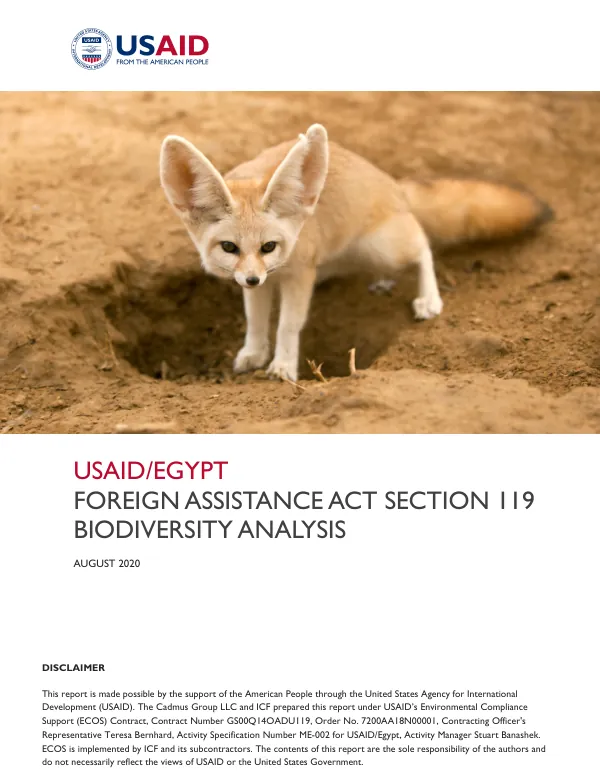
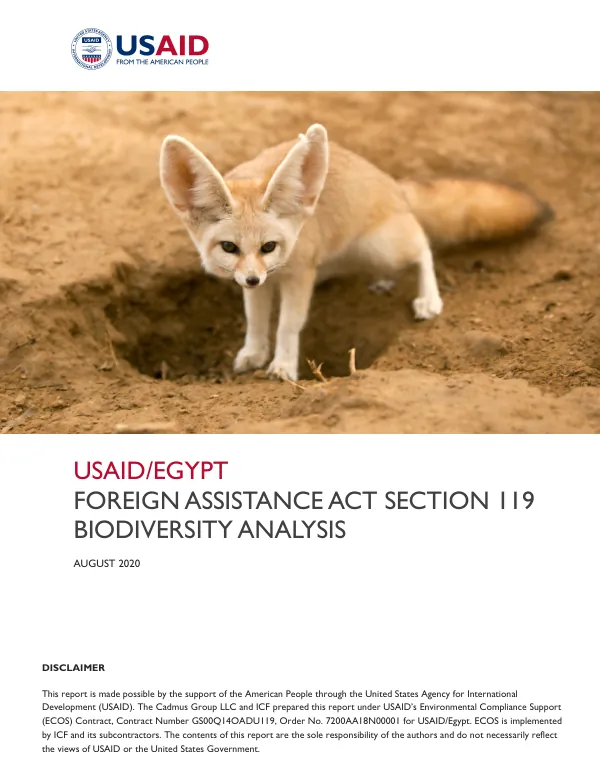
The analysis team consisted of Mahmoud Hanafy, Karim Omar, Paola Bernazzani, Jaime Capron, Jesse Gibson, Daniela Kaegi, and Michael Minkoff (Team Lead). Egypt's biodiversity is characterized by a diverse range of ecosystems, including deserts, oases, and Nile River delta wetlands. The country is home to a wide variety of plant and animal species, including the fennec fox, which is found in North Africa from Morocco to Egypt. However, Egypt's biodiversity is under threat from various drivers, including habitat destruction, overgrazing, and climate change. The analysis identified several key threats to biodiversity in Egypt, including direct threats such as overfishing, overhunting, and pollution, as well as indirect threats such as land degradation, water scarcity, and climate change. The drivers of these threats include population growth, urbanization, and economic development. The analysis also assessed the extent to which USAID/Egypt contributes to actions necessary to address these threats. The results showed that USAID/Egypt has made significant contributions to conservation efforts in Egypt, including the establishment of protected areas, the development of conservation plans, and the implementation of sustainable land management practices. Based on the analysis, the report provides several high-priority recommendations for USAID/Egypt, including the development of a national biodiversity strategy, the establishment of a biodiversity fund, and the implementation of sustainable agriculture practices. The report also identifies opportunities for cross-sectoral and integrated conservation initiatives, including the development of a national conservation plan and the establishment of a biodiversity monitoring system. The analysis team used a range of methodologies, including literature reviews, field observations, and stakeholder engagement, to gather data and information on Egypt's biodiversity and the drivers of threats to it. The report provides a comprehensive overview of Egypt's biodiversity and the actions necessary to address the threats it faces. Egypt's biodiversity is also characterized by a range of ecosystem goods and services, including water filtration, soil formation, and climate regulation. The country's natural resources, including its forests, grasslands, and wetlands, provide a range of economic benefits, including timber, fuelwood, and tourism. The legal framework affecting conservation in Egypt includes national laws, policies, and strategies, as well as international agreements. The country has ratified several international agreements relevant to conservation, including the Convention on International Trade in Endangered Species of Wild Fauna and Flora (CITES) and the Convention on Biological Diversity (CBD). The institutional setting and government agencies involved in conservation in Egypt include the Ministry of Environment, the Ministry of Agriculture, and the Egyptian Environmental Affairs Agency. The report identifies several conservation initiatives, including the establishment of protected areas, the development of conservation plans, and the implementation of sustainable land management practices. The analysis also provides a gap analysis of conservation initiatives in Egypt, identifying areas where further action is needed. The report provides a comprehensive overview of Egypt's biodiversity and the actions necessary to address the threats it faces, and provides several high-priority recommendations for USAID/Egypt.