USAID DEC
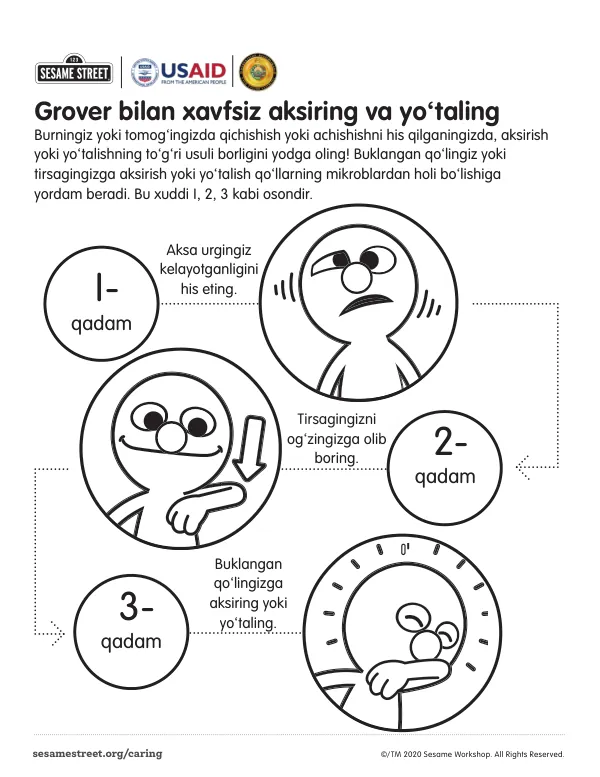
Grover bilan xavfsiz aksiring va yo‘taling
The Sesame Workshop's 2020 publication provides guidance on proper handwashing techniques to prevent illness.
2020 · 1 pages
Sign in to readA free account is required to download.
Abstract
The document emphasizes the importance of hand hygiene in everyday life, particularly in situations where individuals may be exposed to germs. The recommended handwashing procedure involves three simple steps. The first step involves wetting the hands with water, followed by applying soap. The second step requires scrubbing all surfaces of the hands, including the backs of the hands, wrists, and between the fingers. The third step involves rinsing the hands thoroughly with water to remove any soap residue. Proper handwashing is essential in preventing the spread of illnesses. When hands are not washed regularly, germs can multiply and cause infections. The document highlights the importance of handwashing in everyday situations, such as after using the bathroom, before eating, and after blowing one's nose, coughing or sneezing. The Sesame Workshop's publication also emphasizes the importance of teaching children proper handwashing techniques. By following the simple steps outlined in the document, children can develop good hygiene habits that will benefit them throughout their lives. The document provides a clear and concise guide for parents and caregivers to teach children the importance of handwashing. The recommended handwashing technique is a simple and effective way to prevent the spread of illnesses. By following the three-step process outlined in the document, individuals can help keep themselves and those around them healthy. The Sesame Workshop's publication provides a valuable resource for promoting good hygiene habits and preventing the spread of illnesses.