FHI 360
HC4L YR 2 QTR 2 Report Jan-March 18
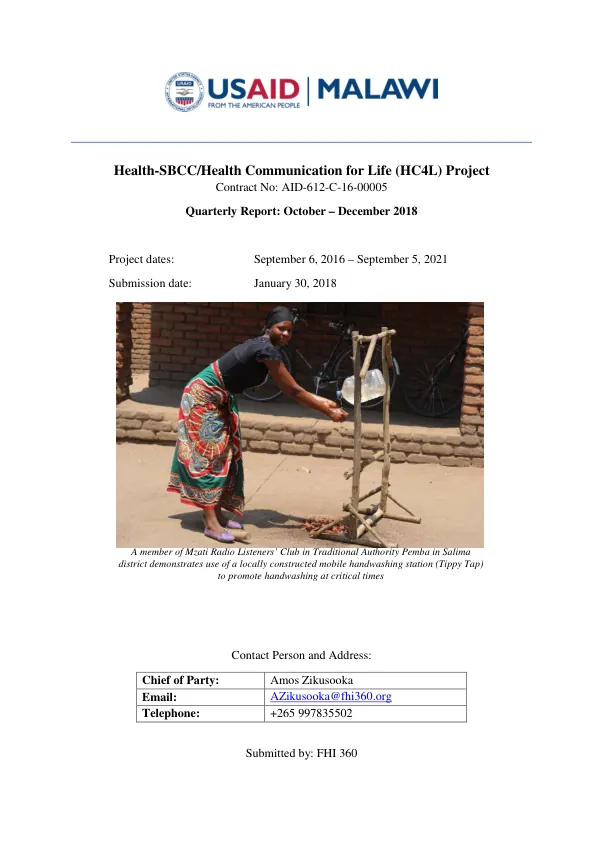
The Health-SBCC/Health Communication for Life (HC4L) Project is a five-year initiative funded by USAID/Malawi, with a contract period from September 6, 2016, to September 5, 2021.
2018 · 37 pages
Sign in to readA free account is required to download.
Abstract
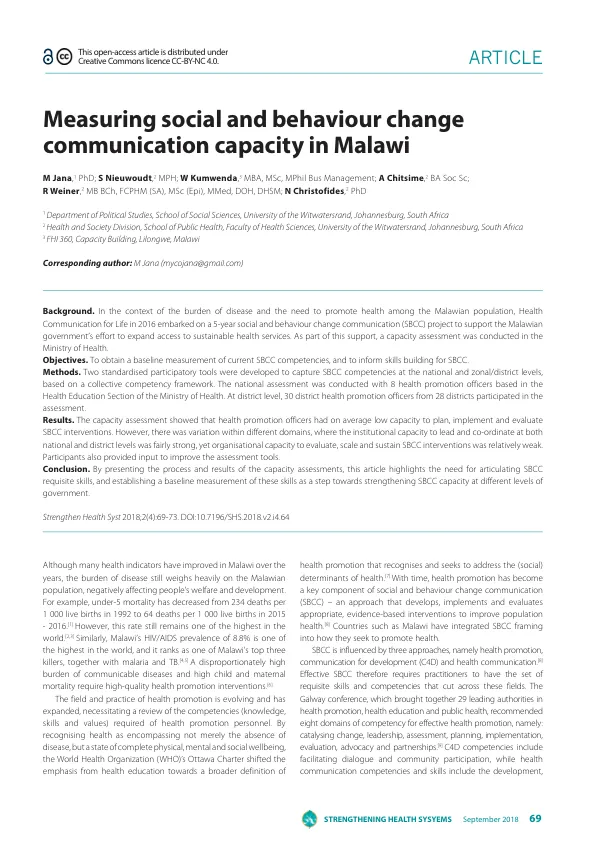
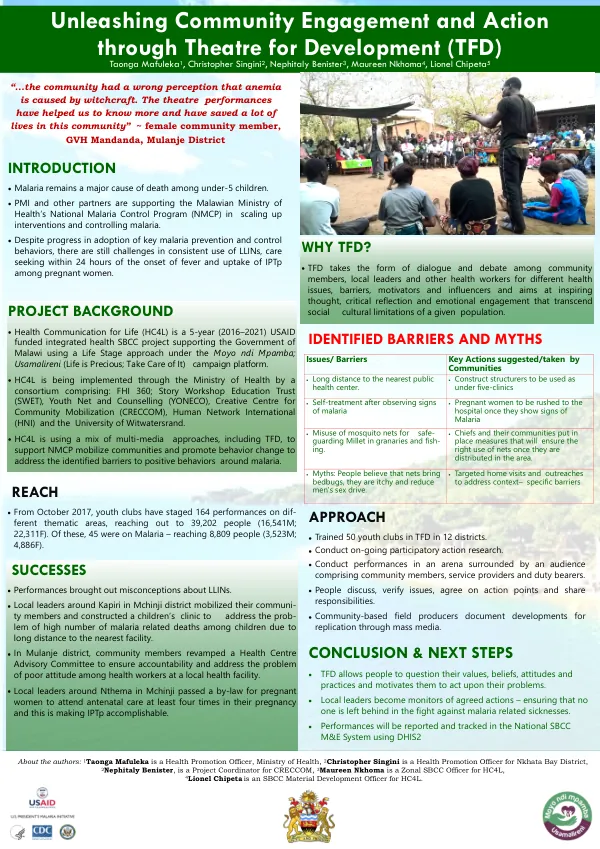
The project aims to improve the health and well-being of Malawians through mass media communication campaigns and capacity strengthening programs for the Government of Malawi to lead national Social and Behavior Change Communication (SBCC) programming. HC4L is working with the Ministry of Health's Health Education Section (HES) to improve health behaviors in areas such as family planning/reproductive health (FP/RH), HIV/AIDS, water, sanitation, and hygiene (WASH), nutrition, maternal, neonatal and child health (MNCH), malaria, misuse of government resources in the health sector, and food safety and aflatoxins management. During the quarter of January to March 2018, key achievements included the continued development of SBCC interventions to identify and address barriers, motivators, and influencers for adoption of various health behaviors. Targeted broadcasting and dissemination of audio and print SBCC materials reached approximately nine million people through radio and over 70,000 people through targeted community activities. In response to the Cholera outbreak, HC4L intensified radio and interpersonal communication (IPC) messaging, producing and disseminating 100,000 leaflets to facilitate rapid community mobilization and action, and broadcasting a total of 8,100 radio exposures on 23 radio stations across the country. The project's four Intermediate Results (IRs) are focused on improving health-seeking practices, government capacity to lead SBCC programming, capacity of key institutional partners to design, implement, and evaluate high-quality SBCC activities, and improved use of data for decision making in SBCC. Under IR 1: HEALTH SEEKING PRACTICES IMPROVED, HC4L developed SBCC interventions to address key barriers, motivators, and influencers for adoption of various health behaviors. The project disseminated SBCC materials and messages through radio and community activities, reaching a large audience. Under IR 2: GOVERNMENT'S CAPACITY TO LEAD SBCC PROGRAMMING, HC4L provided capacity strengthening programs for the Government of Malawi to lead national SBCC programming. The project developed SBCC courses for the next four months, mentored and coached Health Promotion Officers (HPOs) through the "Set for Change" program, and coordinated and quality assured SBCC activities through Technical Working Group (TWG) meetings. Under IR 3: CAPACITY OF KEY INSTITUTIONAL PARTNERS TO DESIGN, IMPLEMENT, AND EVALUATE HIGH-QUALITY SBCC ACTIVITIES IMPROVED, HC4L strengthened the capacity of Civil Society Organizations (CSOs) to design, implement, and evaluate high-quality SBCC activities. Under IR 4: IMPROVED USE OF DATA FOR DECISION MAKING IN SBCC, HC4L established a functional National SBCC Monitoring and Evaluation (M&E) system, created an audience feedback loop for the Moyo ndi Mpamba campaign, and developed a dashboard to promote data use for decision making. The project also conducted site visits, including a USAID Joint WASH Field Visit and a Contracting Officer's Representative (COR) site visit, to assess project progress and provide technical assistance. Challenges and lessons learned during the quarter included the need for intensified capacity strengthening programs for the Government of Malawi and key institutional partners, as well as the importance of establishing a functional National SBCC M&E system.