AVENIR HEALTH
Health Policy Plus: Indonesia
Health Policy Plus (HP+) is a five-year project funded by the U.S.
2018 · 2 pages
Sign in to readA free account is required to download.
Abstract
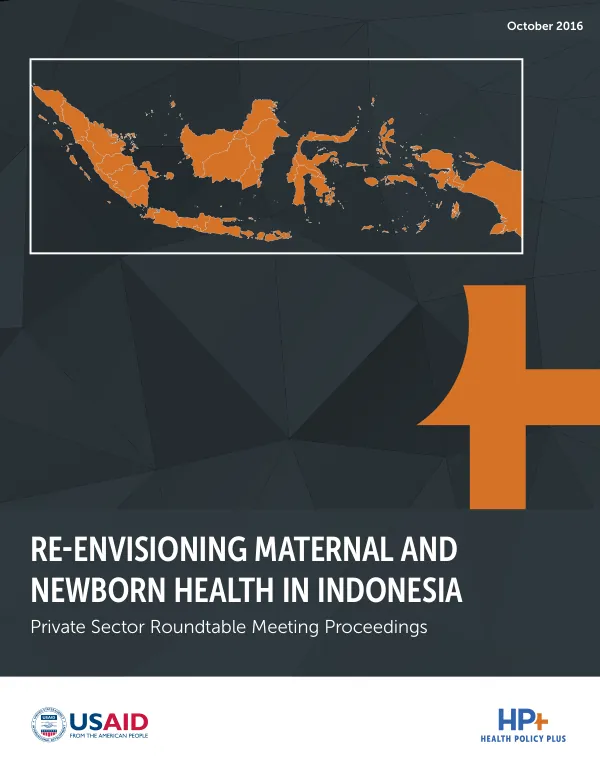
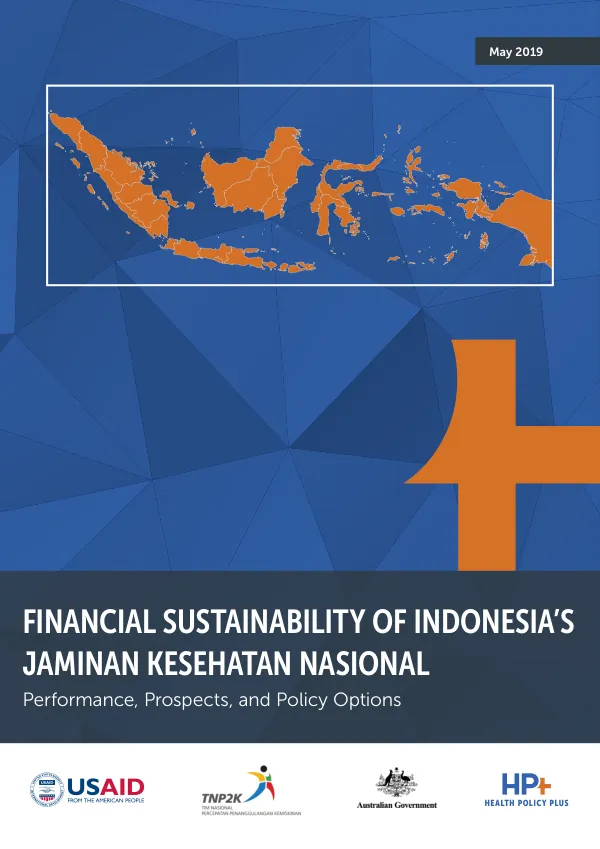
Agency for International Development (USAID) and implemented by a consortium of partners, led by Palladium. The project's HIV activities are supported by the U.S. President's Emergency Plan for AIDS Relief (PEPFAR). HP+ works globally to strengthen and advance health policy to improve the enabling environment for equitable and sustainable health services, supplies, and delivery systems in the areas of family planning and reproductive health, HIV, and maternal health. In Indonesia, HP+ is generating critical data and evidence in close partnership with the government to improve maternal and newborn health, HIV, and health financing programs and outcomes. HP+ practices "learning by doing" to develop the capacity of government partners, ensuring that skills, tools, approaches, and methodologies are embedded for sustained use. The project's work in Indonesia focuses on maternal and newborn health data analytics, national and subnational HIV costing, and a comprehensive assessment of the national health insurance scheme. Maternal and newborn health remains a critical issue in Indonesia, with the country not meeting its related Millennium Development Goal targets. HP+ has conducted a landscape assessment on the role of the private sector and civil society in improving maternal and newborn health in Indonesia. The project is continuing to contribute to the knowledge base on determinants of maternal and newborn health outcomes in Indonesia using data analytics in close partnership with the Ministry of Health's Research Institute (Badan Litbang Kemenkes, or Balitbangkes). This work includes analyzing maternal and newborn risk factors across the "three delays model," a framework commonly used to describe how delays in the decision to seek care, reaching care, and receiving adequate treatment contribute to severe maternal and neonatal outcomes. HP+ is also supporting the government to generate comprehensive HIV resource needs estimates by province and to examine potential HIV financing options through improved integration with the national health insurance scheme and increased local government financing. The project is working with civil society organizations to create a budget advocacy tool for local government financing of key HIV prevention and outreach services. In addition, HP+ is conducting a comprehensive assessment of Indonesia's national health insurance scheme, Jaminan Kesehatan Nasional (JKN), in partnership with the National Team for the Acceleration of Poverty Reduction (Tim Nasional Percepatan Penanggulangan Kemiskinan, or TNP2K). The project has developed analytical tools and generated evidence related to the impact of JKN on the health system, patients, the private sector, and the economy to inform resource mobilization and efficiency improvements in health finance. HP+ is providing highly focused technical assistance to Indonesia's National Social Security Council (Dewan Jaminan Sosial Nasional, or DJSN) to build its capacity to steward the health financing system. DJSN oversees JKN and its implementing agency, the National Social Insurance Agency (Badan Penyelenggara Jaminan Sosial-Ketenagakerjaan, or BPJS-K). In this role, DJSN must be able to conduct, analyze, and disseminate evidence on BPJS-K's function and JKN's operation to inform high-level decision making by the government.