ABT ASSOCIATES
Heat Related Illness
Heat-related illnesses are a significant public health concern, particularly in hot and humid environments.
4 pages
Sign in to readA free account is required to download.
Abstract
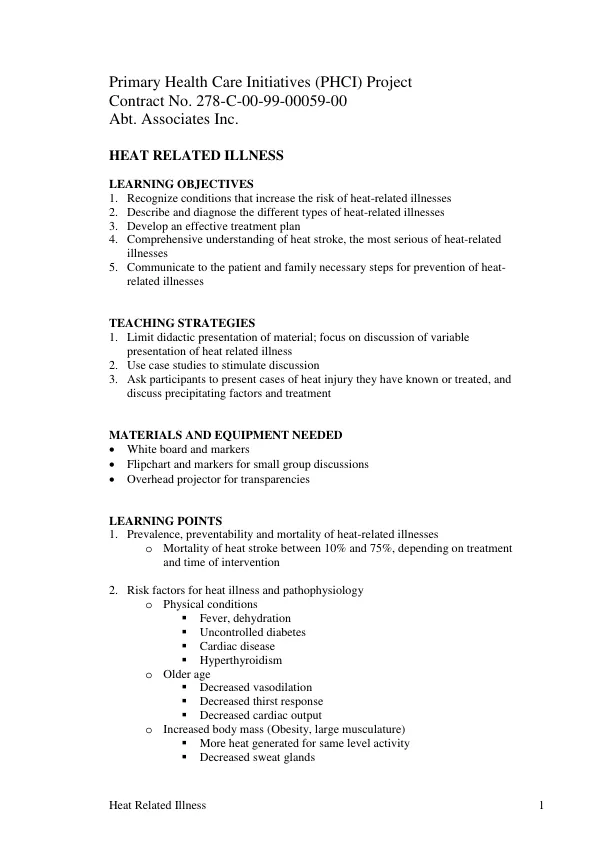
The primary health care initiatives project aims to educate healthcare professionals on the recognition, diagnosis, and management of heat-related illnesses. Prevalence, preventability, and mortality of heat-related illnesses are critical learning points. Heat stroke, the most serious form of heat-related illness, has a mortality rate ranging from 10% to 75%, depending on treatment and time of intervention. Risk factors for heat illness include physical conditions such as fever, dehydration, uncontrolled diabetes, cardiac disease, and hyperthyroidism, as well as older age, decreased vasodilation, and decreased thirst response. Heat-related illnesses can be categorized into four types: heat edema, heat cramps, heat exhaustion, and heat stroke. Heat edema is the mildest form, characterized by swelling in dependent areas of unacclimatized individuals during hot summer months. Heat cramps are painful spasms of skeletal muscles, often caused by lack of acclimatization, salt depletion, and use of diuretic medications. Heat exhaustion occurs when a person experiences excess sweating in a hot humid environment, causing volume depletion, and is characterized by symptoms such as profuse sweating, malaise, headache, dizziness, and muscle weakness. Heat stroke is the most serious form of heat-related illness, characterized by a body temperature of at least 40.5°C and acute mental status changes such as confusion, irritability, or coma. The differential diagnosis for heat stroke includes hyperthyroid storm, pheochromocytoma, CNS system injury, severe infection or sepsis, anticholinergic poisoning, and neuroleptic malignant syndrome. Evaluation of heat stroke involves a thorough history, physical examination, and medical investigation. The history should focus on neurologic symptoms, medical history, medications, and illicit drug use. The physical examination should include core body temperature, skin exam, neurologic exam, mental status changes, and evidence of bleeding disorder. Medical investigation may include chest X-ray, EKG, cardiac enzymes, Hgb and WBC, fibrinogen, liver function, lactate, urinalysis, calcium, phosphorous, and glucose. Emergency management of heat stroke involves external cooling with cold, moist towels, internal cooling with cold NG lavage, cold IV fluids, and cold rectal enema. Respiratory and cardiac status should be closely monitored, and fluids should be administered to maintain blood pressure. Complications and prognosis of heat stroke include permanent brain damage, disseminated intravascular coagulation, hepatic injury, cardiac arrhythmias, and renal failure. Prevention issues and health education messages emphasize the importance of increasing awareness of the risk of heat illness, staying in shade and cooler environments, wearing loose-fitting, light-colored clothing, avoiding helmets if possible, and avoiding the hottest part of the day for strenuous work. Acclimatization, gradual exposure to hot environments, and proper hydration are also critical in preventing heat-related illnesses.