FLORIDA INTERNATIONAL UNIVERSITY
High-Performing Dual-Purpose Sorghum Genotypes for Livestock Feeding
The agricultural innovation of dual-purpose sorghum genotypes for livestock feeding aims to improve livestock performance in semi-arid regions.
2019 · 1 pages
Sign in to readA free account is required to download.
Abstract
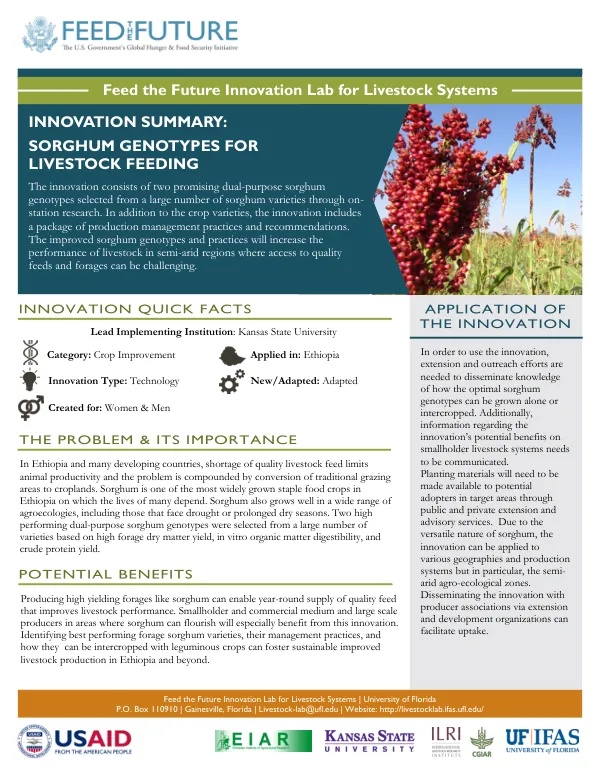
High yielding forages like sorghum can enable year-round supply of quality feed, which is particularly beneficial for smallholder and commercial medium and large scale producers in areas where sorghum can flourish. Identifying best performing forage sorghum varieties, their management practices, and how they can be intercropped with leguminous crops can foster sustainable improved livestock production in Ethiopia and beyond. In order to utilize this innovation, extension and outreach efforts are necessary to disseminate knowledge of how the optimal sorghum genotypes can be grown alone or intercropped. Additionally, information regarding the innovation's potential benefits on smallholder livestock systems needs to be communicated. Planting materials will need to be made available to potential adopters in target areas through public and private extension and advisory services. The versatile nature of sorghum allows the innovation to be applied to various geographies and production systems, particularly in the semi-arid agro-ecological zones. In Ethiopia and many developing countries, the shortage of quality livestock feed limits animal productivity, and the problem is compounded by the conversion of traditional grazing areas to croplands. Sorghum is one of the most widely grown staple food crops in Ethiopia, on which the lives of many depend. Sorghum also grows well in a wide range of agroecologies, including those that face drought or prolonged dry seasons. Two high performing dual-purpose sorghum genotypes were selected from a large number of varieties based on high forage dry matter yield, in vitro organic matter digestibility, and crude protein yield. The innovation consists of two promising dual-purpose sorghum genotypes selected from a large number of sorghum varieties through on-station research. In addition to the crop varieties, the innovation includes a package of production management practices and recommendations. The improved sorghum genotypes and practices will increase the performance of livestock in semi-arid regions where access to quality feeds and forages can be challenging. The innovation has the potential to benefit both women and men in these regions, particularly smallholder farmers who rely on livestock for their livelihoods. The implementation of this innovation will require collaboration between various stakeholders, including extension services, producer associations, and development organizations. Disseminating the innovation through these channels can facilitate uptake and ensure that the benefits of improved livestock feed are shared equitably among all stakeholders. By promoting the use of dual-purpose sorghum genotypes, the innovation aims to improve livestock productivity, increase income for smallholder farmers, and enhance food security in Ethiopia and beyond.