USAID DEC
Historias Exitosas: Conservación del Jaguar y Biodiversidad en el Parque El Cocuy
The Programa Paisajes de Conservación in the zona oriental del Parque El Cocuy aims to promote the conservation of the region's biological richness through scientific research, technological design, and the implementation of sustainable productive projects.
2011 · 3 pages
Sign in to readA free account is required to download.
Abstract
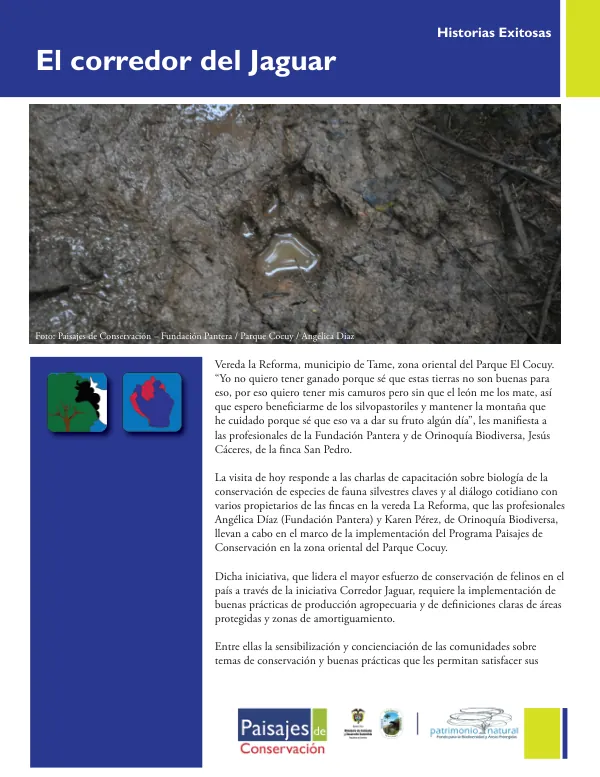
These projects aim to improve the quality of life for local communities and conserve their natural resources. The initiative, led by the Fundación Pantera, focuses on the Corredor Jaguar, a major conservation effort in the country. To achieve this goal, the program promotes the adoption of good agricultural practices and clear definitions of protected areas and buffer zones. Sensitization and awareness-raising efforts are also conducted among local communities to educate them on conservation and sustainable practices that allow them to meet their needs without depleting the natural resources of their territories. In the vereda La Reforma, a community in the municipality of Tame, the program has led to changes in attitude towards the importance of conserving the jaguar, its prey, and other components of biodiversity through sustainable livestock practices. For example, Ciro Niño, a farmer from the finca La Palma, has reported that since the project began, he and his community have respected the life of the jaguar, recognizing its importance in the ecosystem. The program's approach includes the design of silvopastoral arrangements with living fences, which reduce the risk of jaguar predation on livestock. This approach has been implemented in the vereda La Reforma, where the community has shifted from logging to sustainable livestock practices. However, the community still faces economic instability due to market fluctuations and limited access to markets. To address these challenges, the program aims to continue sensitizing the community on the importance of jaguar conservation and other key species, such as the danta, oso andino, paujiles, and pavas. Additionally, the program seeks to reach an agreement with hunters to reduce the pressure they exert on natural prey populations, ensuring the long-term availability of these resources and mitigating conflicts with large felines. The zona de amortiguación del Parque El Cocuy in the eastern sector is part of the route that ensures the reproduction of the jaguar. When the jaguar from the Caribe region seeks a mate in the eastern Colombian plains, it must cross large areas of land, including the bosque de galería del rio Puraré. The community in this area is aware of the importance of this habitat and is making efforts to ensure that the jaguar can pass through its territory without being hunted, find sufficient prey for its sustenance, and find a place with suitable trees that provide a warm climate for its transit. By doing so, the community contributes to the jaguars' ability to find each other and reproduce, thus conserving the species.
Related documents