GLOBAL COMMUNITIES
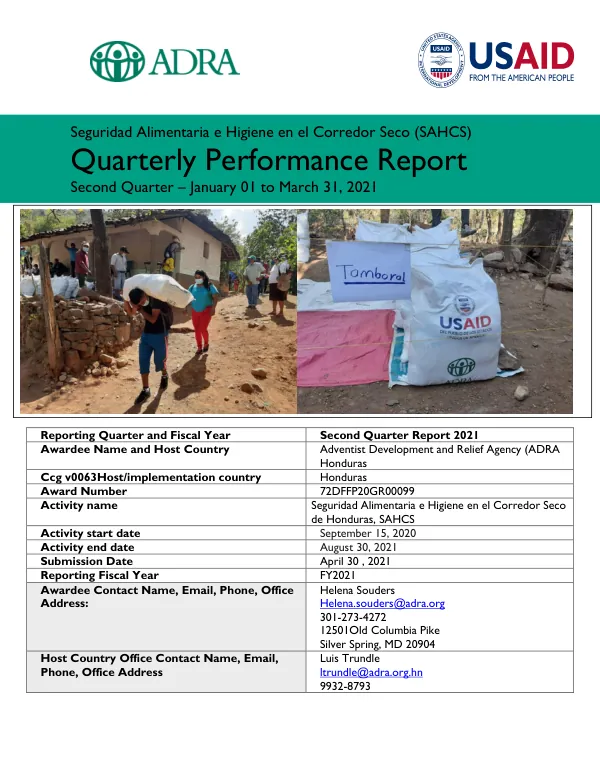
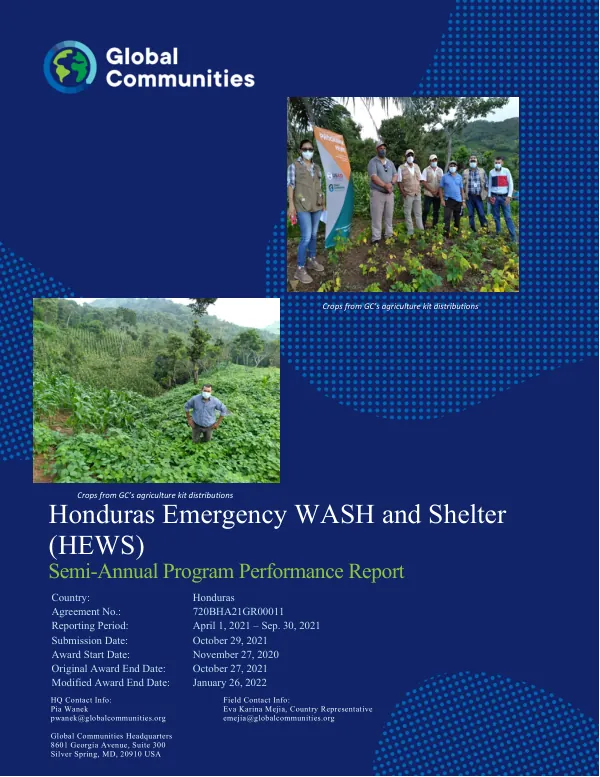
Honduras Emergency WASH and Shelter (HEWS) Semi-Annual Program Performance Report
The Honduras Emergency WASH and Shelter (HEWS) program is a 14-month initiative implemented by Global Communities (GC) since November 27, 2020.
2021 · 17 pages
Sign in to readA free account is required to download.
Abstract
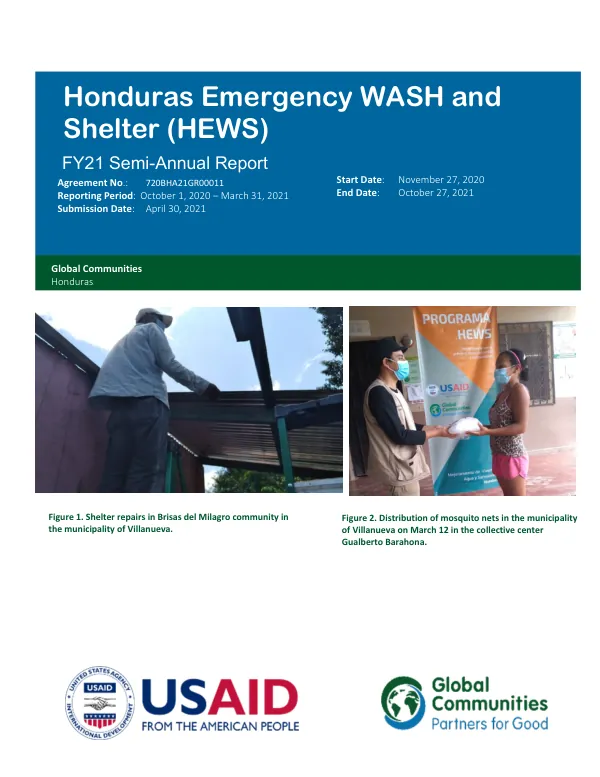
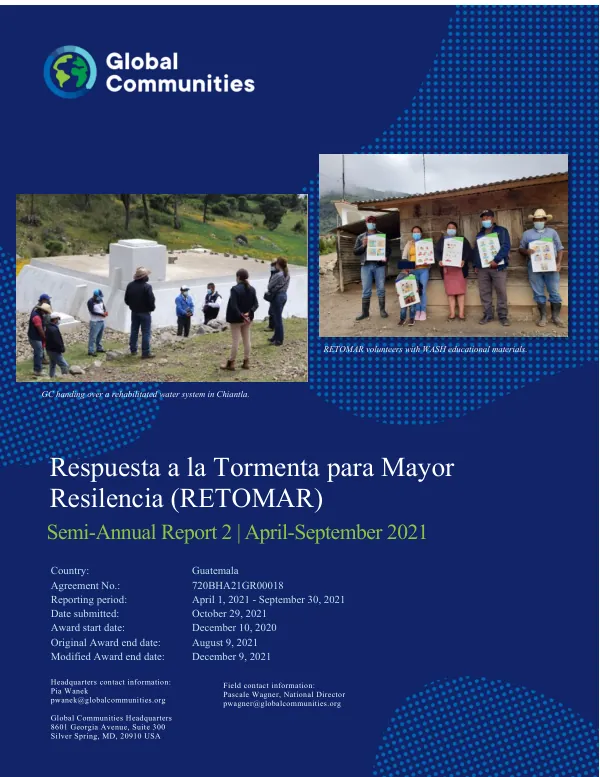
The program aims to address the urgent needs of 100,050 vulnerable individuals affected by recent natural disasters, including hurricanes Eta and Iota. The program has three key purposes: enabling approximately 2,950 families to return to acceptable living conditions by ensuring access to safe, habitable, and appropriate emergency shelter and Shelter Non-Food Items (SNFIs); improving access to safe water supply, emergency sanitation facilities, and critically needed WASH NFIs for 84,000 disaster-affected people; and improving the food security, livelihoods, and general living conditions of 16,050 vulnerable people through MPCA transfers and agricultural and ERMS support. During the reporting period of April 1, 2021, to September 30, 2021, GC continued its shelter, WASH, and MPCA activities. The program made significant progress in shelter repairs, with a total of 781 shelter repairs completed, including 598 repairs in the department of Cortés and 183 repairs in the departments of Santa Bárbara, Copán, and Ocotepeque. Additionally, 134 transitional shelters were set up, including 133 timber-based t-shelters and 1 lightweight steel t-shelter. GC also implemented agriculture and ERMS activities, with a focus on supporting vulnerable households to restart their livelihoods. The program's humanitarian coordination, information management, and evaluations activities continued to focus on facilitating coordination between cluster members and government entities, sharing lessons learned and best practices, and ensuring that information on ongoing activities is being reported and shared. The Shelter Cluster supported the development of the Humanitarian Needs Overview (HNO) and Humanitarian Response Plan (HRP), which were completed in June and published in September. The program also continued to support vector control activities in response to the Dengue outbreak in Villanueva, with a focus on community clean-up campaigns and cash for work initiatives. In terms of WASH activities, GC finalized its water purification kit distributions, completed the rehabilitation of 11 minor water systems, and began the rehabilitation of 3 major ones. The program also set up 107 latrines and continued to support municipality clean-up efforts through small community clean-up campaigns. To date, GC has completed 23 environmental health campaigns, including vector control activities, in Cortés, Copán, Ocotepeque, and Santa Bárbara, benefitting 6,449 families. The program's overall performance is reflected in the following indicators: 937 households occupying shelter that is provided pursuant to relevant guidance appearing in the Sphere Project Handbook; 1,255,056 dollars spent on goods and services produced/procured in country; and 199,123 beneficiaries reached. The program continues to make progress towards its goals, with a focus on supporting vulnerable households to return to acceptable living conditions and improving access to safe water supply, emergency sanitation facilities, and critically needed WASH NFIs.
Related documents