GLOBAL COMMUNITIES
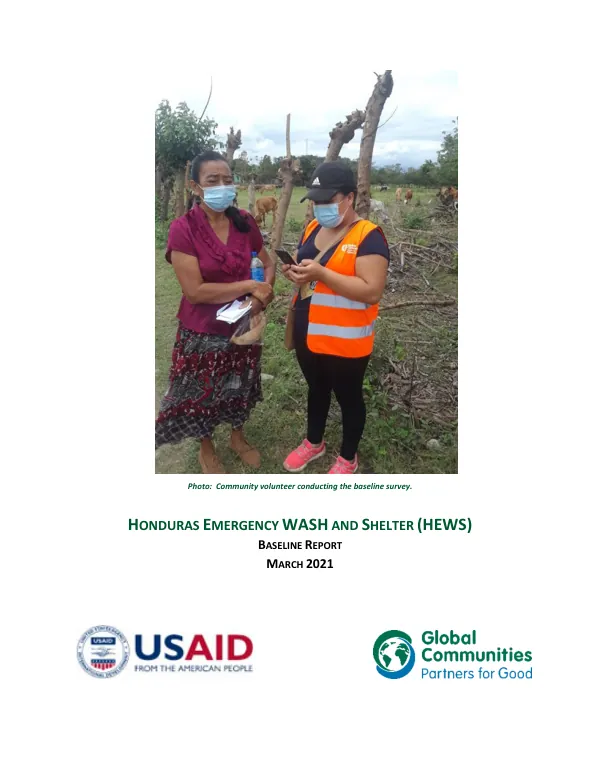
Honduras Emergency WASH and Shelter (HEWS) Baseline Report
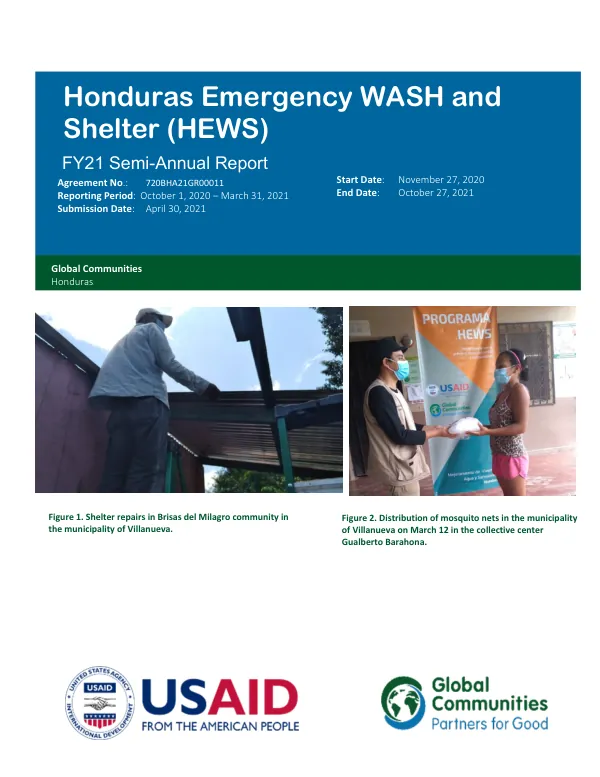
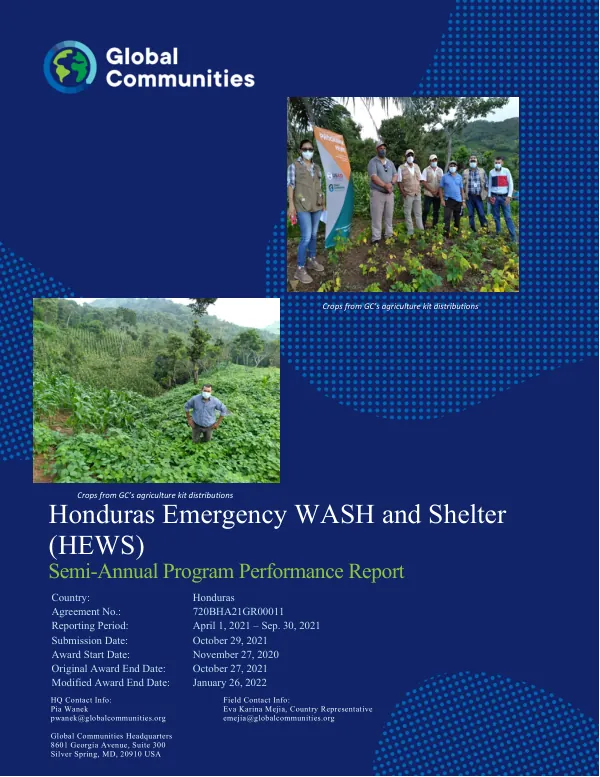
The Honduras Emergency WASH and Shelter (HEWS) program is an eleven-month initiative aimed at addressing urgent Water Sanitation and Hygiene (WASH), Multipurpose Cash Assistance (MPCA), and shelter needs for 54,000 vulnerable individuals in northwestern Honduras affected by the 2020 Hurricanes Eta and Iota.
2021 · 10 pages
Sign in to readA free account is required to download.
Abstract
The program's goal is to provide assistance to affected households in the departments of Santa Barbara and Cortes. The baseline report, conducted in March 2021, outlines the findings for relevant project indicators based on information collected from 1,194 households. The assessment process involved three key steps: assessing 100% of affected households in targeted communities, identifying households meeting the minimum vulnerability score, and conducting further assessment and follow-up as needed. A total of 23 communities have been assessed, including all initially targeted communities in the departments of Santa Barbara and Cortes. The baseline findings indicate that 91% of respondents reported having a handwashing station on premises with both soap and water. There was a slightly higher percentage of respondents in Cortes that had soap and water at the handwashing station compared to respondents in Santa Barbara. Additionally, 80% of respondents could identify three or more critical times to wash hands, with a slightly higher percentage of women (82%) able to identify three or more critical times compared to men (75%). The HEWS program targets five indicators, including two WASH indicators and three MPCA indicators. The two WASH indicators included in this baseline report are: W8, Percent of beneficiary households with soap and water at a handwashing station on premises, and W10, Percent of individuals targeted by the hygiene promotion activity who know at least three (3) of the five (5) critical times to wash hands. The baseline data for the relevant WASH indicators was collected as part of Steps 1 and 2, with relevant Knowledge Attitudes and Practices (KAP) questions added to the overall beneficiary selection questionnaire. The assessment process involved a total of 1,669 households, with 1,194 households referred to program teams and included in the data analysis. The gender breakdown of the selected households showed that 29% were men and 71% were women. The baseline report will be updated and annexed to relevant monthly or semi-annual reports once all the baseline data is available.