THE ASIA FOUNDATION
How to Run a Private School: A Guide for Afghanistan
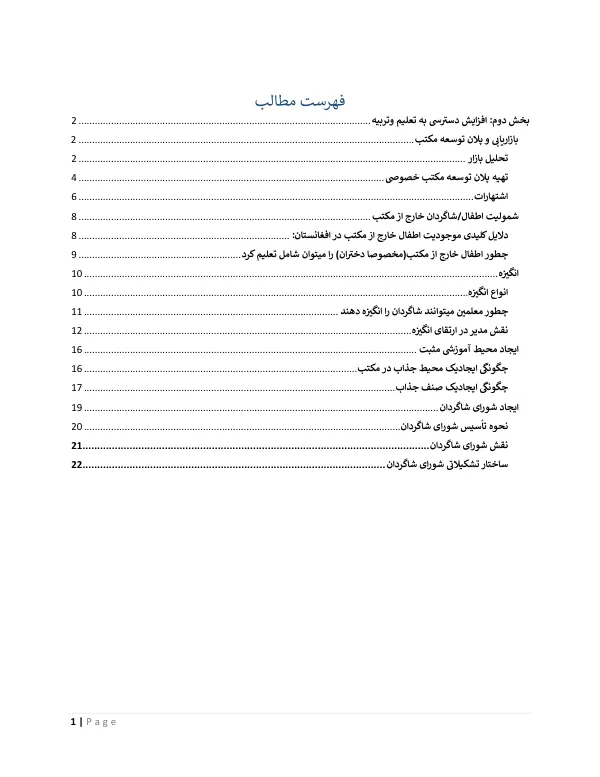
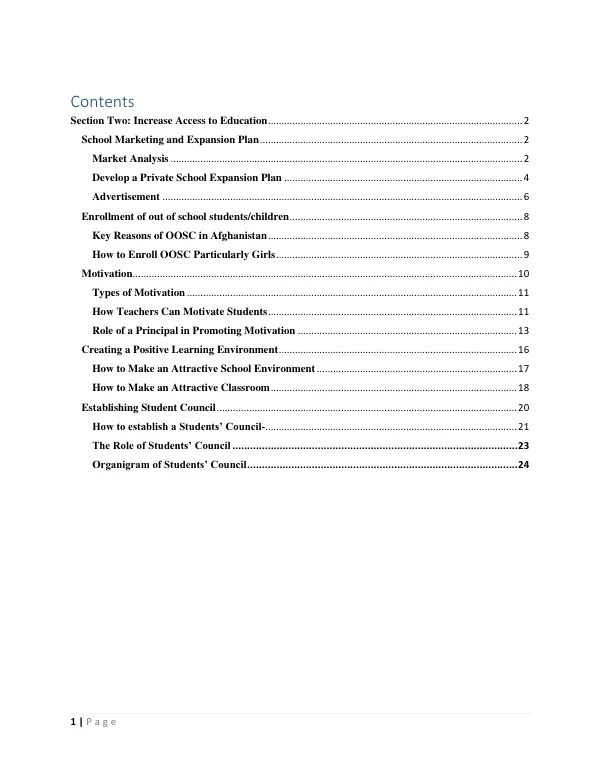
The purpose of this chapter is to understand the necessary steps for conducting a market analysis and developing effective marketing and expansion plans for private schools.
2020 · 25 pages
Sign in to readA free account is required to download.
Abstract
The key objectives of this chapter are to conduct a market analysis, develop a marketing plan, and implement effective advertisement. A market analysis is a crucial step in understanding the demand for private schools in a specific area. The analysis should answer the following questions: Is there a demand for increasing access to a private school in the area? What is the appropriate location for the school? What grade level is the community asking for or needed? A sample case study is provided to help understand the sources of information and the data that should be collected. The case study highlights the following: Among the total population of the targeted Police District (PD), 27.6% are children, of which 8% remain out of school. The average number of students at each private school is 402, with 710 attending each public school, which verifies that parents are committed to sending their children to school. The financial situation of parents is good, as most are government employees or self-employed. The average number of students in each private school shows the level of confidence parents have in private schools. Based on the supportive factors documented, there is an existent opportunity to expand a private school or open a new branch in PD 9. The opportunity is driven by a population size of 94,620, of which 26,000 are children; high demand for private schools; and good purchasing power of parents. To develop a private school expansion plan, owners of private schools should set strategic goals for increasing access to their schools. Examples of goals include increasing enrollment by 10 percent, introducing two new branches, improving communications with parents, and engaging more parents. The plan should also assess the required resources and needs for achieving the goals. The planning process involves developing a list of activities and a timeline for achieving them. Examples of activities include renting a property, recruiting new teachers, and advertising. The owner should also develop a budget to identify and estimate the cost of operations, including furniture, equipment, admin staff, new teacher, support staff, purchase van, rent van, driver, advertisement cost, and miscellaneous expenses.
Related documents