USAID DEC
Human-wild mammal conflict in a human dominated midhill landscape: a case study from Panchase area in Chitwan Annapurna Landscape, Nepal
Sign inTRIBHUVAN UNIVERSITY
Human-wild mammal conflict in a human dominated midhill landscape: a case study from Panchase area in Chitwan Annapurna Landscape, Nepal
Human-wild mammal conflict in a human-dominated midhill landscape is a significant problem in Nepal, particularly in the Panchase area of the Chitwan Annapurna Landscape.
2018 · 9 pages
Sign in to readA free account is required to download.
Abstract
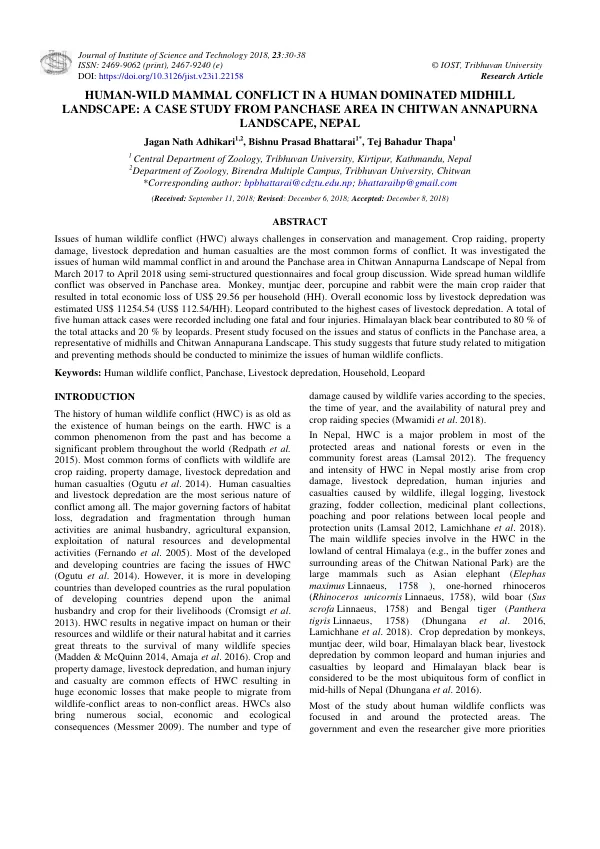
The conflict is characterized by crop raiding, property damage, livestock depredation, and human casualties. The main wildlife species involved in the conflict are monkeys, muntjac deer, porcupine, and rabbit, which result in a total economic loss of US$ 29.56 per household. Leopard is the primary contributor to livestock depredation, with a total of US$ 11,254.54 estimated loss. The study area, Panchase Protected Forest, is rich in biodiversity and has high biodiversity value in the region. The forest has been declared as a 'Protected Forest' under the Forest Act 2002, recognizing its rich biodiversity, forest resources, and cultural and spiritual values. The mean maximum and minimum temperature of the PPF area are 29 °C and 5.3 °C, respectively, with the coldest month being January. The area receives an average of 3,883 mm of rainfall every year. The terrestrial ecosystem of PPF and its slopes on all directions consists of different land use types, including forest grazing and agricultural land. Human settlements in the area are located in the sloppy hills and valleys, with forest starting from 1,450 m to 2,517 m altitude. The dominant species in the forests are Rhododendron and oak, which have been replaced by Rakchan (Daphniphyllum himalense), indicating the degraded condition of the forest. Panchase is home to 589 flowering plant species, including 94 orchid species, 24 mammal species, and 260 bird species. The study design involved a preliminary survey in March-April 2017, which identified major resident areas in and around Panchase, including Sidhane, Bhanjyang, Pumdi Bhumdi, Bhadaure and Tamagi, Virmathi and Daumdame, Arthar dada and Kaule, Chitre, and Wangsing. The respondents in these areas were selected using stratified random sampling regarding their age, sex, caste, occupation, and education status. A total of 100 respondents were sampled using semi-structured questionnaires related to crop damage, livestock depredation, and human casualty and injury. The results of the study indicate that the frequency and intensity of human-wild mammal conflict in the Panchase area are high, with a total of five human attack cases recorded, including one fatal and four injuries. Himalayan black bear contributed to 80% of the total attacks, while leopards contributed to 20%. The study suggests that future studies related to mitigation and preventing methods should be conducted to minimize the issues of human-wild mammal conflicts in the Panchase area. The study also highlights the need for conservation and management of the forest outside the protected areas to minimize the conflicts issues in and around Panchase area.