ICRC
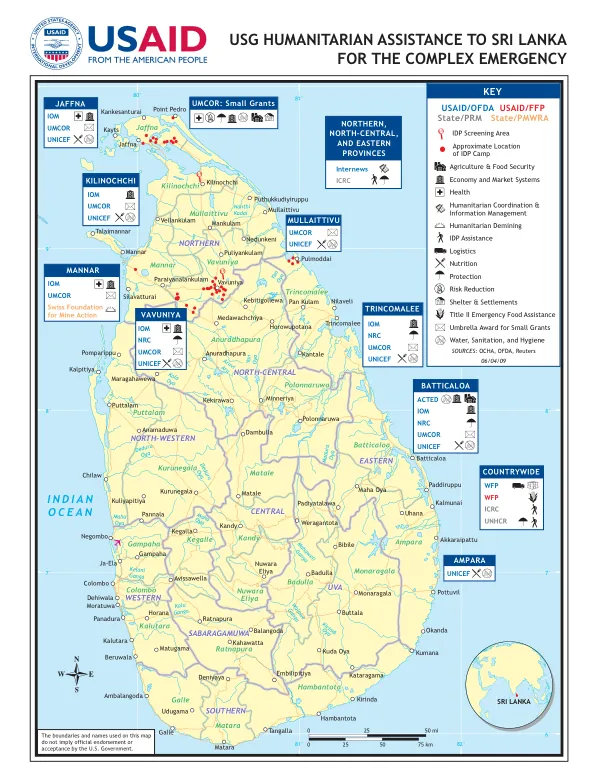
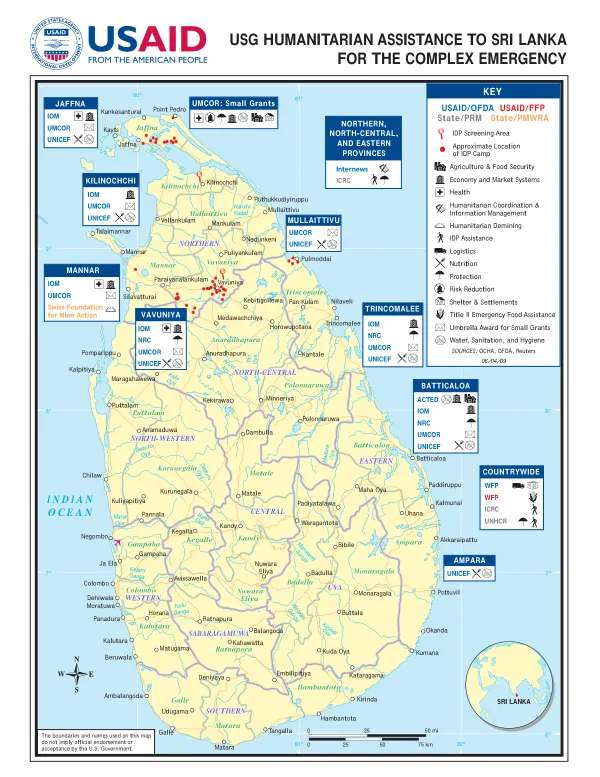
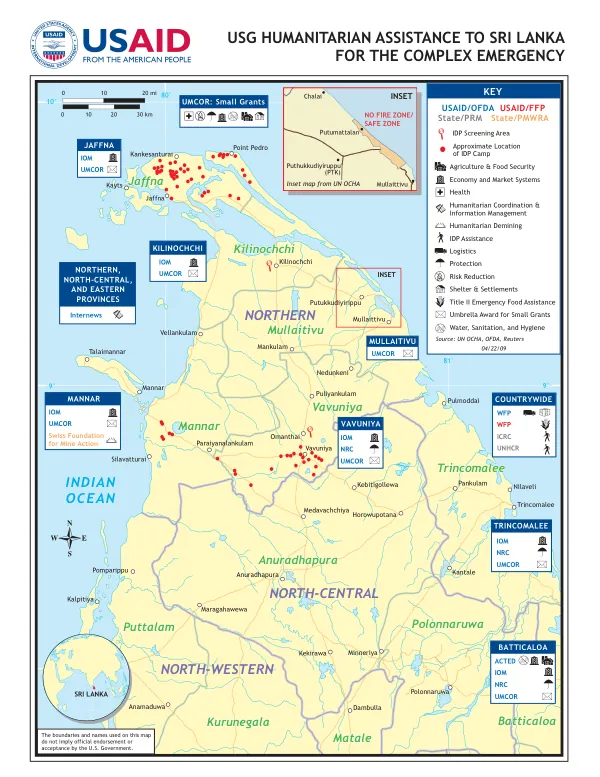
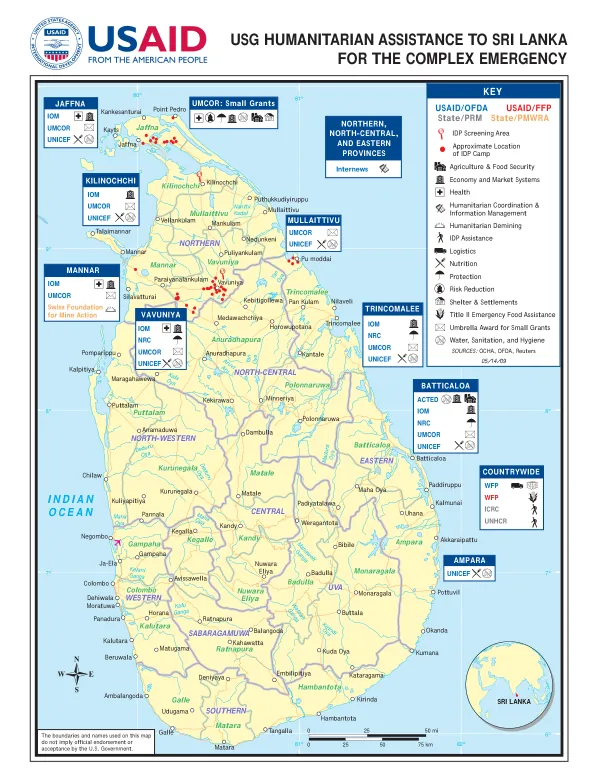
Humanitarian Demining, IDP Screening Area, Approximate Location of IDP Camp
The Sri Lankan provinces of Jaffna, Mannar, Vavuniya, and Trincomalee are among the areas most severely affected by the complex emergency.
2009 · 1 pages
Sign in to readA free account is required to download.
Abstract
The humanitarian situation in these regions is characterized by a high concentration of internally displaced persons (IDPs), with many living in makeshift camps. The IDPs are primarily from the Tamil ethnic group and have been displaced due to the conflict between the government and the Liberation Tigers of Tamil Eelam (LTTE). The humanitarian response in the affected provinces is led by the United Nations (UN) and its implementing partners, including the United Nations Children's Fund (UNICEF), the United Nations High Commissioner for Refugees (UNHCR), the International Committee of the Red Cross (ICRC), and non-governmental organizations (NGOs) such as the Norwegian Refugee Council (NRC), the International Organization for Migration (IOM), and the United Methodist Committee on Relief (UMCOR). The response focuses on providing emergency assistance, including food, shelter, and healthcare, as well as supporting the return and reintegration of IDPs. The humanitarian situation in the affected provinces is further complicated by the presence of landmines and unexploded ordnance (UXO), which pose a significant threat to the safety and security of IDPs and humanitarian workers. The Swiss Foundation for Mine Action is working to clear these hazards and make the areas safe for return and reintegration. The humanitarian response in the affected provinces is also supported by the Government of Sri Lanka, which has established a number of IDP camps and is providing assistance to IDPs. However, the government's response has been criticized for being inadequate and slow, and there are concerns about the treatment of IDPs and the lack of access to basic services such as healthcare and education. The humanitarian situation in the affected provinces is expected to continue for the foreseeable future, and the humanitarian response will need to be sustained to meet the ongoing needs of IDPs. The international community, including the US Government, is providing significant support to the humanitarian response, with a focus on addressing the root causes of the crisis and promoting durable solutions for IDPs. The provinces of Kilinochchi, Mullaittivu, and Batticaloa are also affected by the complex emergency, with a significant number of IDPs living in these areas. The humanitarian response in these provinces is similar to that in the other affected areas, with a focus on providing emergency assistance and supporting the return and reintegration of IDPs.
Related documents