CENTER FOR EDUCATIONAL DEVELOPMENT
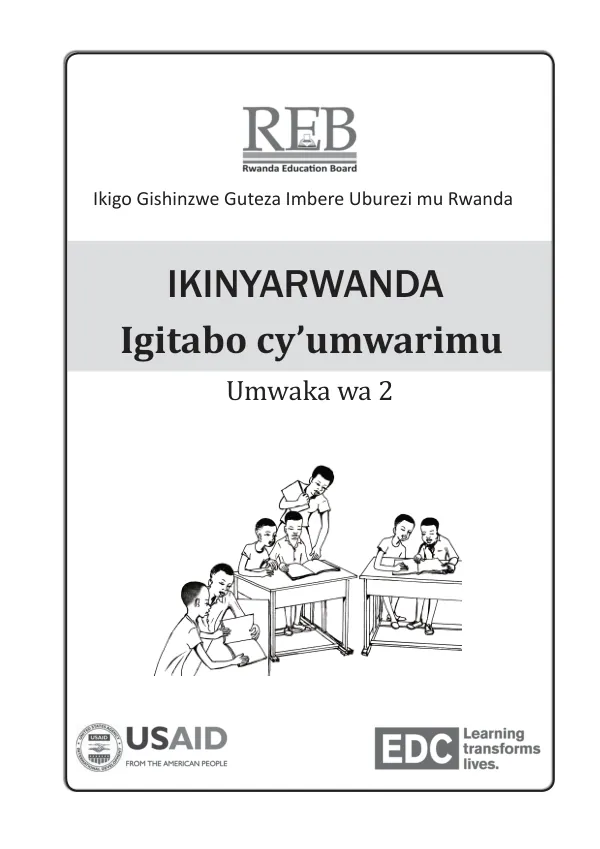
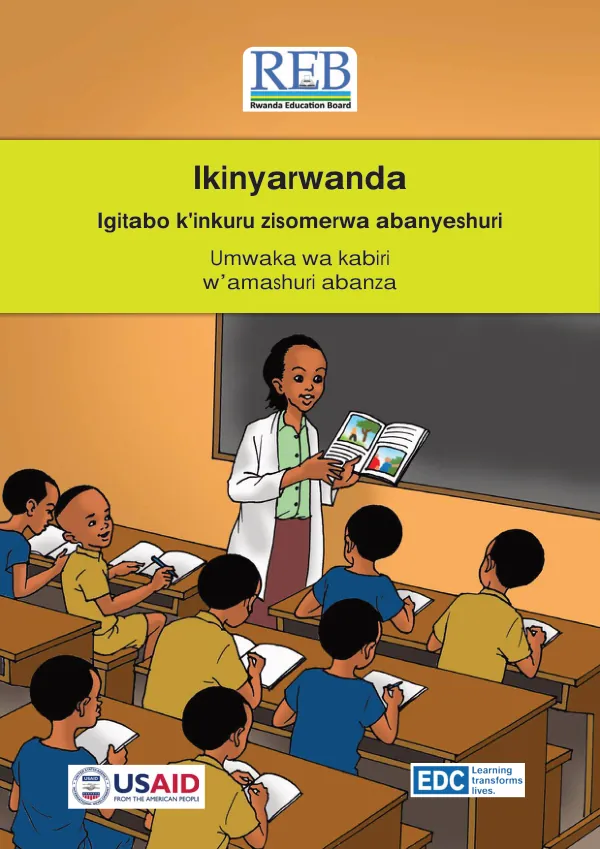
Igitabo cy'umwarimu: Ikinyarwanda mu mwaka wa kabiri w'amashuri abanza
The Rwanda Education Board initiated the development of a new curriculum for primary school students in Rwanda.
2015 · 320 pages
Sign in to readA free account is required to download.
Abstract
The curriculum, titled "Igitabo cy'umwarimu," was designed to improve the teaching and learning of the Kinyarwanda language. The project was funded by the United States Agency for International Development (USAID) through the Education Development Center (EDC). The curriculum was developed to address the challenges faced by students in learning the Kinyarwanda language. It was designed to be more engaging and interactive, with a focus on developing the skills of students in reading, writing, and speaking. The curriculum was also intended to promote critical thinking and problem-solving skills among students. The curriculum was divided into six units, each focusing on a different aspect of the Kinyarwanda language. The units included Umwaka wa kabiri (Second Year), Isubiramwo r'ibyizwe mu mwaka ushize (Review of the Previous Year), Ibihekane byigwa (Grammar), and Isukuru (Vocabulary). Each unit consisted of eight lessons, which were designed to be taught over a period of several weeks. The curriculum was developed by a team of experts, including linguists, educators, and language specialists. The team worked together to create a comprehensive and engaging curriculum that would meet the needs of students in Rwanda. The curriculum was also reviewed and approved by the Rwanda Education Board and other stakeholders. The curriculum was designed to be implemented in primary schools across Rwanda, with the goal of improving the teaching and learning of the Kinyarwanda language. The curriculum was intended to promote the development of language skills among students, as well as critical thinking and problem-solving skills. The implementation of the curriculum was expected to have a positive impact on the education system in Rwanda. The curriculum was also designed to be flexible and adaptable to the needs of different schools and students. It included a range of activities and exercises that were intended to engage students and promote active learning. The curriculum was also designed to be easy to use and understand, with clear instructions and guidelines for teachers. The implementation of the curriculum was expected to be monitored and evaluated by the Rwanda Education Board and other stakeholders. The evaluation was intended to assess the effectiveness of the curriculum in improving the teaching and learning of the Kinyarwanda language. The results of the evaluation were expected to inform future developments in the curriculum and improve the education system in Rwanda. The Rwanda Education Board played a key role in the development and implementation of the curriculum. The board worked closely with teachers, students, and other stakeholders to ensure that the curriculum met the needs of students in Rwanda. The board also provided support and resources to teachers to help them implement the curriculum effectively. The curriculum was an important step in improving the education system in Rwanda. It was designed to promote the development of language skills among students, as well as critical thinking and problem-solving skills. The implementation of the curriculum was expected to have a positive impact on the education system in Rwanda and promote the development of a more educated and skilled workforce.
Related documents