USAID DEC
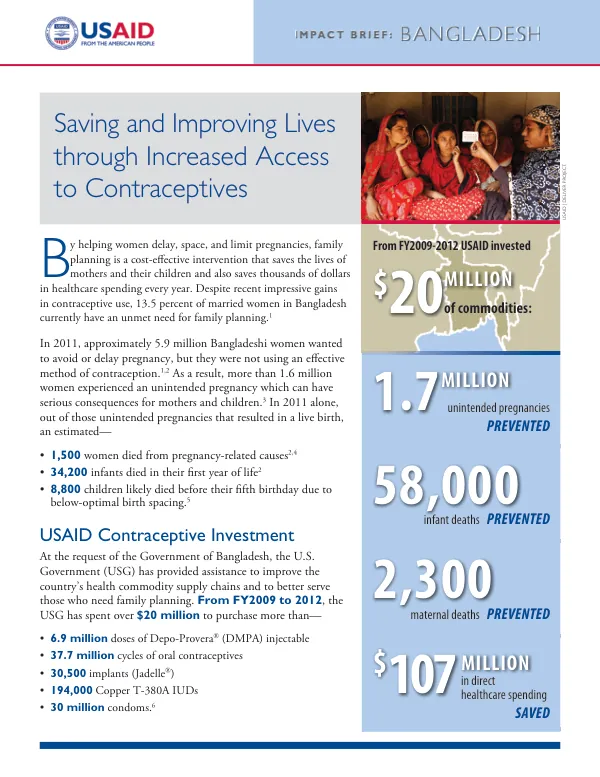
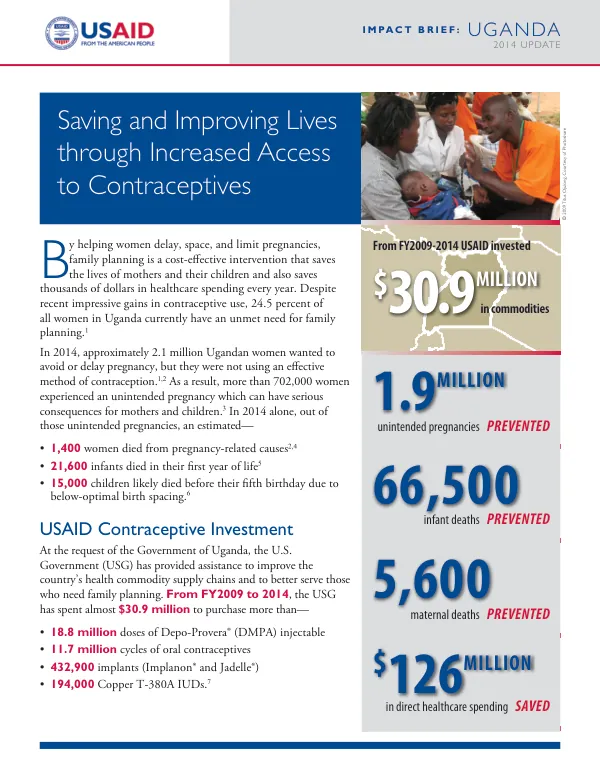
Impact Brief: Uganda. Saving and Improving Lives through Increased Access to Contraceptives. 2014 Update. (July 2015)
Sign inICF
Impact Brief: Uganda. Saving and Improving Lives through Increased Access to Contraceptives. 2014 Update. (July 2015)
The agricultural development initiative in Uganda began with the assistance of the U.S.
2014 · 2 pages
Sign in to readA free account is required to download.
Abstract
Government, which provided funding to improve the country's health commodity supply chains and to better serve those who need family planning. The initiative focused on increasing access to modern methods of contraception, which is crucial to meeting the reproductive health needs of women in Uganda. In 2014, approximately 2.1 million Ugandan women wanted to avoid or delay pregnancy, but they were not using an effective method of contraception. As a result, more than 702,000 women experienced an unintended pregnancy, which can have serious consequences for mothers and children. The estimated impact of unintended pregnancies in 2014 included 1,400 maternal deaths, 21,600 infant deaths in the first year of life, and 15,000 child deaths before the age of five due to below-optimal birth spacing. The U.S. Government invested almost $30.9 million from FY2009 to 2014 to purchase more than 18.8 million doses of Depo-Provera injectable, 11.7 million cycles of oral contraceptives, 432,900 implants, and 194,000 Copper T-380A IUDs. This investment had the potential to meet the needs of more than 7.8 million Ugandan couples. The estimated impact of USAID-funded contraceptives during this time included 1.9 million unintended pregnancies averted, 588,100 induced abortions averted, 66,500 infant deaths averted, and 43,700 child deaths averted due to improved birth spacing. The USAID | DELIVER PROJECT calculated the estimated impact of USAID contraceptive commodity support in Uganda from FY2009 to FY2014. The results showed that the commodities shipped generated 7.8656 million couple-years of protection (CYP), which averted 1,896,600 unintended pregnancies, 1,030,300 unintended live births, 588,100 induced abortions, 66,500 infant deaths, and 43,700 child deaths due to improved birth spacing. The direct healthcare costs savings were estimated at $126.368 million.