TETRA TECH
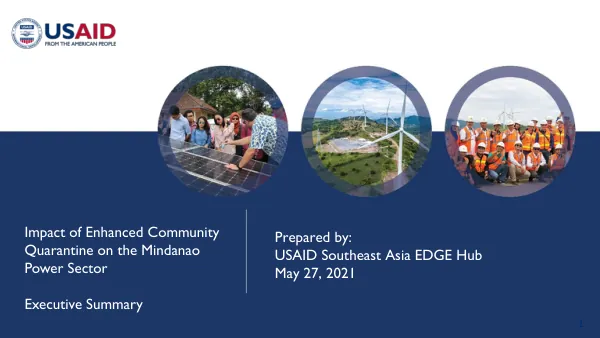
Impact of Enhanced Community Quarantine on the Mindanao Power Sector
The Mindanao power sector in the Philippines experienced significant impacts due to the COVID-19 pandemic.
2021 · 22 pages
Sign in to readA free account is required to download.
Abstract
Commercial and industrial sector electricity consumption declined during the lockdown, resulting in increased electricity demand in the residential sector. However, the increased residential sales were insufficient to offset the decreased commercial and industrial sales, negatively impacting the represented electric cooperatives' (ECs) top line. Electricity billing and collection efficiencies suffered during the peak quarantine months of March to May 2020. As a result, overall losses increased from 11% in 2019 to 22% in 2020. The poor collections exacerbated collection losses, which reached up to 10%. The COVID-19 pandemic accentuated the financial situations of ECs, which had been deteriorating over the last five years. Revenue did not cover the cost of service, and liquidity was low, indicating a combination of shortfall in tariff and cost management challenges. The reduced demand could impact investment plans and delay ongoing capital expenditure (CAPEX) projects. Electric cooperatives in Mindanao face significant challenges in meeting the growing peak demand, which is increasing at a compound annual growth rate (CAGR) of 7-18%. To meet this demand, ECs will need to double their supply capacity in 4-10 years. This requires significant capital investment for energy procurement and network upgrades, including transformers and distribution feeders. The Mindanao power sector's financial situation is precarious, with revenue not covering the cost of service and liquidity being low. The COVID-19 pandemic has exacerbated these challenges, making it essential for the electric cooperatives to implement measures to improve their financial resilience and recovery. The study recommends policy, technical, and financial measures to facilitate EC resilience and recovery, including improving billing and collection efficiencies, enhancing financial management, and increasing investment in infrastructure. The study's findings and recommendations are based on a technical and financial analysis of data from three representative electric cooperatives in Mindanao. The analysis identified key challenges facing the ECs, including poor collections, low liquidity, and inadequate revenue to cover the cost of service. The study's recommendations aim to address these challenges and improve the financial resilience and recovery of the electric cooperatives in Mindanao.
Related documents