USAID DEC
Implementation of the Institutional Integrity Model in the Ministry of Justice and Human Rights in Peru
Sign inUSAID
Implementation of the Institutional Integrity Model in the Ministry of Justice and Human Rights in Peru
The Institutional Integrity Model (IIM) was incorporated into the MINJUS Anti-Corruption Plan in 2014.
2014 · 1 pages
Sign in to readA free account is required to download.
Abstract
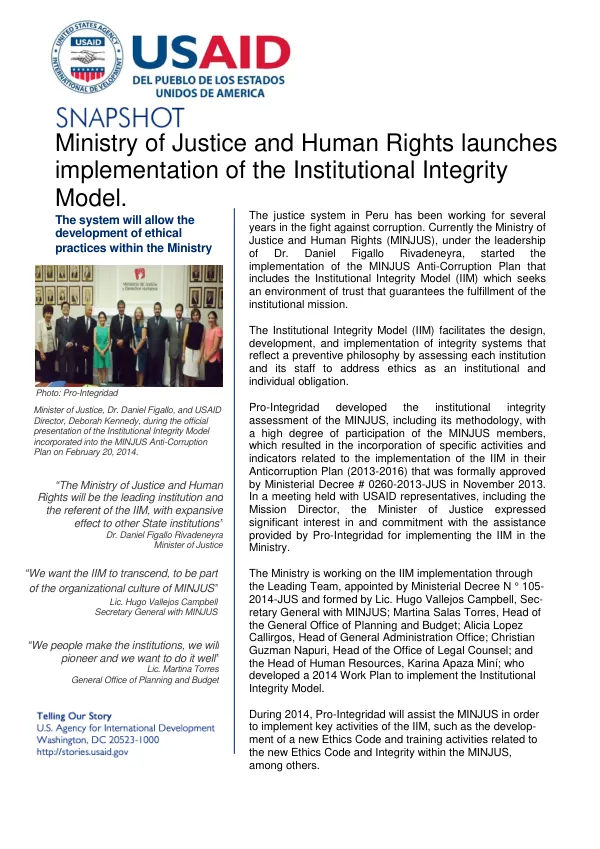
The Ministry of Justice and Human Rights (MINJUS) in Peru, led by Minister Dr. Daniel Figallo Rivadeneyra, launched the implementation of the IIM. The system aims to develop ethical practices within the Ministry, with the goal of becoming the leading institution and a referent for other State institutions. The IIM facilitates the design, development, and implementation of integrity systems that reflect a preventive philosophy. It assesses each institution and its staff to address ethics as an institutional and individual obligation. Pro-Integridad developed the institutional integrity assessment of MINJUS, including its methodology, with a high degree of participation from MINJUS members. The assessment resulted in the incorporation of specific activities and indicators related to the implementation of the IIM in the Anticorruption Plan (2013-2016). The Ministry is working on the IIM implementation through the Leading Team, appointed by Ministerial Decree N ° 105-2014-JUS. The team, formed by Lic. Hugo Vallejos Campbell, Martina Salas Torres, Alicia Lopez Callirgos, Christian Guzman Napuri, and Karina Apaza Miní, developed a 2014 Work Plan to implement the Institutional Integrity Model. The plan includes key activities such as the development of a new Ethics Code and training activities related to the new Ethics Code and Integrity within MINJUS. The IIM implementation is a significant step in the fight against corruption in the justice system in Peru. The Ministry's commitment to the IIM is evident in the Minister's expression of interest and commitment to the assistance provided by Pro-Integridad. The IIM aims to create an environment of trust that guarantees the fulfillment of the institutional mission. The implementation of the IIM is expected to have a positive impact on the Ministry's operations and the overall justice system in Peru. The development of a new Ethics Code and training activities related to integrity will help to promote a culture of ethics and transparency within the Ministry. The IIM's preventive philosophy will enable the Ministry to address ethics as an institutional and individual obligation, ultimately contributing to a more effective and efficient justice system.