USAID
Strengthening of the Disaster Risk Reduction System in Arequipa and Moquegua (Peru)
The agricultural development initiative in Arequipa and Moquegua, Peru, aimed to strengthen the disaster risk reduction system in the region.
33 pages
Sign in to readA free account is required to download.
Abstract
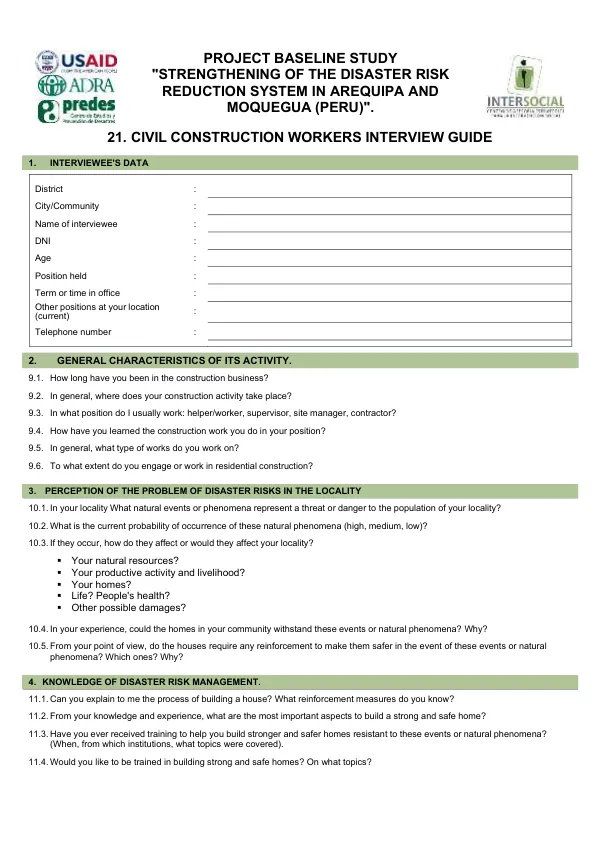
The initiative focused on improving the resilience of communities to natural disasters, such as earthquakes, landslides, and floods. The project involved conducting baseline studies to assess the current state of disaster risk management in the region. The baseline study involved conducting interviews with civil construction workers to gather information on their experiences and perceptions of disaster risks in their locality. The interviews revealed that the workers were aware of the potential risks associated with natural disasters, such as landslides and floods, but lacked the necessary knowledge and skills to mitigate these risks. The study also involved conducting interviews with members of the civil defense platform to gather information on their roles and responsibilities in disaster risk management. The interviews revealed that the platform members were aware of the importance of disaster risk management but lacked the necessary resources and capacity to implement effective disaster risk reduction measures. The baseline study identified several key challenges to disaster risk management in the region, including limited access to information and resources, inadequate infrastructure, and inadequate training and capacity building. The study recommended that the project should focus on improving the capacity of communities to manage disaster risks, enhancing the resilience of infrastructure, and improving access to information and resources. The project also involved conducting interviews with community leaders to gather information on their perceptions of disaster risks in their locality. The interviews revealed that the community leaders were aware of the potential risks associated with natural disasters but lacked the necessary knowledge and skills to mitigate these risks. The baseline study provided a comprehensive understanding of the current state of disaster risk management in the region and identified several key challenges that needed to be addressed. The study recommended that the project should focus on improving the capacity of communities to manage disaster risks, enhancing the resilience of infrastructure, and improving access to information and resources. The project aimed to strengthen the disaster risk reduction system in Arequipa and Moquegua, Peru, by improving the capacity of communities to manage disaster risks, enhancing the resilience of infrastructure, and improving access to information and resources. The project involved conducting baseline studies to assess the current state of disaster risk management in the region and identifying several key challenges that needed to be addressed. The project recommended that the project should focus on improving the capacity of communities to manage disaster risks, enhancing the resilience of infrastructure, and improving access to information and resources. The project aimed to improve the resilience of communities to natural disasters, such as earthquakes, landslides, and floods, and to enhance the capacity of communities to manage disaster risks. The project involved conducting interviews with civil construction workers, members of the civil defense platform, and community leaders to gather information on their experiences and perceptions of disaster risks in their locality. The interviews revealed that the workers, platform members, and community leaders were aware of the potential risks associated with natural disasters but lacked the necessary knowledge and skills to mitigate these risks. The project involved conducting baseline studies to assess the current state of disaster risk management in the region and identifying several key challenges that needed to be addressed. The project recommended that the project should focus on improving the capacity of communities to manage disaster risks, enhancing the resilience of infrastructure, and improving access to information and resources. The project involved conducting baseline studies to assess the current state of disaster risk management in the region and identifying several key challenges that needed to be addressed