UNITED NATIONS
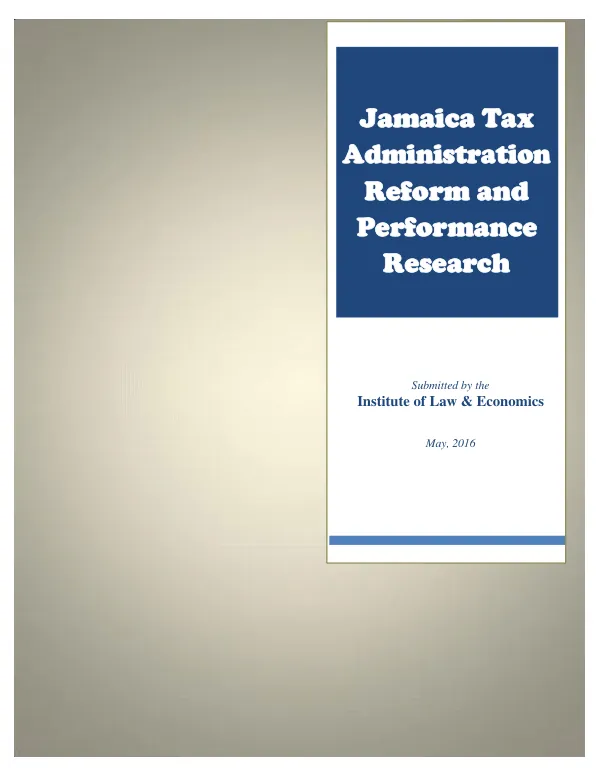
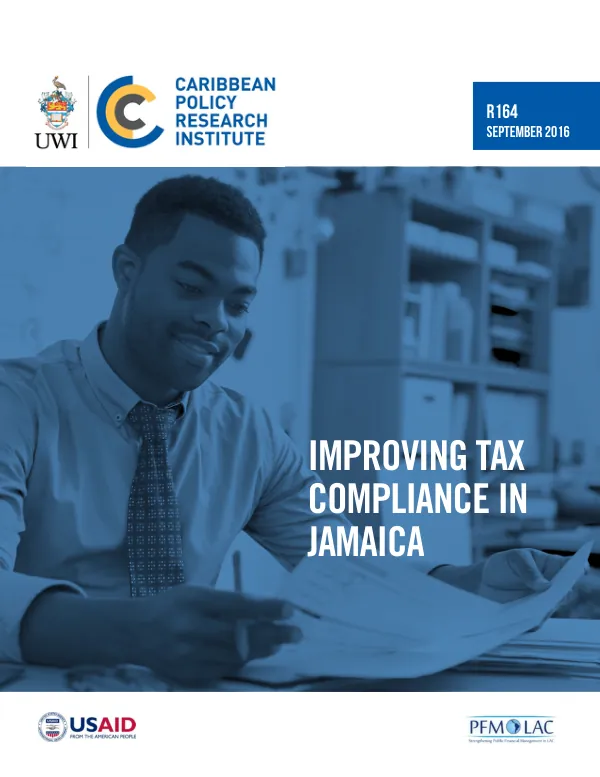
Improving Tax Compliance in Jamaica
The purpose of this study is to identify ways to improve tax compliance in Jamaica.
2016 · 44 pages
Sign in to readA free account is required to download.
Abstract
A survey of literature in tax compliance was conducted to ascertain the techniques that have and have not been working in other countries. Recent reforms implemented by the tax authority in Jamaica, Tax Administration Jamaica (TAJ), were then identified and compared with international best practice. The study aims to provide information useful for educating the public on how to comply with paying their tax obligations and outlines strategies for improving the performance of tax administration in the future. Tax compliance can be defined as adhering to all the laws of the country as it pertains to the paying of taxes. It involves taxpayers' willingness to comply with tax laws, declare correct income, claim the correct deductions, relief, and rebates, and pay all taxes on time. Implicit in tax compliance is a certain 'willingness' on the part of the taxpayer to do what is expected of him/her by law. While there are certain enforcement measures that tax authorities can take to ensure that taxpayers file and pay all the taxes for which they are liable, in recent years there has been a strong emphasis on voluntary compliance. One of the main challenges when trying to measure and ensure compliance is the informality of a large share of economic activity in Jamaica. Businesses which operate without being registered do not report their income to any authority and do not file or pay taxes. Previous estimates of the scale of informality in the Jamaica economy have put it between 40 and 80 percent of the official economy. Significant levels of informality among businesses have implications for revenue collection and enforcement costs. Another means of non-compliance is the underreporting of income, which may take place at the individual or business level. The tax compliance literature is based on two schools of thought – the coercive approach and the persuasive approach. The coercive approach encourages tax compliance through civil penalties and tax audits, instilling harsh penalties for non-compliance in order to "scare" taxpayers into compliance. Conversely, the persuasive approach induces tax compliance by influencing tax morale through increasing taxpayer services, simplifying the laws that govern the paying of taxes, and through enhanced mutual understanding. Recent reforms implemented by the TAJ in the past five years have included improved tax services, a public education program, and enforcement measures. These reforms compare with international best practices, which emphasize the importance of taxpayer services, education, and mutual understanding in promoting compliance. An island-wide survey of firms was conducted to determine the extent to which they are aware of the recent reforms and how their behavior and general attitude towards compliance have been influenced. The study concludes that the taxpayers' responsibility is to make sure that they are aware of all their obligations, while it is in the tax authority's interest to ensure that citizens are educated about all their tax responsibilities and are able to comply. The challenge is to provide incentives for individuals and firms to be compliant. A review of recent best practices in the area of tax compliance was conducted to identify new measures that have been successful in improving compliance in other countries. These best practices and lessons learnt are presented in Section 2, which discusses various reforms that have been introduced by the TAJ in the past five years in an attempt to increase compliance. The study presents an overall analysis on how the recent reforms have affected compliance, bringing together all the data collected during this study. The results of the island-wide survey of firms are presented, looking at the extent to which they are aware of the recent reforms and how their behavior and general attitude towards compliance have been influenced. The study concludes by outlining potential measures to improve Jamaica's tax performance.