USAID DEC
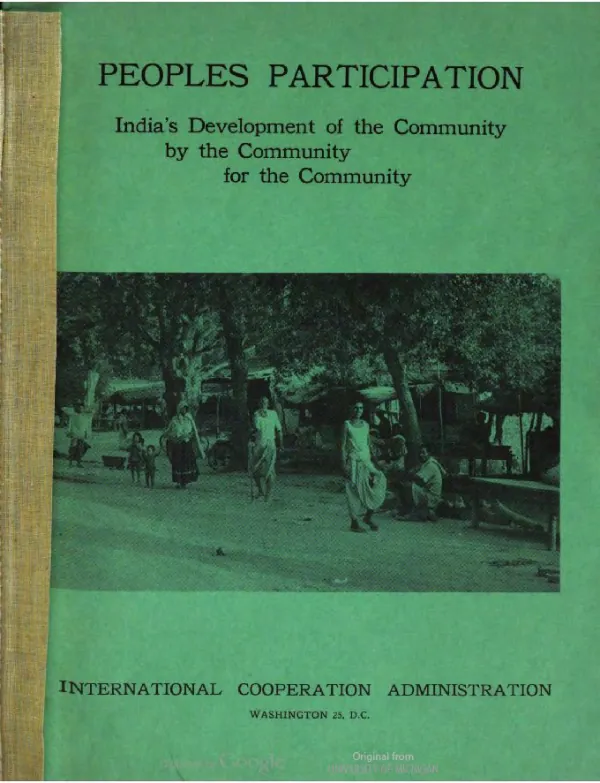
India's Participation: Development of the Community by the Community for the Community
Sign inMICHIGAN STATE UNIVERSITY FOUNDATION
India's Participation: Development of the Community by the Community for the Community
The Community Development Program in India was a joint initiative between the Government of India and the International Cooperation Administration.
24 pages
Sign in to readA free account is required to download.
Abstract
The program aimed to improve the living conditions of the Indian people by providing technical assistance and training to local communities. The program was implemented in various regions of India, with a focus on rural areas. The program's objectives were to improve agricultural productivity, increase food security, and enhance the overall quality of life for the Indian people. To achieve these objectives, the program provided training and technical assistance to farmers, agricultural workers, and other community members. The program also focused on improving infrastructure, such as irrigation systems, roads, and communication networks. The program's approach was based on the concept of "community development," which emphasized the importance of community participation and ownership in the development process. The program worked closely with local communities, involving them in the planning, implementation, and evaluation of development projects. This approach helped to build trust and confidence among community members, who were more likely to adopt and sustain development initiatives. The program's impact was significant, with improvements in agricultural productivity, food security, and overall quality of life for the Indian people. The program also helped to build capacity among local communities, enabling them to take ownership of development initiatives and sustain them over time. The program's success was attributed to the effective collaboration between the Government of India, the International Cooperation Administration, and local communities. The program's approach, which emphasized community participation and ownership, was instrumental in achieving its objectives. The program's impact was felt not only in the regions where it was implemented but also in the broader context of India's development. The program's experience and lessons were valuable for future development initiatives in India and other countries. The program's approach, which emphasized community participation and ownership, was a key factor in its success. The program's impact on agricultural productivity, food security, and overall quality of life for the Indian people was significant, and its lessons continue to be relevant today. The program's implementation was facilitated by the presence of technical cooperation advisors, who provided guidance and support to local communities. The advisors worked closely with community members, providing training and technical assistance to help them develop the skills and knowledge needed to implement development projects. The program's evaluation revealed that the community development approach was effective in improving agricultural productivity, food security, and overall quality of life for the Indian people. The program's impact was also felt in the broader context of India's development, with improvements in economic growth, social welfare, and human development.