RAINFOREST ALLIANCE
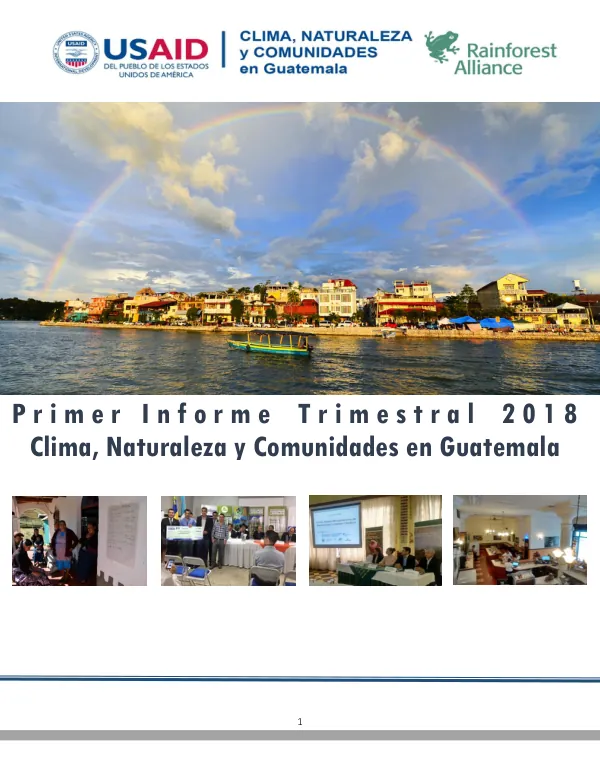
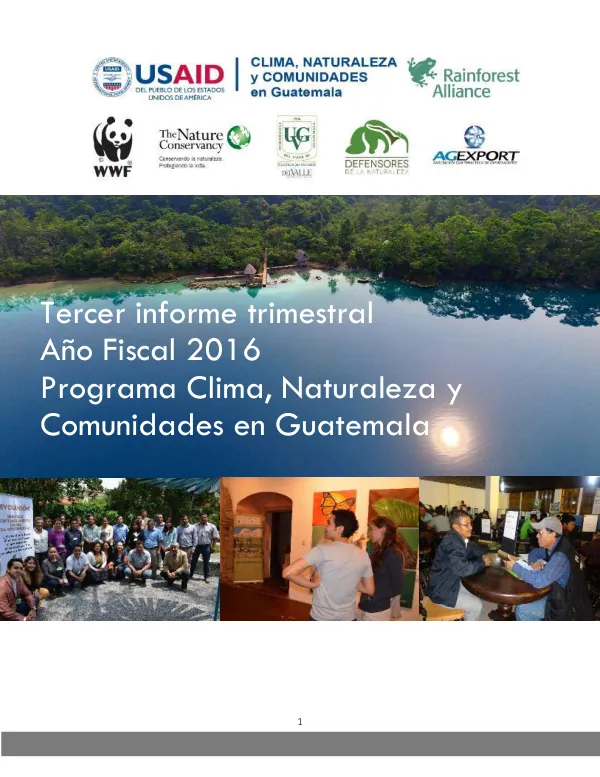
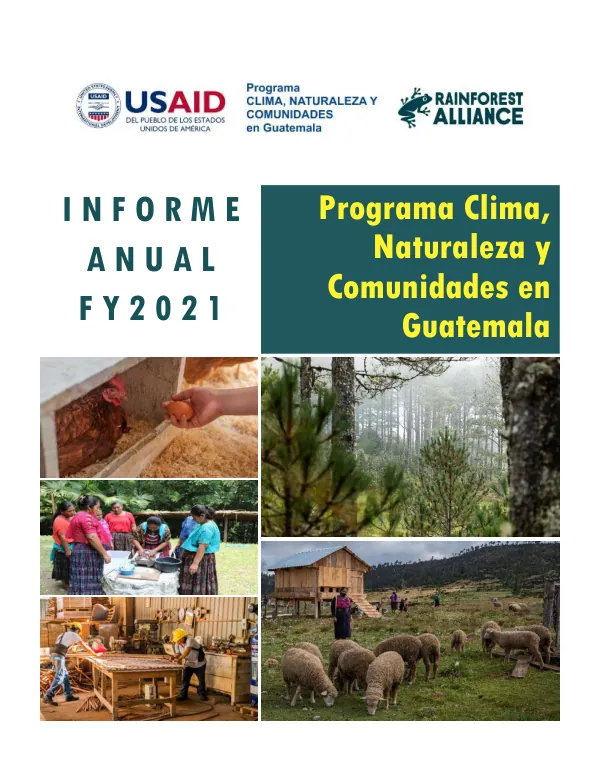
Informe Anual FY 2021: Programa Clima, Naturaleza y Comunidades en Guatemala
The Clima, Naturaleza y Comunidades en Guatemala (CNCG) program is a collaborative effort between the Rainforest Alliance and the USAID Guatemala office.
2021 · 236 pages
Sign in to readA free account is required to download.
Abstract
The program aims to promote sustainable land use, conservation, and community development in Guatemala. The program's main objective is to conserve biodiversity while creating employment and generating income for vulnerable populations. Implementation of the program's work plan for 2021 focused on several key areas. Notable achievements include the establishment of demonstration plots in 15 communities, which showed a 60% increase in crop yields when applying sustainable agriculture practices. The program also made significant progress in implementing its core indicators. For example, the number of hectares of biologically significant areas under improved natural resource management increased by 27% during the fourth quarter of 2021. The program's capacity-building efforts focused on training and capacity development for local organizations and communities. The program also implemented transversal themes, including gender, private sector engagement, youth, local governments, indigenous peoples, alliances, and coordination. The program's monitoring, evaluation, and learning (AMEL) system was also established to track progress and identify areas for improvement. The program's execution of the 2021 fiscal year budget was also reported. The program's annual report includes detailed information on sales and employment by quarter, as well as a summary of progress in activities. The report also highlights the program's achievements and challenges, as well as its priorities for the first quarter of 2022. The program's partnerships with local organizations and communities were also a key focus area. The program worked with a range of organizations, including the Asociación de Cooperación al Desarrollo de Huehuetenango (ACODIHUE) and the Asociación de Comunidades Forestales de Petén (ACOFOP). The program also engaged with local governments, private sector companies, and indigenous communities to promote sustainable land use and conservation. The program's achievements in reducing greenhouse gas emissions from the agricultural, forestry, and other land use sectors were also reported. The program's efforts to promote sustainable agriculture practices and reduce deforestation resulted in a 27% reduction in greenhouse gas emissions during the fourth quarter of 2021. Overall, the CNCG program made significant progress in promoting sustainable land use, conservation, and community development in Guatemala during 2021. The program's achievements and challenges highlight the importance of continued support for sustainable development initiatives in the region.