COASTAL RESOURCES CENTER
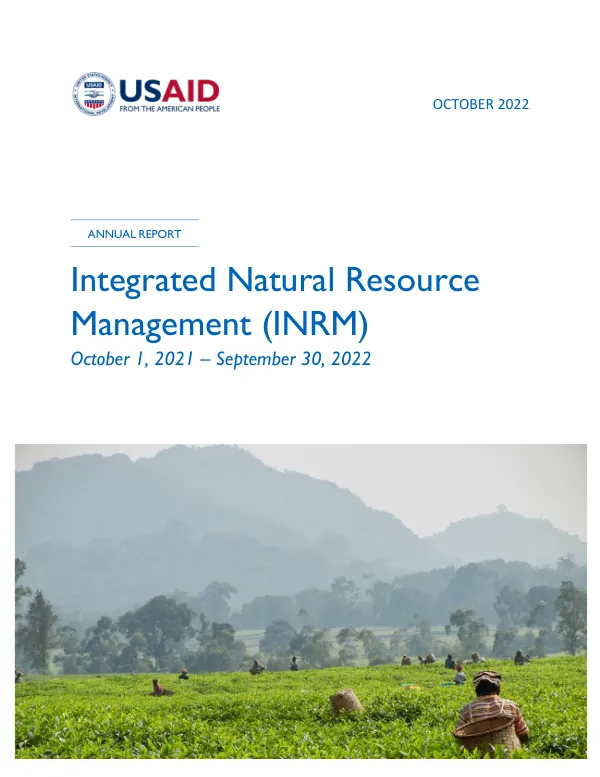
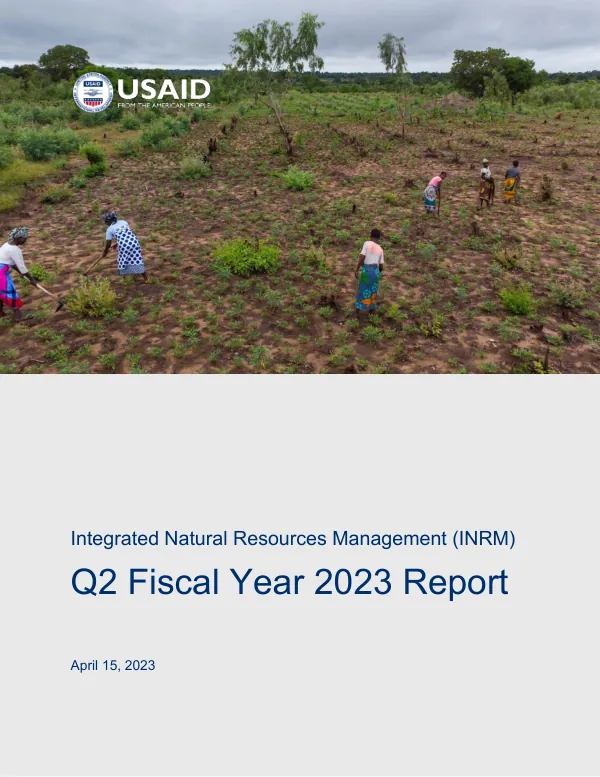
INRM Q2 Fiscal Year 2023 Report
Integrated Natural Resource Management (INRM) is a five-year task order under the Strengthening Tenure and Resource Rights (STARR) II Indefinite Delivery Indefinite Quantity (IDIQ) contract.
2023 · 51 pages
Sign in to readA free account is required to download.
Abstract
INRM supports multiple Offices in the Bureau for Development, Democracy and Innovation (DDI) and provides strategic support and facilitation to USAID's Missions, technical offices, and other Operating Units on integrated environment programming. The INRM task order is aligned with the Agency's Environmental and Natural Resource Management (ENRM) Framework. INRM supports and promotes integrated programming across sectors traditionally classified as "environmental," such as land use, forestry, and biodiversity conservation, as well as sectors that traditionally have not been linked to environment programming but are in fact strongly connected, such as food security, health, and governance. By using a multi-sectoral lens, the TO strengthens the impacts of USAID's core environmental programming by recognizing synergies, adopting best practices, and building broader constituencies for integrated programming. INRM works across the USAID Program Cycle, supporting assessment, strategy, activity design, piloting of new approaches, adaptive management, monitoring, evaluation, and learning, and communications. The mechanism responds to integrated programming requests through five task areas: analysis and development of an evidence base to support integrated NRM programming, support and facilitation of design and adaptive management of integrated NRM programming, testing of innovative approaches for integrated NRM programming, support of integrated monitoring, evaluation, and learning of multi-sectoral programs, and support of communications and knowledge management. INRM is committed to integrating gender equality, women's empowerment, and social inclusion into INRM's activity planning, design, and implementation. INRM has a dedicated full-time Gender Equality and Social Inclusion (GESI) Lead to collaborate with the INRM team, subcontractors, and USAID to identify opportunities to increase gender and social inclusion actions in INRM programming. The INRM Quarterly Performance Reports provide an overview of the reporting period, update on progress and learning related to the overarching management and integration actions, and update on progress and learning of approved activities. Key highlights from the Q2 Fiscal Year 2023 Report include the INRM FEWS NET Health Threat Extension featured in a White House announcement on promoting climate activities across Africa, INRM's publication of a brief on water tenure, and INRM's presentation on effective communication strategies that opened doors to new activities with USAID. INRM's presentation on effective communication strategies aimed to provide practical ways to address the challenge of capturing the attention of audience members despite significant competition for attention. As a result of the presentation, a USAID staff member requested INRM's support to incorporate this approach into the communications plan for a new activity on critical energy minerals. In addition, the presentation showcased INRM's expertise in communications and knowledge management beyond DDI and sparked interest and potential new opportunities with the Bureau for Resilience and Food Security. INRM-produced resources, such as an evidence review on the linkages between participatory natural resource management (PNRM) and democratic outcomes, are being used by environmental experts at the World Bank to inform the development of indicators which will measure conflict sensitivity of natural resource management-based interventions. This evidence review is part of INRM's broader PRNM activity which supports USAID to build a systematic evidence review process, create compelling and usable products, and inform decision-making. The INRM Fiscal Year 2023 Q2 Report highlights the progress and learning of INRM's activities and impact to date relative to the performance indicator targets and results defined in the activity Monitoring, Evaluation, and Learning (MEL) plan. The report provides an update on the tasks completed in the last three months relative to what was anticipated in the approved workplan and assesses the overall activity impact to date relative to the performance indicator targets and results defined in the activity MEL plan.