WORLD HEALTH ORGANIZATION
Integrated Management of Childhood Health: Sick Child, Age 2 Months up to 5 Years
The Integrated Management of Childhood Illness (IMCI) guidelines provide a framework for assessing and treating sick children aged 2 months to 5 years.
2013 · 73 pages
Sign in to readA free account is required to download.
Abstract
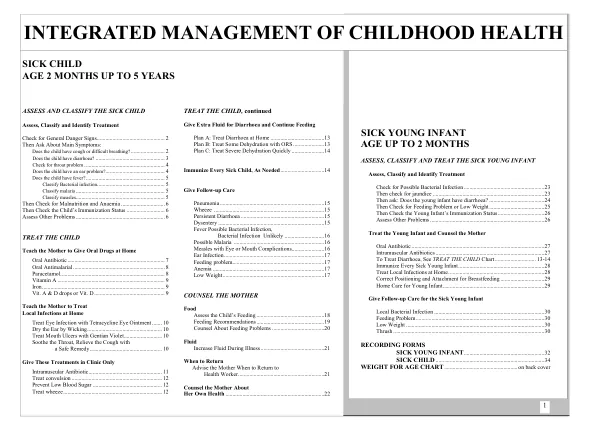
The guidelines emphasize the importance of identifying and treating general danger signs, which include signs of severe illness such as convulsions, vomiting, and lethargy. The assessment process begins with checking for general danger signs, including the child's ability to drink or breastfeed, vomiting, and convulsions. If the child exhibits any of these signs, urgent attention is required, and the child should be referred to a hospital immediately. The guidelines also provide a classification system for cough or difficult breathing, which is a common symptom in children. The classification system includes three categories: very severe disease, severe pneumonia, and no pneumonia or cough or cold. The treatment for each category is outlined in the guidelines, including the administration of antibiotics, treatment of wheeze, and follow-up care. In addition to cough or difficult breathing, the guidelines also address other common symptoms in children, including diarrhea, fever, and ear problems. The treatment for each of these symptoms is outlined in the guidelines, including the administration of oral antibiotics, antimalarial medication, and vitamin A. The IMCI guidelines also emphasize the importance of immunization in preventing childhood illnesses. The guidelines recommend that every sick child be immunized, as needed, to prevent the spread of disease. The guidelines also provide information on how to counsel the mother on various aspects of child care, including feeding, fluid intake, and follow-up care. The guidelines recommend that the mother be advised on how to increase fluid intake during illness, how to assess the child's feeding, and how to identify signs of malnutrition and anemia. The IMCI guidelines also provide information on how to treat local infections at home, including eye infections, ear infections, and mouth ulcers. The guidelines recommend the use of tetracycline eye ointment, dry ear by wicking, and gentian violet for mouth ulcers. The guidelines also provide information on how to treat severe dehydration quickly, including the use of oral rehydration solution (ORS) and intravenous fluids. The guidelines recommend that children with severe dehydration be referred to a hospital immediately. The IMCI guidelines also provide information on how to record and track the child's progress, including the use of a weight-for-age chart and a recording form for sick children. Overall, the IMCI guidelines provide a comprehensive framework for assessing and treating sick children aged 2 months to 5 years. The guidelines emphasize the importance of identifying and treating general danger signs, providing appropriate treatment for common symptoms, and counseling the mother on various aspects of child care.
Related documents