CATHOLIC RELIEF SERVICES ORGANIZATION
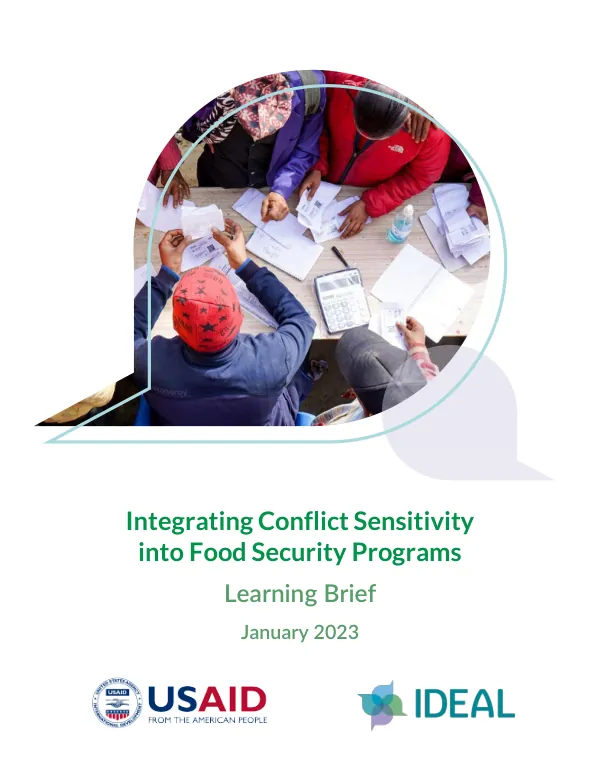
Integrating Conflict Sensitivity into Food Security Programs | Learning Brief
Conflict sensitivity in food security programming is a critical concern for achieving the goals of food security programs.
2023 · 27 pages
Sign in to readA free account is required to download.
Abstract
The recent conflict in Ukraine is a stark reminder of the links between conflict and food security, highlighting the need for food security actors to understand local conflict dynamics and how their programs interact with them. If they do not, implementers risk not only undermining progress toward their objectives, but may also inadvertently cause or exacerbate conflict. Understanding conflict and fragility is essential for effective food security programming. Conflict sensitivity is not only about managing and mitigating risk, but also about seeking opportunities to promote peace. This approach requires a deep understanding of the local context, including the root causes of conflict and the ways in which food security programs can interact with them. General approaches for integrating conflict sensitivity in food security programming include context monitoring and analysis, participation, empowerment, and inclusion, transparency, accountability, and communication, and strengthening social capital and social cohesion. These approaches can be applied across different programmatic dimensions and operational levels, and tailored to the modalities of each program and context. Targeting and distribution, procurement of goods and services, working through local aid actors and localization, investing in livelihoods and economic inclusion, public services and infrastructure, land, water, and resource sharing, and humanitarian principles and conflict sensitivity are all critical areas where conflict sensitivity can be integrated into food security programming. Lessons learned and recommendations from existing guidance and research highlight the importance of addressing these areas in a conflict-sensitive manner. The literature review and key informant interviews conducted for this learning brief reveal that food security programs can be more conflict sensitive by using participatory approaches that emphasize inclusion and empower aid recipients. Such programs must be transparent to aid recipients and include robust accountability mechanisms that allow communities to make their grievances heard. Conflict sensitivity should be approached in an integrated manner across different programmatic dimensions and operational levels and tailored to the modalities of each program and context. Ultimately, conflict sensitivity is essential for achieving the goals of food security programs and promoting peace and social cohesion. By understanding local conflict dynamics and integrating conflict sensitivity into food security programming, implementers can reduce the risk of exacerbating conflict and promote more effective and sustainable outcomes. Food security programs should seek ways to strengthen social cohesion and gender equality through sustainable practices rooted in the collective management of resources. This can be achieved through approaches such as community-led planning, participatory budgeting, and collective management of resources. In addition, food security programs should prioritize transparency and accountability, ensuring that aid recipients are informed and involved in the decision-making process. This can be achieved through mechanisms such as community feedback systems, grievance redressal mechanisms, and participatory monitoring and evaluation. By prioritizing transparency and accountability, food security programs can build trust with aid recipients and promote more effective and sustainable outcomes. Furthermore, food security programs should invest in livelihoods and economic inclusion, recognizing that economic stability is critical for promoting peace and social cohesion. This can be achieved through approaches such as vocational training, entrepreneurship development, and microfinance initiatives. By investing in livelihoods and economic inclusion, food security programs can promote more sustainable and equitable outcomes. In conclusion, conflict sensitivity is a critical concern for achieving the goals of food security programs. By understanding local conflict dynamics and integrating conflict sensitivity into food security programming, implementers can reduce the risk of exacerbating conflict and promote more effective and sustainable outcomes. Food security programs should prioritize approaches such as participatory planning, transparency, accountability, and livelihoods and economic inclusion to promote peace and social cohesion.
Related documents