USAID DEC
INTEGRATING FAMILY PLANNING/REPRODUCTIVE HEALTH MESSAGES INTO LIVELIHOOD PROGRAMS FOR YOUNG PEOPLE IN URBAN UPPER EGYPT
Sign inUSAID
INTEGRATING FAMILY PLANNING/REPRODUCTIVE HEALTH MESSAGES INTO LIVELIHOOD PROGRAMS FOR YOUNG PEOPLE IN URBAN UPPER EGYPT
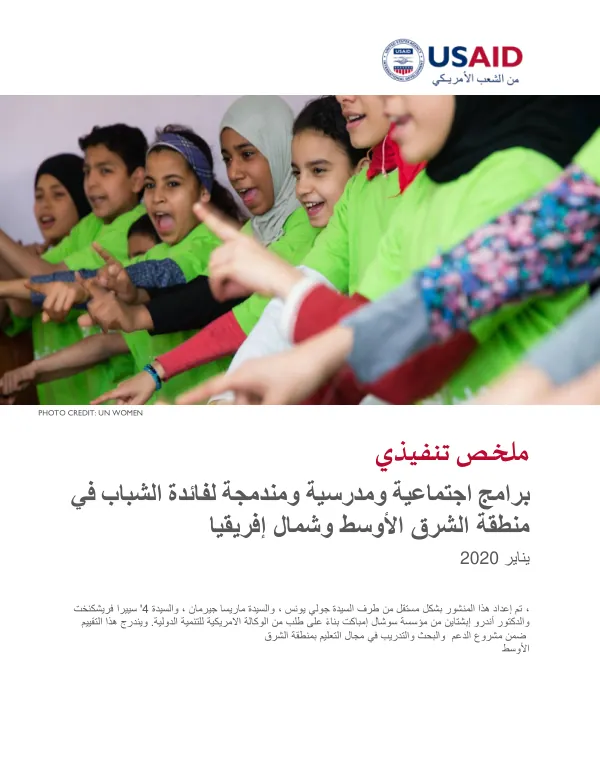
The Evidence Project, in collaboration with the Population Council, is implementing an intervention to enhance family planning and reproductive health (FP/RH) knowledge among young people in Souhag, one of the poorest governorates in Egypt.
2018 · 1 pages
Sign in to readA free account is required to download.
Abstract
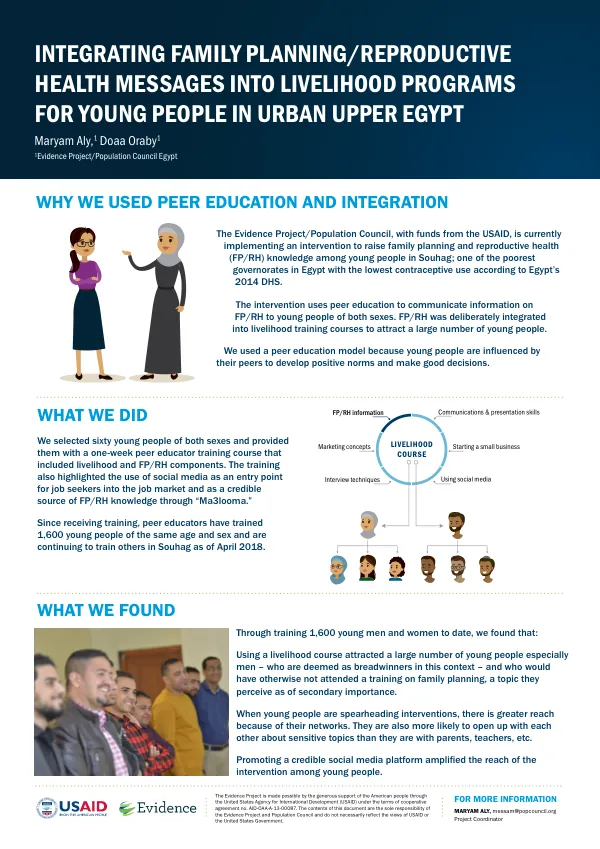
Souhag has the lowest contraceptive use in Egypt, according to the 2014 DHS. The intervention utilizes peer education to communicate FP/RH information to young people of both sexes. Peer education was chosen as the primary method of communication because young people are influenced by their peers to develop positive norms and make informed decisions. A peer education model was selected to leverage the influence of peers in shaping attitudes and behaviors. Sixty young people of both sexes were selected and provided with a one-week peer educator training course that included livelihood and FP/RH components. The training also emphasized the use of social media as an entry point for job seekers into the job market and as a credible source of FP/RH knowledge through the "Ma3looma" platform. Since receiving training, peer educators have trained 1,600 young people of the same age and sex, and are continuing to train others in Souhag as of April 2018. Integrating FP/RH messages into livelihood programs for young people in urban Upper Egypt has been a key component of the intervention. By incorporating FP/RH information into livelihood training courses, the intervention has attracted a large number of young people, particularly men, who might not have otherwise attended a training on family planning. The use of a livelihood course has been effective in engaging young people, especially men, who are perceived as breadwinners in this context. Young people are more likely to open up with each other about sensitive topics than with parents, teachers, or other authority figures. The promotion of a credible social media platform has also amplified the reach of the intervention among young people. The Evidence Project's intervention has demonstrated the potential of peer education and integration to enhance FP/RH knowledge and promote positive behaviors among young people in Souhag. The intervention's success can be attributed to the effective use of peer education and integration. By leveraging the influence of peers and incorporating FP/RH information into livelihood training courses, the intervention has been able to reach a large number of young people, particularly men, who might not have otherwise been engaged in FP/RH discussions. The use of social media has also been an effective tool in promoting the intervention and amplifying its reach among young people.