USAID DEC
Conservacolombia: A Stimulus Package for Subnational Protected Area Establishment in Colombia
Sign inCVC
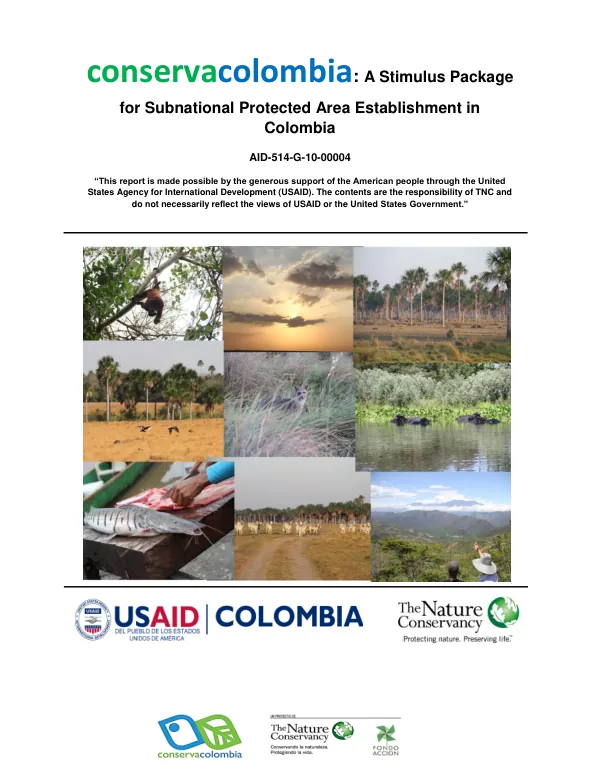
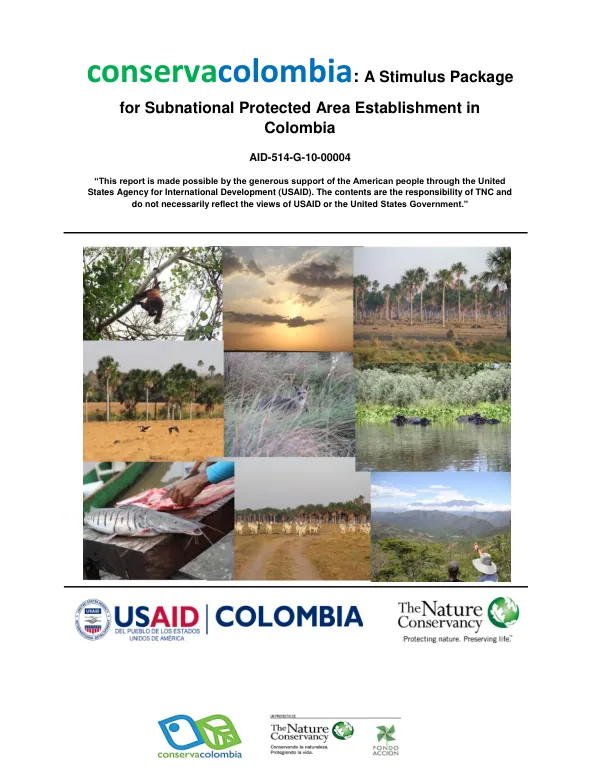
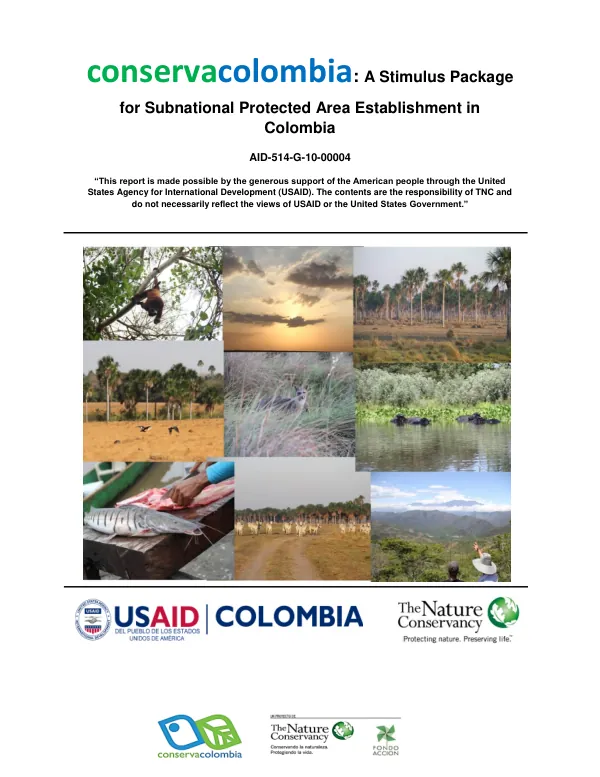
Conservacolombia: A Stimulus Package for Subnational Protected Area Establishment in Colombia
The conservacolombia initiative, a stimulus package for subnational protected area establishment in Colombia, was initiated in 2013 by the SIDAP Valle del Cauca.
2014 · 18 pages
Sign in to readA free account is required to download.
Abstract
The project aimed to protect the Arbustales and matorrales medio muy seco en montaña fluvio-gravitacional (AMMMSMH) ecosystem, which is highly threatened due to deforestation and habitat loss. The ecosystem is characterized by a unique vegetation type, dominated by cacti, small trees, and shrubs, and is home to a diverse range of flora and fauna. The area of study is located in the north of the Valle del Cauca department, covering 10,840.48 hectares across the municipalities of Roldanillo, La Unión, and Toro. The climate is defined by high solar radiation, low humidity, and significant temperature variations, with two distinct thermal zones: a warm climate zone between 0 and 1000 meters and a temperate climate zone between 1000 and 2000 meters. The area has a negative water balance, with most of the year experiencing negative monthly balances, except for the months of May and October. The area is characterized by a diverse range of flora, with 124 species identified across 54 botanical families. Notable species include the Montesino tree (Cynophalla amplissima), the Caracolí Anacardium tree (Anacardium excelsum), and the Jigua amarilla tree (Nectandra turbacensis). The area is also home to several species of birds, including the Lirio Caucano (Eucharis caucana), which is listed as critically endangered in Colombia.
Connected topics