USAID DEC
Investing in Malaria in Pregnancy in Sub-Saharan Africa: Saving Women's and Children's Lives
Sign inCDC
Investing in Malaria in Pregnancy in Sub-Saharan Africa: Saving Women's and Children's Lives
Malaria in pregnancy poses significant risks for pregnant women, fetuses, and newborns.
2016 · 2 pages
Sign in to readA free account is required to download.
Abstract
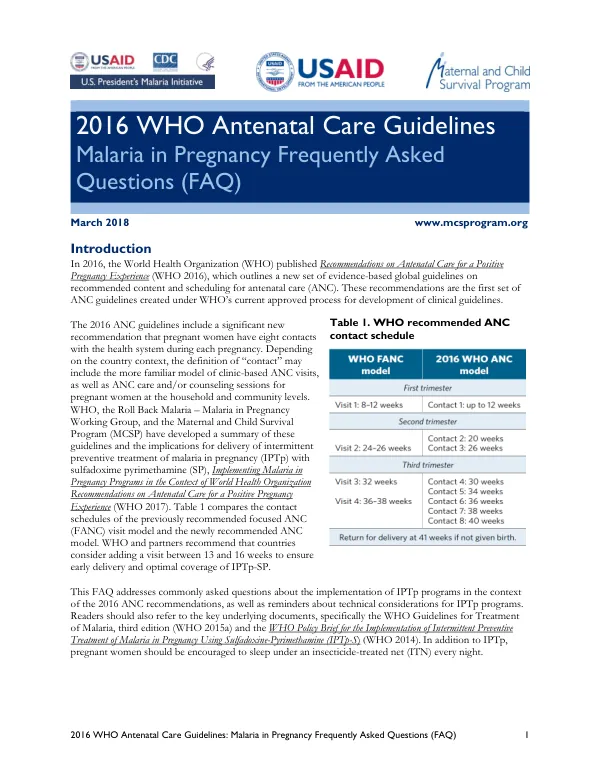
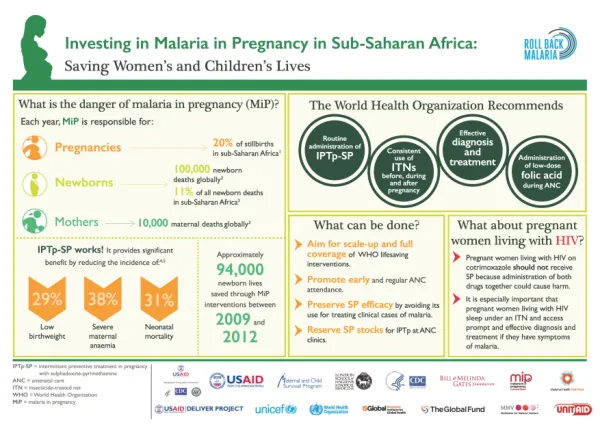
Serious complications include anaemia, severe malaria, spontaneous abortion, stillbirth, prematurity, neonatal mortality, and low birthweight. As malaria prevalence in a country declines, adverse consequences in pregnant women are likely to increase due to delayed acquisition of immunity. Malaria infection in pregnancy can be a reservoir of infection, making addressing malaria in pregnancy key to malaria elimination efforts. Pregnant women co-infected with malaria and HIV are more vulnerable to severe outcomes of both diseases. Intermittent preventive treatment in pregnancy with sulphadoxine-pyrimethamine (IPTp-SP) is a cost-effective intervention that prevents adverse consequences of malaria, including placental infection, clinical malaria, maternal anaemia, foetal anaemia, low birthweight, and mortality. IPTp-SP has been shown to reduce severe maternal anaemia by 38%, low birthweight by 29%, and neonatal mortality by 31%. MiP prevention can avert newborn deaths, with approximately 300,000 deaths potentially avoided if IPTp-SP and insecticide-treated net (ITN) coverage had increased to 80% from 2009 to 2012. IPTp-SP continues to protect against low birthweight even in areas of low malaria transmission, and will remain important until malaria has been eradicated. The World Health Organization recommends lifesaving interventions for malaria in pregnancy, including IPTp at every antenatal care (ANC) visit, starting as early as possible in the second trimester, with doses at least a month apart, and ITN use before, during, and after pregnancy. Scale-up of efforts is needed, as coverage of effective tools is low: 40% of eligible pregnant women received two or more doses of IPTp-SP, and 17% received three or more doses, while ITN use among pregnant women is 38%. Effective case management in pregnancy is largely unknown, and investment in health systems strengthening, including effective monitoring and evaluation, is critical to scale up and sustain gains over time for MiP. The Roll Back Malaria Global Call to Action focusing on IPTp-SP scale-up includes information on effective interventions and strategies for increasing coverage. This brief highlights the importance of addressing malaria in pregnancy to save women's and children's lives, and emphasizes the need for scale-up and full coverage of lifesaving interventions.