AFRICARE, INC.
JI Quarterly Report October to December 2012
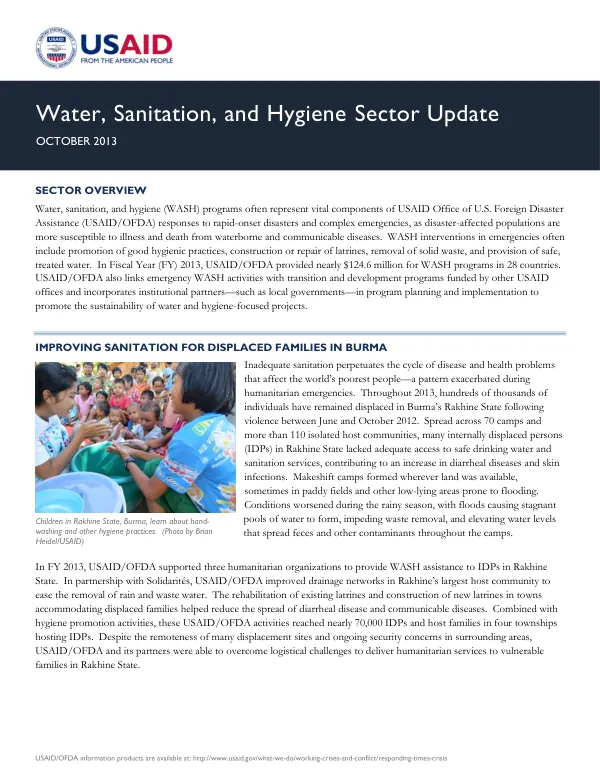
The NGO Joint Initiative for Urban Zimbabwe program began its preliminary stages in July 2013, with a focus on addressing water, sanitation, and hygiene issues in five cities: Mutare, Mbare, Chitungwiza, Bulawayo, and Masvingo.
2013 · 2 pages
Sign in to readA free account is required to download.
Abstract
The program's operating environment remained generally peaceful following the national elections, but the economy's performance was uncertain due to unclear government policies. The water and sanitation situation in the cities worsened, with bursting sewer pipes in Chitungwiza and Mbare exacerbating the crisis. This situation posed a significant risk of increased waterborne diseases during the upcoming rainy season. A program start-up meeting was conducted with all Joint Initiative partners, including CRS, Africare, Oxfam, Care, and Mercy Corps. The meeting confirmed that the program had been accepted in all targeted cities, and partners were in the process of signing memorandums of understanding with municipal authorities. Beneficiary registration began in Mutare, Bulawayo, and Chitungwiza, with plans to complete the process in the next quarter. Baseline data collection for the program started during this quarter, with findings to be reported in the subsequent quarter. The program's plans for the next quarter included completing beneficiary registrations in all five cities, conducting a baseline survey, and holding Community-Based Disaster Risk Management Training and planning sessions. Participatory Health and Hygiene Education sessions through schools and community health clubs were also scheduled to commence. In preparation for the rainy season, which is the high transmission season for diarrheal diseases, Joint Initiative partners collaborated with PSI and City Councils to implement activities promoting Point of Use Water Treatment (POUWT). The focus was on promoting waterguard, a readily available option for households in the program's operational areas. The program's focus on water, sanitation, and hygiene issues was critical, given the worsening situation in the cities. The bursting sewer pipes in Chitungwiza and Mbare posed a significant risk of increased waterborne diseases, emphasizing the need for urgent action. The program's plans for the next quarter aimed to address these issues through beneficiary registration, baseline surveys, and community-based interventions. The Joint Initiative partners' collaboration with PSI and City Councils to promote POUWT and waterguard was a key aspect of the program's strategy. This initiative aimed to reduce the risk of waterborne diseases during the rainy season, when transmission rates are highest. By promoting the use of waterguard, households in the program's operational areas could access a readily available and effective solution for improving water quality.