USAID DEC
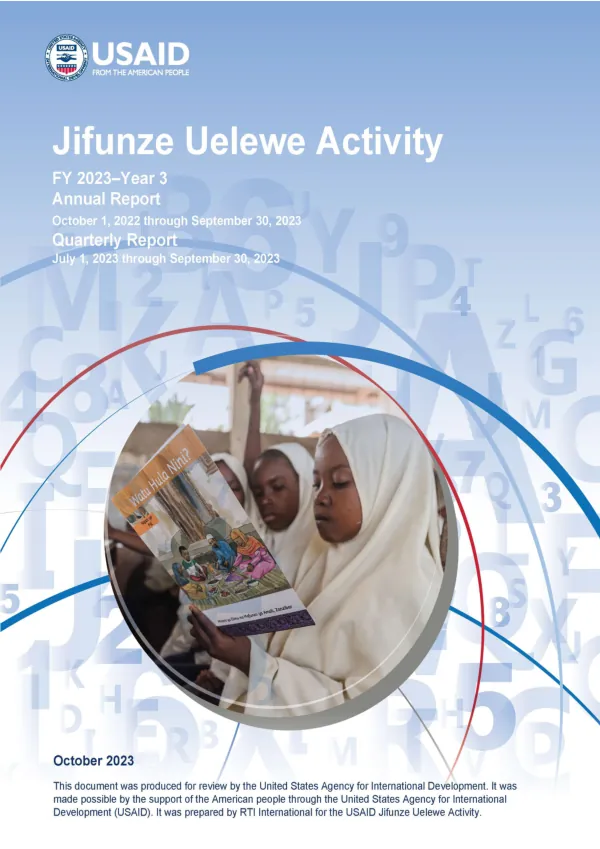
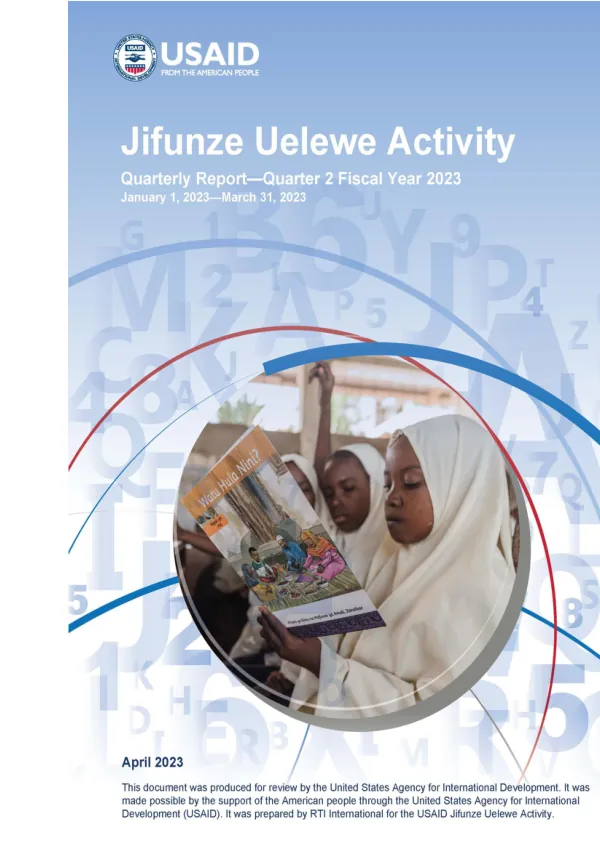
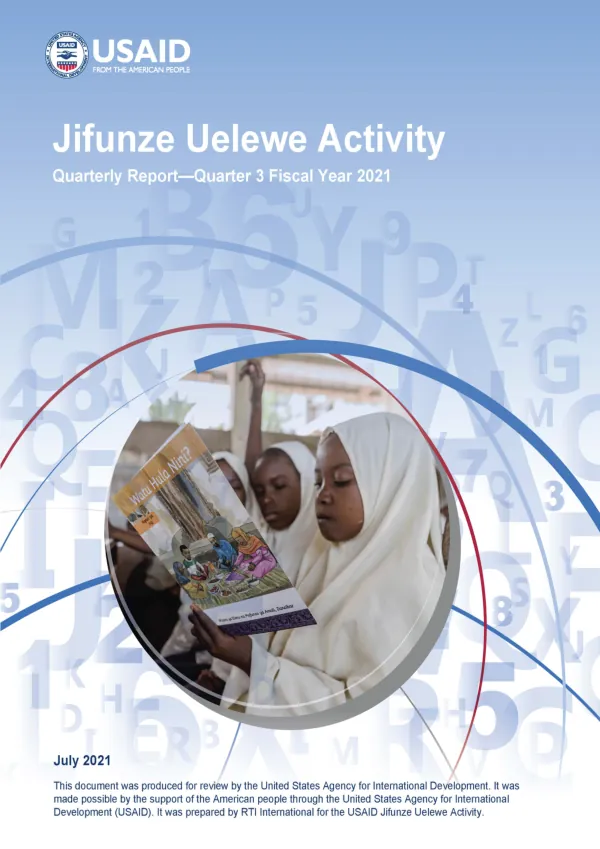
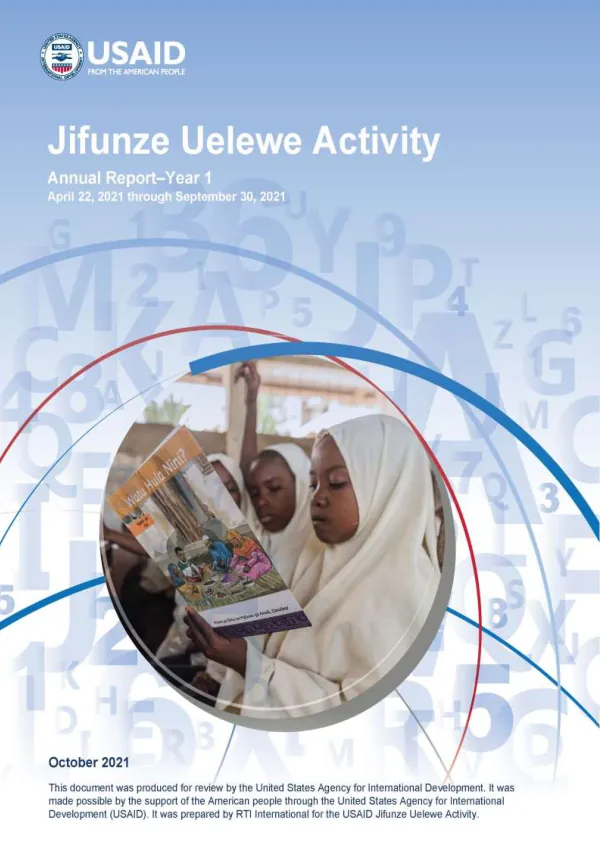
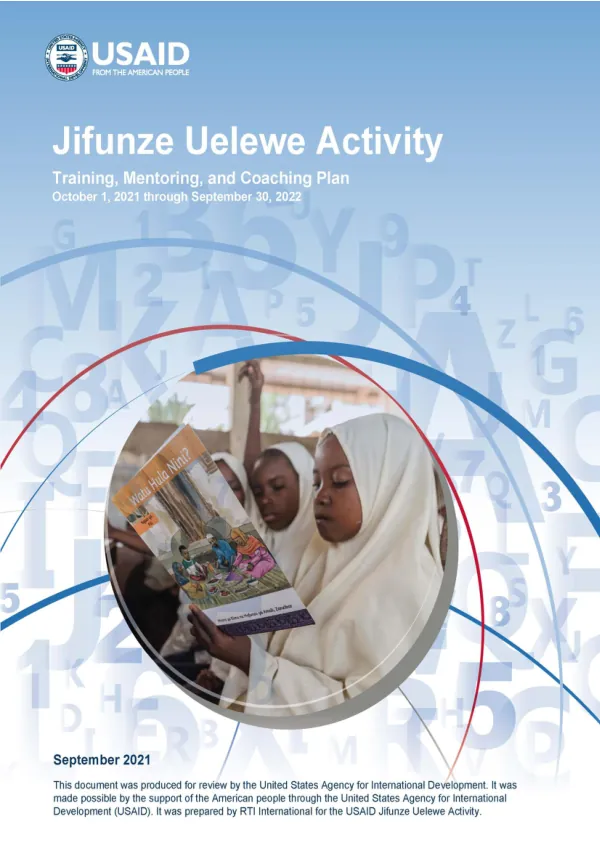
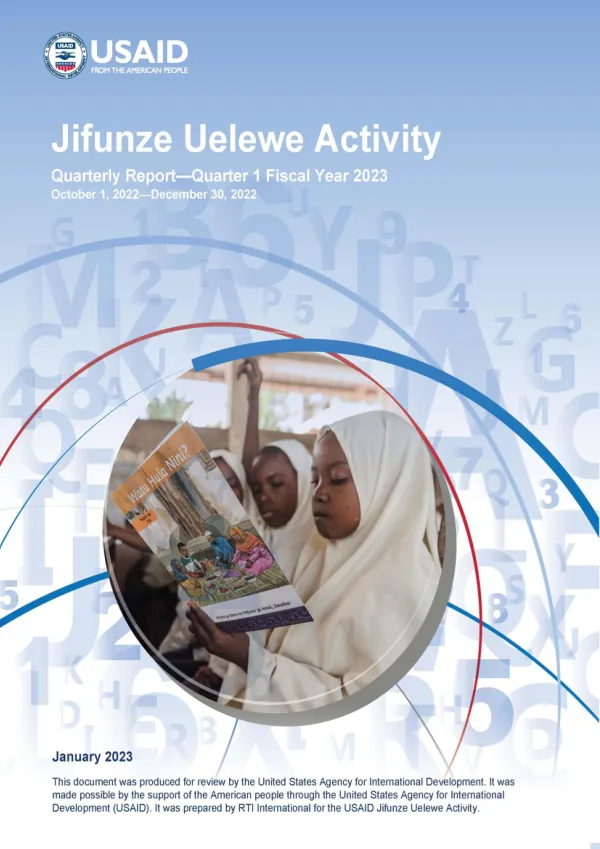
Jifunze Uelewe Activity Quarterly Report Q1 (October 1 through December 30, 2022) FY 2023
Sign inRTI INTERNATIONAL
Jifunze Uelewe Activity Quarterly Report Q1 (October 1 through December 30, 2022) FY 2023
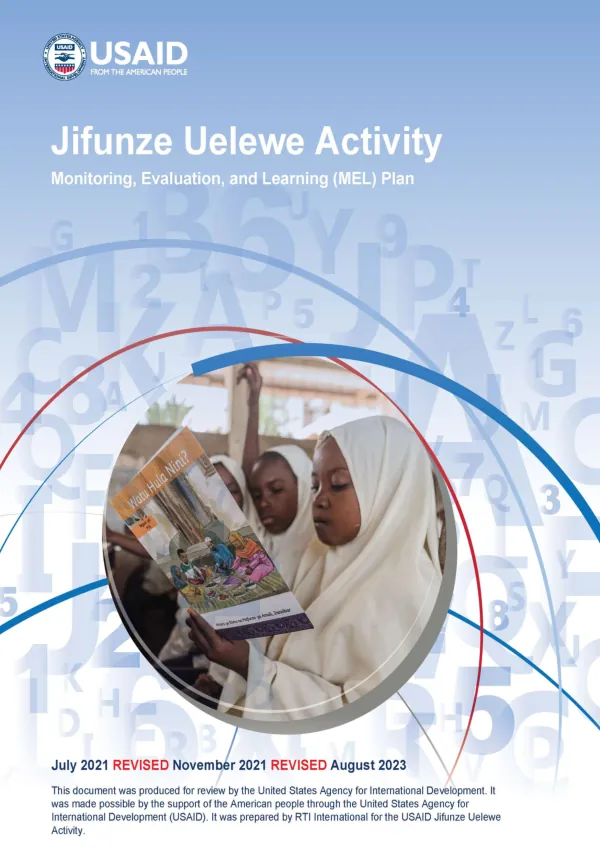
The Jifunze Uelewe Activity is a program aimed at improving literacy, numeracy, and social-emotional instruction by teachers, strengthening the capacity of local and regional governments to sustain improved learning outcomes, and increasing community support for safe and inclusive learning environments.
2023 · 97 pages
Sign in to readA free account is required to download.
Abstract
The program is implemented in target districts, wards, schools, and communities. Outcome 1: Improved Literacy, Numeracy, and Social-Emotional Instruction by Teachers The program focused on in-service training for teachers and education officials, which improved their capacity to deliver high-quality instruction. Continuous professional development was strengthened through training programs, workshops, and coaching. Inclusive teaching and learning materials were made available to and utilized by each teacher and child, enhancing the learning experience. Outcome 2: Strengthened Capacity of Local and Regional Governments to Sustain Improved Learning Outcomes The program aimed to increase the capacity of local and regional governments to plan, budget, and implement curriculum. Institutional capacity assessments were conducted to identify areas for improvement. The capacity of local and regional governments to collect and utilize data to improve learning outcomes was increased, enabling them to make informed decisions. Outcome 3: Increased Community Support for Safe and Inclusive Learning Environments The program enhanced community engagement to support safe and inclusive learning environments. Reading skills practice outside of the school was increased, promoting a culture of reading and learning. Community members were involved in the development of inclusive teaching and learning materials, ensuring that they met the needs of all learners. Cross-cutting activities included gender responsiveness, activity monitoring, evaluation, learning, and adapting, grants under contract, government relations, and coordination with USAID and partners. These activities ensured that the program was implemented effectively and efficiently, and that lessons learned were shared and applied. Financial and operational activities included procurement, finance, cost overruns, and human resources. The program's financial management was overseen by the implementing partner, RTI International, in collaboration with USAID. The program's budget was managed in accordance with USAID's financial regulations and guidelines. The program achieved several key outcomes during the first quarter of fiscal year 2023. These included the training of over 2,500 teachers and education officials, the development and dissemination of inclusive teaching and learning materials, and the enhancement of community engagement to support safe and inclusive learning environments. The program also made significant progress in strengthening the capacity of local and regional governments to sustain improved learning outcomes. The program's sustainability strategies included the development of institutional capacity assessments, the establishment of a monitoring and evaluation system, and the creation of a community engagement plan. These strategies aimed to ensure that the program's outcomes were sustained beyond the project period. The program's performance indicators were tracked and monitored regularly to ensure that the program was on track to meet its objectives. The program's progress was reported to USAID and other stakeholders through regular reports and updates. The program's achievements during the first quarter of fiscal year 2023 were significant, and the program is expected to continue making progress in the coming quarters. The program's success will depend on the continued support of USAID and other stakeholders, as well as the commitment of the program's implementing partner, RTI International.