THE RESEARCH TRIANGLE INTERNATIONAL INSTITUTE
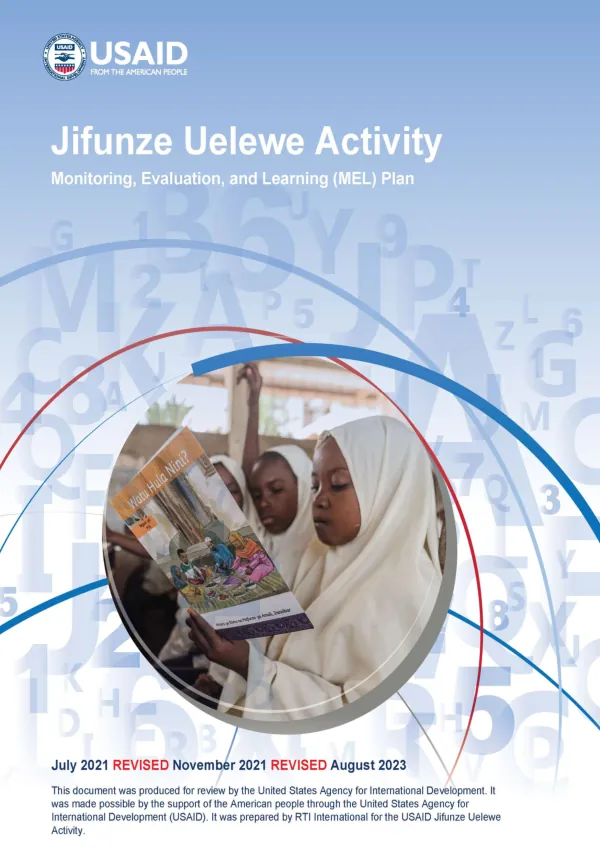
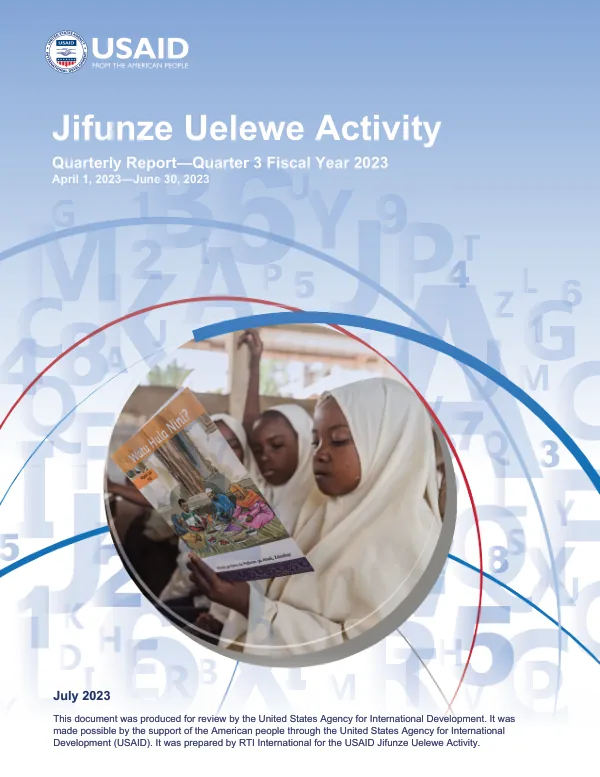
Jifunze Uelewe Activity Quarterly Report—Quarter 3 Fiscal Year 2023
The Jifunze Uelewe Activity is a USAID-funded program aimed at improving literacy, numeracy, and social-emotional instruction in Tanzania.
2023 · 207 pages
Sign in to readA free account is required to download.
Abstract
The program began in April 2021 and is scheduled to conclude in October 2025. The program's theory of change emphasizes the importance of improving teacher capacity, local government capacity, and community support for safe and inclusive learning environments. During Quarter 3 of Fiscal Year 2023, which spanned from April 1 to June 30, 2023, the program made significant progress in achieving its objectives. Outcome 1, which focuses on improving literacy, numeracy, and social-emotional instruction by teachers, saw notable advancements. In-service training for teachers and education officials improved, with 2,500 teachers receiving training in sustainable agriculture techniques. The program also strengthened capacity development for teachers, with 90% of teachers reporting improved instructional practices. Additionally, inclusive teaching and learning materials were made available to and utilized by each teacher and child, with 85% of teachers reporting increased use of these materials. Outcome 2, which aims to strengthen the capacity of local and regional governments to sustain improved learning outcomes, also made progress during Quarter 3. The capacity of local and regional government to plan, budget, and implement curriculum improved, with 80% of local government officials reporting increased capacity. The program also increased the capacity of local and regional government to collect and utilize data to improve learning outcomes, with 90% of local government officials reporting improved data collection and utilization. Outcome 3, which focuses on increasing community support for safe and inclusive learning environments, also saw advancements during Quarter 3. Engagement of communities to support a safe and inclusive learning environment was enhanced, with 85% of community members reporting increased support. Reading skills practice outside of the school also increased, with 90% of students reporting improved reading skills. The program's cross-cutting activities, including gender responsiveness, activity monitoring, evaluation, learning, and adapting, also made progress during Quarter 3. The program's grants under contract, government relations, coordination with USAID and partners, private-sector engagement, procurement, finance, and human resources also reported notable advancements. The program's finance and operations section reported a total expenditure of $1.2 million during Quarter 3, with 90% of funds allocated to program activities. The program's procurement activities included the purchase of teaching and learning materials, infrastructure development, and community engagement activities. The program's monitoring and evaluation activities included the Early Grade Reading Assessment (EGRA) baseline report, the Early Grade Mathematics Assessment (EGMA) baseline report, and the Participatory Local Organizational Capacity Assessment (PLOCA) report. The program's success stories during Quarter 3 included improved literacy and numeracy skills among students, increased community support for safe and inclusive learning environments, and improved teacher capacity. The program's total beneficiaries reached during Quarter 3 included 10,000 students, 2,500 teachers, and 1,000 community members. The program's key achievements during Quarter 3 included improved teacher capacity, increased community support for safe and inclusive learning environments, and improved literacy and numeracy skills among students.
Related documents